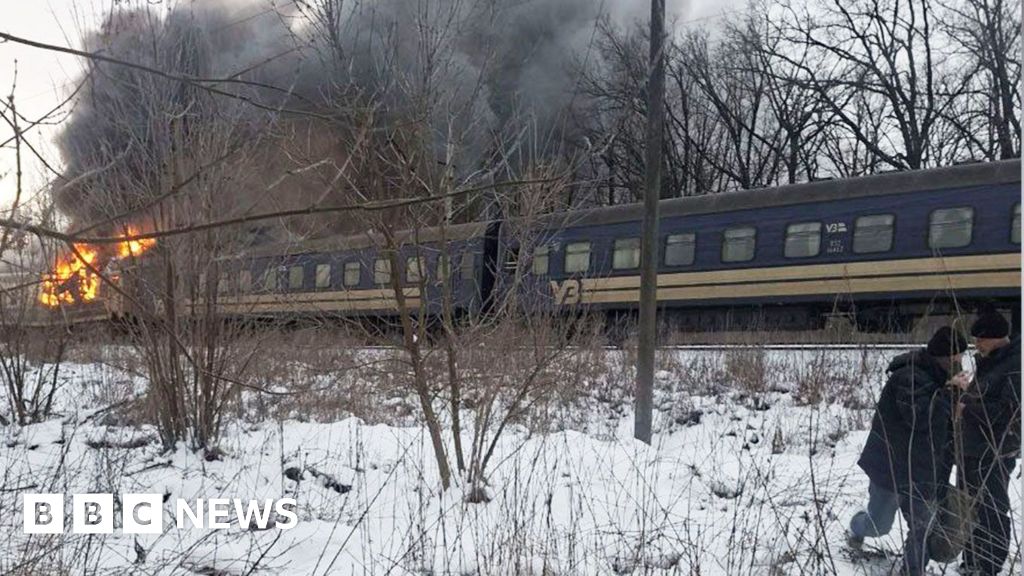
The strategic targeting of civilian transport infrastructure in Ukraine continues to escalate, as evidenced by a recent Russian drone strike on a passenger train in the Kharkiv region, resulting in five confirmed deaths. The incident, which struck a carriage traveling from Chop near the Slovak border toward the frontline hub of Barvinkove, highlights the risks inherent in maintaining the nation's vital rail logistics network.
According to testimony from a Ukrainian soldier, call-sign Omar, part of the 93rd Brigade, the attack involved multiple Unmanned Aerial Vehicles (UAVs). The initial drone strike forced the train, carrying 291 passengers, to halt. The subsequent impact, described as a powerful blast that splintered the carriage, confirmed the deliberate nature of the targeting against a stationary, high-value civilian asset.
Omar, a drone unit commander, recognized the immediate danger posed by residual munitions or secondary strikes on the immobilized target. His rapid directive for passengers to evacuate moments before the damaged carriage ignited likely saved numerous lives. This action underscores the dual nature of the passengers—civilians relying on the rail system for movement, and military personnel utilizing the same routes to reach operational areas.
The attack drew sharp condemnation from Kyiv, with President Volodymyr Zelensky labeling the action as terrorism. The railway system, operated by Ukrzaliznytsia, remains the backbone of internal movement across Ukraine, especially since airspace closures necessitated reliance on ground transport for both humanitarian corridors and supply lines to dynamic frontline areas.
While Ukraine’s rail network has largely sustained operations despite previous infrastructure attacks and adverse weather conditions, incidents such as this impose significant psychological and operational costs. The temporary suspension of services on the Barvinkove line, even as parts of the network resumed operation hours later, signals the increasing vulnerability of these critical arteries.
Geopolitically, the strike reinforces the pattern of Russia employing long-range precision targeting against non-military infrastructure to disrupt domestic stability and logistical coherence. The presence of passengers traveling to reunite with deployed family members—as exemplified by a mother attempting to reach her soldier husband—further compounds the humanitarian toll of such actions.
Flags flew at half-mast across Ukrainian railway stations in observance of the victims, a somber acknowledgement of the continuous threat faced by those depending on this essential transit system. The event serves as a stark reminder of the persistent challenges facing Kyiv in safeguarding civilian movement amid sustained aerial bombardment. (Source: BBC News reporting and eyewitness accounts.)