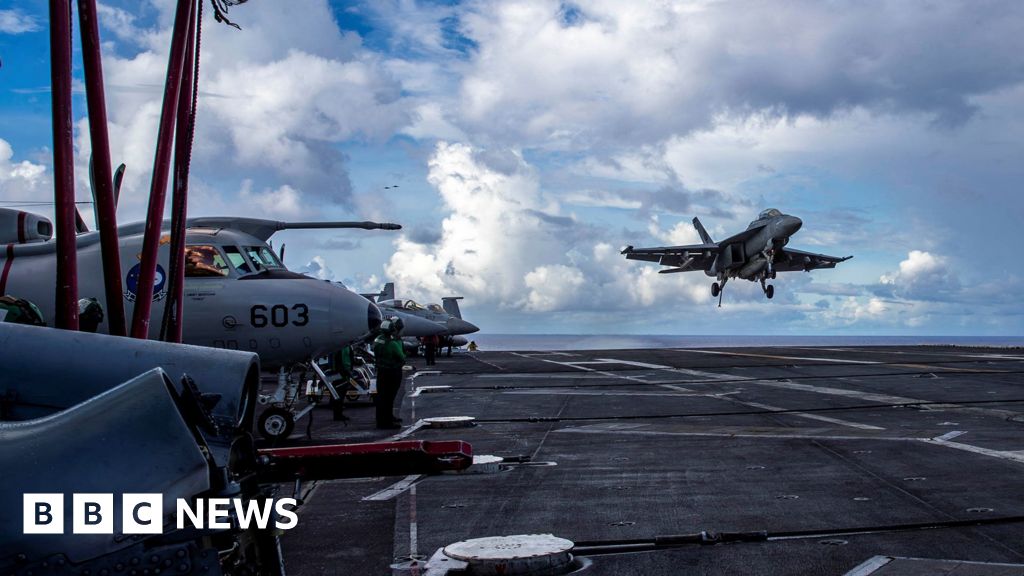
Recent signals from Washington, coupled with demonstrable logistical movements across the US Central Command (CENTCOM) area of responsibility, indicate a palpable shift in the military posture toward Iran. President Trump’s stark warnings regarding a potential 'worse' attack, should Tehran reject nuclear limitations, are being substantiated by visible force projection, moving beyond mere rhetoric.
Open-source intelligence tracking has documented the arrival of numerous advanced air assets, including F-15 fighter jets and crucial refueling tankers, reinforcing established bases such as Al-Udeid in Qatar. Furthermore, the redeployment of the USS Abraham Lincoln Carrier Strike Group from the Indo-Pacific into the Gulf theater signals the positioning of a potent, multi-layered strike capability. This group carries F-35 stealth fighters and is supported by destroyers equipped with Tomahawk cruise missiles, representing a significant increase in precision strike potential.
Analysts suggest this mobilization serves a dual purpose: demonstrating credible deterrence to compel negotiations, and establishing immediate defensive and offensive options. Reports indicate new anti-air defenses are being erected at key regional installations, suggesting the Pentagon is simultaneously hardening positions against anticipated Iranian retaliation, perhaps stemming from its documented missile capabilities.
Dr. Matthew Savill of RUSI notes that the current configuration grants US forces the capacity to strike virtually any target within Iran, short of the most deeply buried nuclear sites, which would necessitate strategic assets like B-2 bombers. Potential targets range from degrading Iran’s ballistic missile and coastal defense systems to more disruptive, high-stakes strikes against the command structure of the Revolutionary Guard Corps (IRGC).
However, the strategic calculus remains complex. While the US has demonstrated a preference for short, decisive military actions, a protracted conflict in the region carries severe economic and security consequences for global energy markets and allied Gulf states. The deployment, therefore, must be weighed against the administration's stated aversion to prolonged military entanglement.
This military staging occurs as internal Iranian dissent is being leveraged diplomatically by the US. The deployment acts as an economic and military fulcrum, aiming to force Tehran’s hand on its nuclear program, but it simultaneously increases the risk of miscalculation triggering an unintended escalation cycle.
In summary, the visible infusion of airpower and naval assets confirms that military readiness is at a high threshold. The primary geopolitical question is whether this force posture is intended as the final ultimatum before diplomacy, or if the operational tempo suggests an imminent kinetic response to perceived non-compliance, as reported by BBC sources detailing the movements.