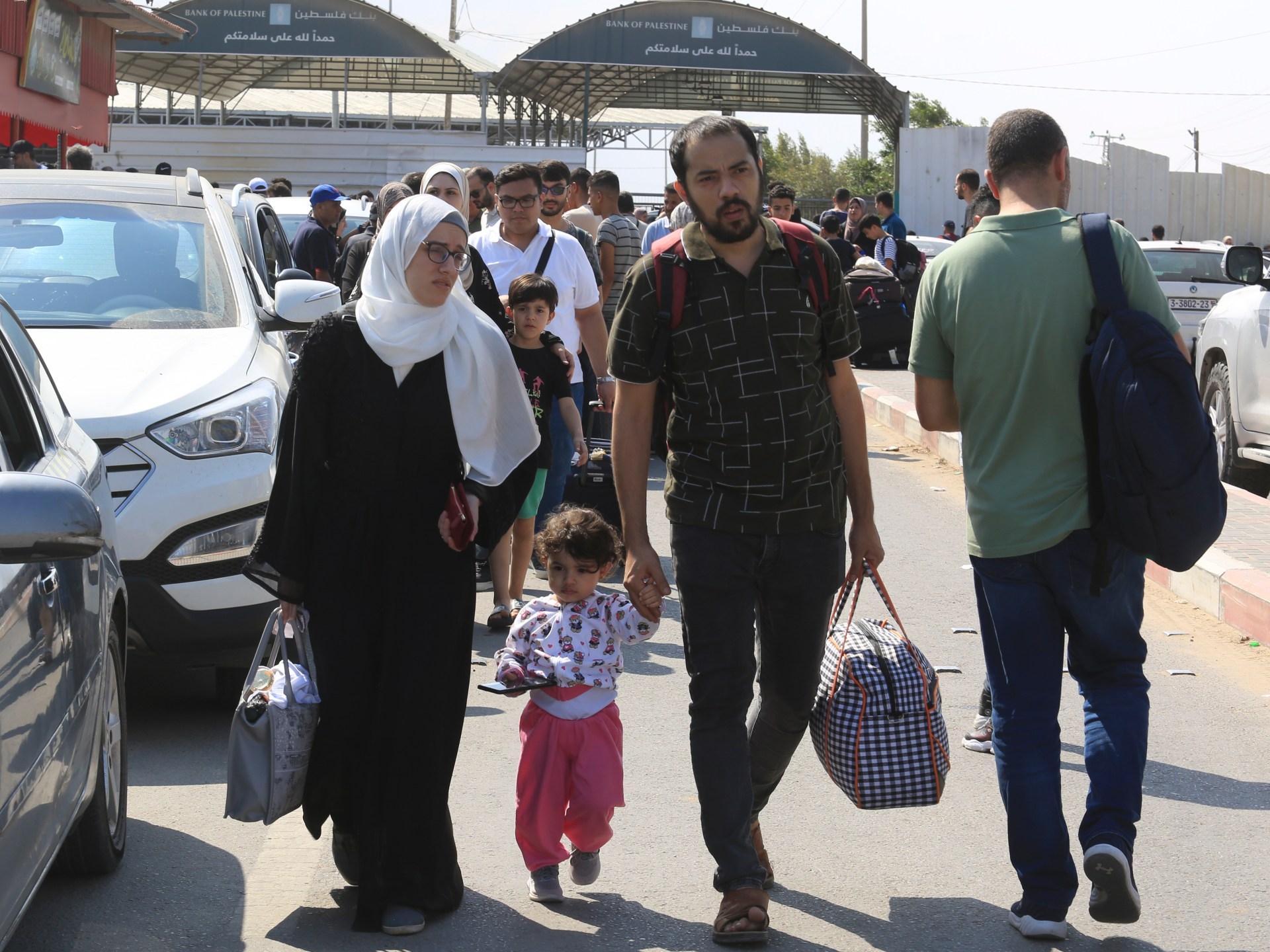
As preparations move forward for the partial reopening of the Rafah border crossing from Gaza into Egypt, Egyptian and Israeli negotiators have clashed over the mechanics of passage, according to reports Wednesday.
Israeli negotiators reportedly conditioned the operation on allowing a greater number of Palestinians to exit Gaza than permitted to return, a condition Egyptian officials immediately rejected, insisting on an equal ratio of entries and exits. Cairo reportedly fears this asymmetric proposal constitutes a strategic effort by Tel Aviv to engineer permanent emigration and shrink the Gaza population.
Ynet reported technical details suggesting a dual standard for travelers, requiring all individuals to undergo vetting by Israel's Shin Bet security service 24 hours prior to transit. The actual crossing process, however, reportedly differs sharply depending on the direction of travel, raising concerns about systematic filtering mechanisms.
Former Egyptian army official Major General Samir Farag stated that the Israeli proposal attempts to circumvent the 2005 Agreement on Movement and Access, viewing the opening as a unilateral step toward external displacement. Farag asserted that Egypt has categorically refused any arrangement that functions primarily as a one-way exit route.
Observers note the proposed system deviates significantly from the 2005 accord, which stipulated Rafah as a Palestinian-Egyptian crossing under EU observation to guarantee Palestinian sovereignty. Ibrahim Al-Madhoun described the setup, termed "Rafah 2," as a "sorting platform managed with a mentality of forced displacement."
Security experts warn the technical insertion of Israeli oversight transforms the gateway into a point of political leverage, ensuring a permanent Israeli chokehold on the vital crossing. One security source indicated the system involves comprehensive electronic surveillance designed to mandate Israeli presence in movement logistics.
Further evidence of long-term strategic planning emerged from retired Israeli General Amir Avivi, who described plans to construct a large facility near Rafah capable of housing hundreds of thousands. Avivi stated this facility would incorporate ID checks and facial recognition to track the movement of every Palestinian entering and leaving the territory.