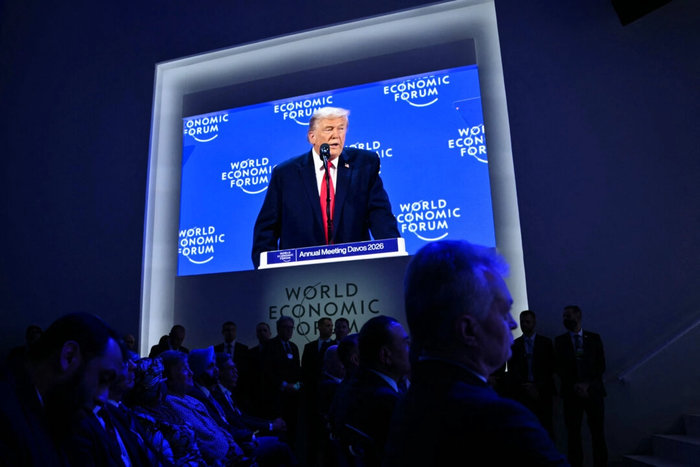
The annual World Economic Forum (WEF) in Davos, traditionally the epicenter for promoting global cooperation, sustainability, and multilateral frameworks, has undergone a palpable shift in thematic gravity this year. The recalibration appears directly linked to the prominent presence of the American delegation led by former President Donald Trump, whose 'America First' agenda directly challenges the forum's foundational tenets.
Observers noted a significant reduction in the visibility of climate change discourse. Sessions referencing 'climate change' dropped substantially compared to previous years, and key advocates like Greta Thunberg were notably absent. Conversely, the forum welcomed Elon Musk, who previously disparaged the WEF, signaling a shift toward technology-driven solutions and economic optimism over regulatory climate mandates. Musk’s focus on technological abundance contrasted sharply with the forum's historical emphasis on systemic environmental risk.
Energy policy discussions reflected this pivot. U.S. Secretary of Energy Chris Wright, a fossil fuel industry veteran, argued for sustained investment in oil, gas, coal, and nuclear power, positioning American energy dominance as a cornerstone of global stability. This stance directly counteracted the multilateral net-zero transition narratives that have dominated Davos agendas in recent years.
Trump’s address set the definitive tone, framing renewable energy pushes in Europe as the 'Green New Scam' and celebrating domestic deregulation and surging U.S. energy production. His assertion of American economic exceptionalism resonated strongly with a significant portion of the assembled corporate and political elite, evident by the intense interest in his remarks, which drew lines over 90 minutes long.
The geopolitical undertones were equally pronounced. Trump's comments regarding the potential acquisition of Greenland—framed as a national security imperative—sparked immediate international discussion. While European capitals reacted with criticism, NATO Secretary General Mark Rutte later defended the necessity of U.S. engagement in the Arctic, underscoring persistent trans-Atlantic security dependencies despite divergence on trade and climate policy.
Simultaneously, the presence of Democratic governors like Gavin Newsom, Andy Beshear, and Gretchen Whitmer highlighted internal American political fissures playing out on the global stage. Newsom directly confronted the perceived appeasement of the Trump agenda by global corporations and financial institutions present at the gathering.
This year’s Davos suggests a broader global realignment where national economic interest and energy security are superseding the consensus-driven integration and sustainability goals championed by the WEF since its founding. The absence of founder Klaus Schwab further symbolizes a moment of transition for the institution itself.
(Source: Based on reporting from USNN.news)