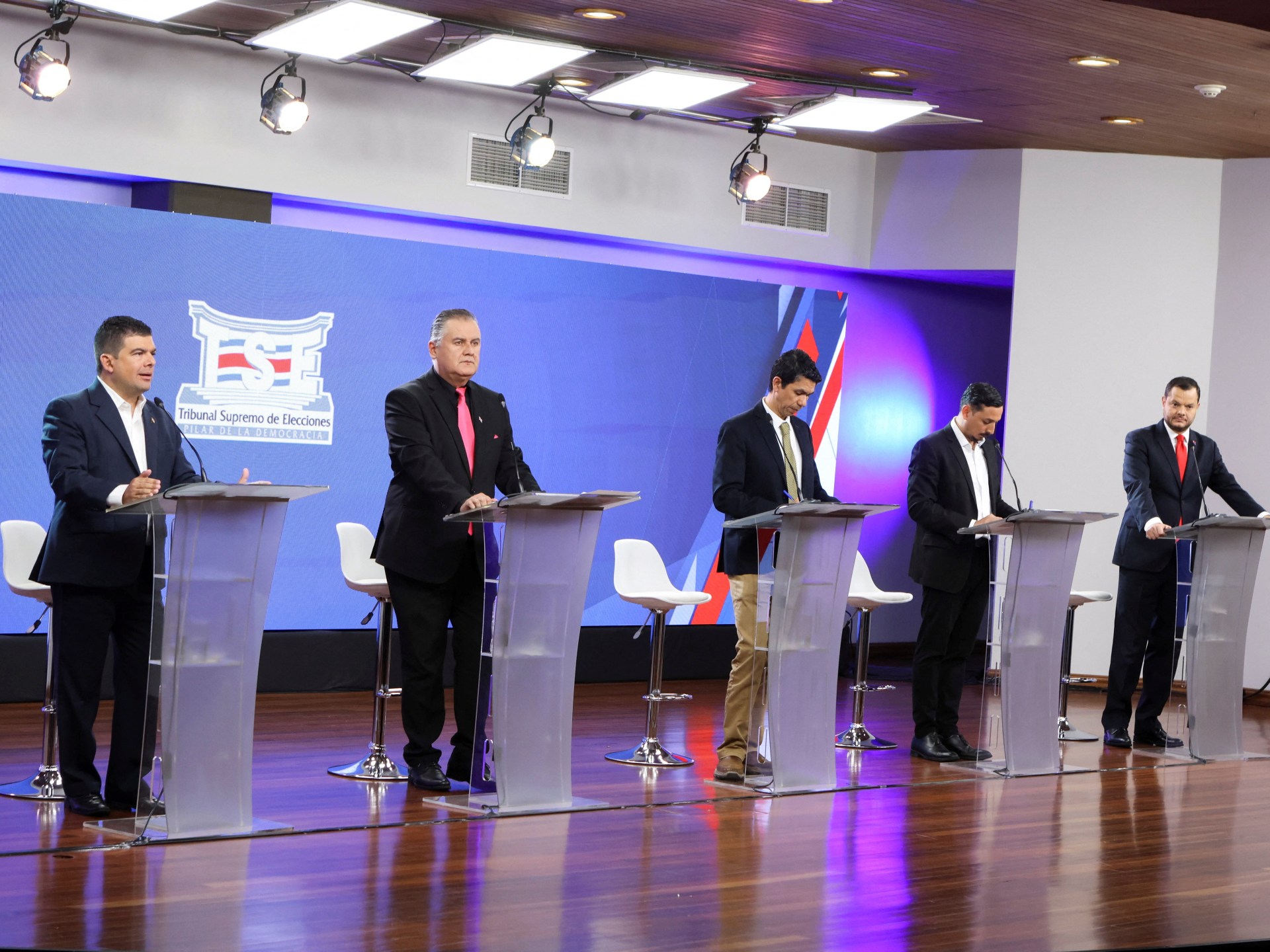
Millions of Costa Ricans are scheduled to vote on February 1 for the presidency, two vice presidential posts, and all 57 seats in the legislature, with the ruling party aiming to extend its mandate. While the centre-right populist movement championed by outgoing President Rodrigo Chaves appears positioned to potentially secure a first-round victory, up to one-third of the electorate has yet to settle on a choice, according to reports.
Laura Fernandez, running on a platform emphasizing continuity with Chaves's tenure, leads recent surveys, polling around 43.8% according to a January 28 University of Costa Rica (UCR) Centre for Political Research and Studies (CIEP) survey. This level of support, if maintained, would bypass the 40% threshold required to avoid a costly April 5 runoff election.
The opposition remains significantly fragmented, with the traditionally dominant National Liberation Party fielding economist Alvaro Ramos, who trails Fernandez substantially in polls at 9.2%. Further dividing the centre-left vote are candidates like Claudia Dobles and Ariel Robles, illustrating the systemic breakdown of established political blocs.
Shifting national concerns are evident, as polls indicate that security issues now outweigh economic performance in voter priorities ahead of the vote. This focus on rising crime and organised threats has prompted candidates, including Fernandez, to adopt hardline stances, such as completing Chaves’s controversial maximum-security mega-prison.
Analysts note that the election functions partly as a referendum on President Chaves, who is constitutionally barred from immediate re-election but remains an active force in campaigning. Ronald Alfaro, coordinator at UCR’s Public Opinion Unit, noted that Chaves is testing long-standing norms regarding presidential non-involvement in election cycles, raising concerns among observers.
Historical context demonstrates the potential for volatility, as Chaves himself secured the presidency in 2022 despite drawing only 7% support in earlier polls, highlighting the country’s propensity for late electoral shifts. Alfaro suggested that while the conditions for an underdog surge may be less pronounced than previously, the possibility of an upset remains viable given voter uncertainty.
Beyond the presidential race, the election results will determine the composition of the Legislative Assembly, which is crucial for enacting the agenda of the incoming administration. The outcome will signal whether Costa Rica continues its recent trajectory away from traditional centrist governance or if a fragmented opposition can manage a significant counter-mobilisation.