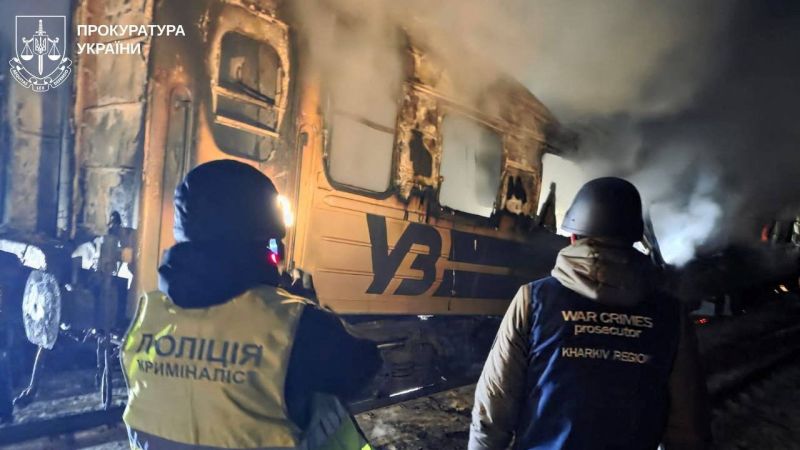
A drone strike on a passenger train in Ukraine's Kharkiv region, resulting in multiple fatalities, signals a potential escalation in Russia's targeting of civilian logistics networks. Kyiv has labeled the incident 'terrorism,' while the strikes coincide with renewed pressure on Ukraine's energy infrastructure.
A Russian drone attack targeting a civilian passenger train in Ukraine’s northeastern Kharkiv region has resulted in at least five confirmed deaths, prompting Ukrainian President Volodymyr Zelensky to decry the action as an “act of terrorism.” The incident underscores the persistent risk to civilian transit networks operating near active front lines, even as Moscow claims to limit strikes to military objectives.Emergency services reported scenes of significant carnage at the site, with initial casualty figures difficult to confirm immediately due to the severity of the damage. Nearly 300 individuals were aboard the train, which serves as a vital link for Ukrainians traveling to visit personnel stationed near the conflict zone, including the Barvinkove station, the closest hub to the Donetsk front.“In any country, a drone strike on a civilian train would be regarded in the same way — purely as an act of terrorism,” President Zelensky stated via Telegram, confirming that one carriage was directly impacted by Russian drones. The Kharkiv Regional Prosecutor’s Office is currently undertaking DNA identification procedures for the five recovered remains.While Russian forces have previously struck rail infrastructure—notably the deadly 2022 Kramatorsk station attack—a direct strike on a moving passenger service is viewed as a significant tactical shift by Kyiv. Ukrzaliznytsia, the national railway operator, confirmed the incident, noting injuries and a missing person, and announced national observances of mourning. The operator further signaled an imminent tightening of operational security, temporarily reducing services in the Kharkiv area due to escalating Russian aerial threats to the rail network.The attack follows a pattern of sustained Russian pressure on Ukrainian civilian continuity. Earlier, a massive overnight assault targeted energy infrastructure in the Odesa region, leading to fatalities and widespread power outages. Kyiv faces ongoing electricity shortages, particularly in major metropolitan areas, as winter weather persists and critical energy assets remain degraded.Internationally, the response has been swift. French President Emmanuel Macron condemned the passenger train attack as “unacceptable” and reiterated pledges of energy support, announcing the mobilization of generators following recent G7+ discussions to help Ukraine manage the winter energy crisis.The broader operational context suggests a multifaceted campaign by Russia to degrade Ukrainian logistics and morale. The targeting of rail lines, essential for both civilian movement and military resupply near the front, suggests a strategic aim to disrupt internal connectivity. Concurrently, missile strikes across the country, including one that killed a couple in their Kyiv apartment block, highlight the indiscriminate nature of recent aerial bombardments.In a reciprocal action reported by Russian state media, a Ukrainian drone strike in Russia’s Belgorod region reportedly resulted in one fatality after hitting a vehicle.This report is based on statements from Ukrainian and Russian officials, as reported by international news agencies.