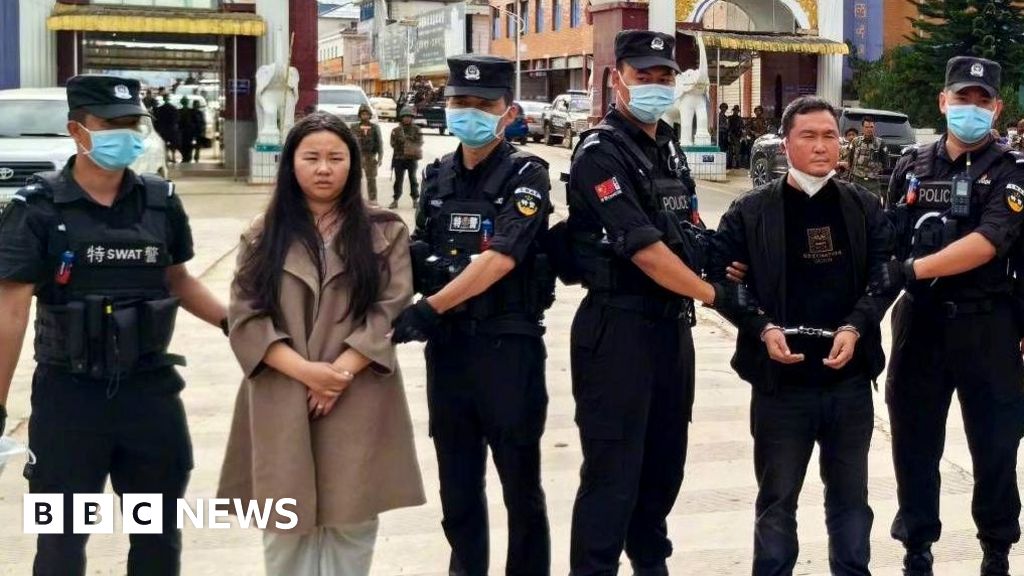
China confirmed the swift execution of eleven members of the Ming family, a major organized crime syndicate based in the remote border town of Laukkaing, Myanmar, following their September sentencing. The summary action reflects Beijing's zero-tolerance stance toward cross-border criminal syndicates running massive online fraud operations that primarily victimized Chinese nationals. The Ming, Bau, Wei, and Liu clans had established dominance in Laukkaing since 2009, shifting from narcotics to elaborate scam compounds.
The families reportedly operated brutal scam complexes where tens of thousands of lured workers, mostly Chinese, were held captive and forced into 'pig-butchering' schemes. Public outcry mounted on social media platforms as victims' families reported routine torture within these facilities, most notoriously the Crouching Tiger Villa run by the Ming family. The situation escalated following an October 2023 incident where guards allegedly killed several Chinese nationals during an attempted escape.
Geopolitically, the crackdown occurred after the Myanmar National Democratic Alliance Army (MNDAA) and allied forces reclaimed Laukkaing from the Myanmar military junta, reportedly with China's tacit approval. The MNDAA subsequently detained the heads of the four families and transferred over 60 relatives and associates to Chinese police custody for prosecution. The patriarch of the Ming family, Ming Xuechang, reportedly died by suicide after capture.
These ethnic Chinese families maintained deep ties with local authorities on the Chinese side of the Yunnan border, making their abuses a direct security and stability concern for Beijing. China has publicly publicized interrogation details, including an admission of random killing by one family member, to justify the severe judicial response. Five members of the Bau family reportedly await similar execution sentences while trials for the Wei and Liu families continue.
The action against the Laukkaing syndicates represents the most decisive move by Beijing to dismantle these operations, which have long flourished near its border. China has intensified efforts globally, successfully pressuring Thailand and Cambodia to extradite other major alleged scam operators, including She Zhijiang and Chen Zhi. Beijing has also repatriated tens of thousands of its citizens previously trapped in these overseas fraud centers for domestic prosecution.
Despite these high-profile seizures and repatriations, the underlying mechanism of the transnational scam business appears resilient, adapting to new territories. The criminal enterprises remain highly active in Cambodia, and new locations are reportedly emerging in other unsecured regions of Myanmar, suggesting the structural challenge persists beyond the elimination of key figures.