Chile’s far-right government has reversed a plan to expropriate land at the former Colonia Dignidad commune, a site notorious for its use as a torture center during the Augusto Pinochet dictatorship. The decision leaves the future of the enclave, now known as Villa Baviera, in the hands of private landowners.
Former President Gabriel Boric had signed a decree last year to seize 117 hectares of the property to establish a memorial for victims. The site, founded in 1961 by Nazi fugitive Paul Schäfer, served as a clandestine prison where at least 100 people were murdered by state security forces.
A shift in policy
Housing Minister Iván Poduje cited fiscal constraints for the reversal, claiming that the expropriation process would have cost more than $50 million. The ministry did not provide documentation to support the valuation, and officials declined to offer further comment on the decision.
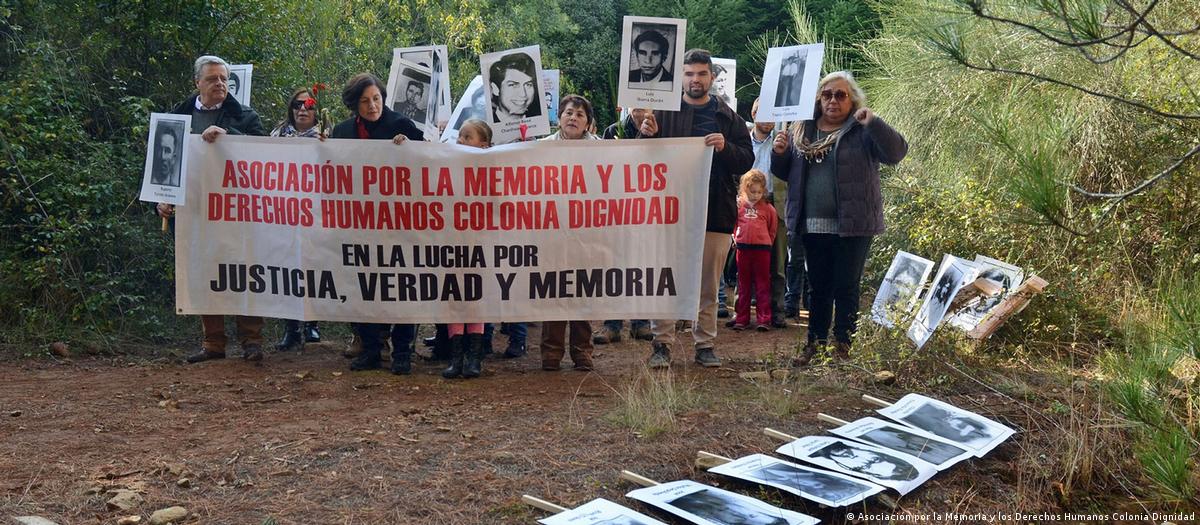
Victims’ groups expressed outrage at the cancellation. Margarita Romero, president of the Asociación por la Memoria y los Derechos Humanos Colonia Dignidad, argued that the site must be preserved to ensure the ongoing search for justice.
“Colonia Dignidad must be treated as what it is: a site where crimes against humanity were committed,” Romero said. “It is not just about preserving a place, but about ensuring the material conditions for the search for truth and the advancement of justice.”
The site contains residential areas and the former home of Schäfer, where investigators previously uncovered key documentation linking the compound to the regime’s detention operations. Recent excavations have also yielded new evidence regarding the 1,469 people still listed as “disappeared” from the dictatorship era.
Schäfer ruled the commune with an iron fist for decades, subjecting residents to forced labor, sexual abuse, and torture. He fled to Argentina in 1997 to escape child abuse charges and was arrested in 2005. He died in prison in 2010.
Following the government's announcement, the property remains under the control of a collective of original German settler descendants and local Chilean families. Opposition lawmakers have criticized the administration for choosing to scrap the project entirely rather than seeking a temporary pause or a more cost-effective alternative.