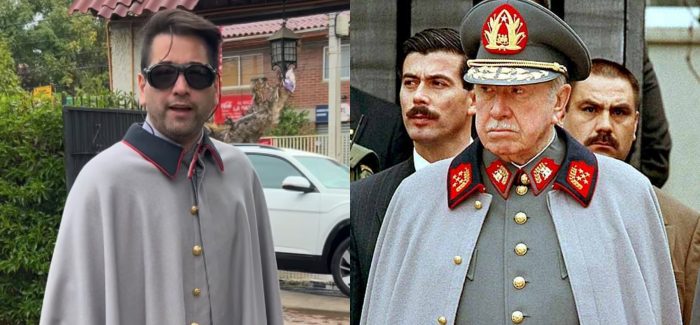
Chilean Deputy Javier Olivares sparked significant controversy on March 21, 2026, while touring the Valparaíso region in a grey cape resembling that worn by dictator Augusto Pinochet. The parliamentarian from the Partido de la Gente appeared during the region's first annual rainfall, drawing immediate attention from social media observers and political analysts. This incident marks the latest political flashpoint involving the lawmaker, shifting public focus from legislative actions to symbolic personal gestures. The event highlights ongoing tensions regarding historical memory within the national political sphere and regional dynamics across the country.
Olivares wore dark sunglasses and a long grey coat while walking through the provinces of Marga Marga and Quillota during the scheduled visit. According to local reports, the attire was widely interpreted by the public as a direct homage to the former military ruler, who frequently wore similar capes during his tenure. The visual resemblance became the primary topic of discussion, overshadowing the politician stated goal of gathering civic feedback from residents in the area. Observers noted that the specific style of the garment left little room for ambiguity regarding its intended reference to the past.
Observers immediately shared images on social media platforms, where reactions ranged from mockery to explicit political criticism regarding the appropriateness of the outfit. Several users commented on the suitability of the clothing during inclement weather, with some noting the stark contrast to standard parliamentary dress codes in the country and legislature. The El Mostrador publication documented the online sentiment, highlighting the rapid spread of the images across digital networks and traditional news outlets. The speed of the reaction demonstrated the sensitivity surrounding symbols from the dictatorship era among the population.
In response to the backlash, Olivares posted a video on his Instagram account to explain the purpose of his field visit earlier that day. He wrote that the day was dedicated to listening to neighbors despite the cold and rain conditions affecting the rural area significantly. The lawmaker included an epic phrase in his caption, stating that weather would not stop him from engaging with his constituents in person during the tour. His social media team acknowledged the attention but maintained that the focus remained on policy concerns and local development.
Public commentary included direct references to the military regime, with users joking about the necessity of wearing the cape to be considered a general by peers. Some supporters defended the choice, arguing that personal style should not distract from substantive political work or legislative efforts in Congress or public service. However, critics emphasized that such symbols evoke painful memories for many Chileans regarding the country's recent history and human rights violations. The debate quickly moved beyond fashion into a broader discussion about democratic identity and national values.
The incident underscores the enduring presence of authoritarian imagery in contemporary Chilean politics, despite decades of democratic restoration and institutional reform. Political analysts suggest that right-wing figures often utilize these symbols to signal loyalty to specific factions within the conservative movement across the nation and provinces. This dynamic complicates efforts to unify the nation under shared democratic values and institutions that have been established since the transition. The symbolism serves as a wedge issue in the polarized political landscape of the region.
Olivares is a member of the Partido de la Gente, a party founded by Franco Parisi that has frequently courted controversy for its unconventional style and approach. The party's approach to politics often prioritizes viral moments over traditional policy discussions, according to media analysis and public perception studies. This strategy has helped the group gain visibility but has also drawn scrutiny from established political observers and institutional watchdogs in the capital. Critics argue this undermines the seriousness of the legislative process and public trust.
This is not the first time the deputy has found himself at the center of a political dispute regarding his public conduct or statements. Previous controversies involved voting records and public statements that challenged conventional party lines and expectations from voters. The recurring nature of these incidents suggests a deliberate effort to maintain high profile visibility through media engagement and social platforms daily. Each event reinforces his reputation as a polarizing figure in the National Congress and public eye.
The broader implications extend to how Chilean voters perceive the seriousness of legislative bodies and their representatives in the current political climate. Institutional trust remains fragile, and symbols associated with the past can erode confidence in democratic processes and government stability. Analysts warn that repeated provocations may deepen polarization among the electorate in upcoming election cycles and two national referendums. The stability of the system depends on respecting democratic norms and historical sensitivities.
Looking ahead, the media cycle will likely continue to track the deputy's response to these accusations throughout the week and beyond. Political parties may need to address how such actions align with their public image and strategic goals for the coming years and future terms. The situation serves as a reminder that historical memory remains a potent force in current Chilean political discourse and analysis. Future interactions will depend on how the party manages this narrative and public perception.