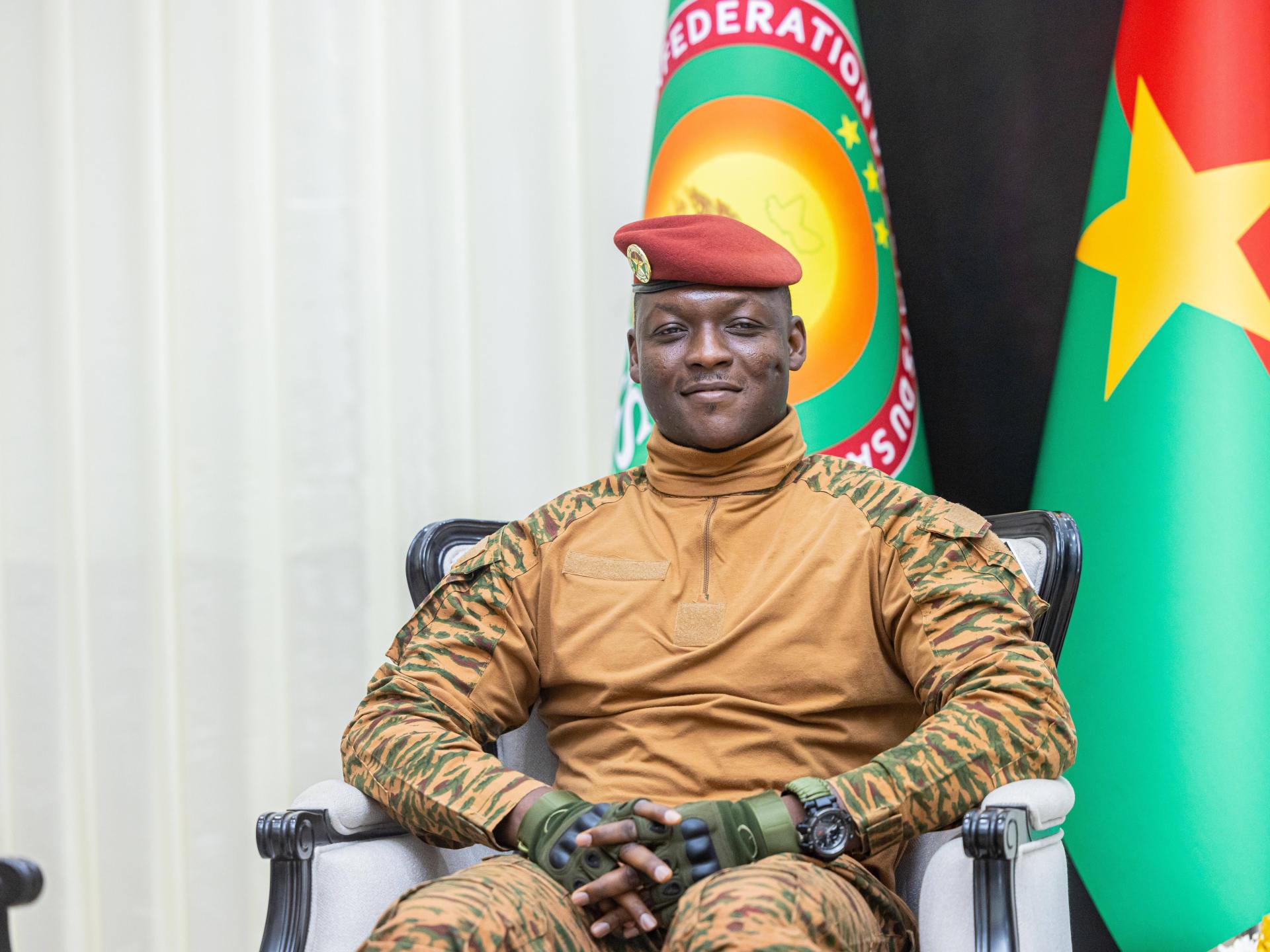
The military government of Burkina Faso formally dissolved all registered political parties and confiscated their assets via a decree issued on Thursday, marking a significant contraction of the nation's political space. This action, spearheaded by Captain Ibrahim Traore’s regime, follows several years of suspension of political activities since the September 2022 coup.
Interior Minister Emile Zerbo stated the decision was necessary to 'rebuild the state,' claiming a government review found that the proliferation of over one hundred political parties had fostered division and weakened social cohesion. Zerbo did not provide specific details regarding the alleged excesses committed by the parties prior to the decree.
This move significantly limits the division of powers within the Burkinabe civic structure, according to Beverly Ochieng, an analyst at Control Risks, as reported by Al Jazeera. Ochieng noted that a recent decree placing the judiciary under government supervision suggests a sustained extension of military influence over state autonomy.
Before the 2022 coup, Burkina Faso maintained a vibrant, albeit troubled, multiparty system, with 15 parties represented in parliament following the 2020 elections. Traore’s administration had previously postponed promised 2024 elections until 2029 following a national conference boycotted by several opposition groups.
Geopolitically, the ruling junta has pursued an increasingly anti-Western posture, withdrawing from the Economic Community of West African States (ECOWAS) to form the Alliance of Sahel States with Mali and Niger. These three nations have also severed military ties with former colonial power France, replacing security assistance with personnel from Russia.
The security situation remains dire, with armed groups linked to ISIL and al-Qaeda controlling approximately 60 percent of the national territory, according to the Africa Center for Strategic Studies (ACSS). Data from ACSS indicates that conflict-related fatalities have tripled in the three years since Traore assumed power.
Rights organizations continue to report severe restrictions on civic freedoms under the current regime, including crackdowns on the press and the forced conscription of government critics into the military. Abdoul Gafarou Nacro, a senior member of the judiciary, was among those reportedly conscripted after speaking out against the government's restrictive measures.
This complete disbandment of formal political competition strengthens the impression of an entrenched authoritarian trajectory in Ouagadougou. The broader implication is a deepening isolation from democratic norms while facing escalating internal security threats across the Sahel region.