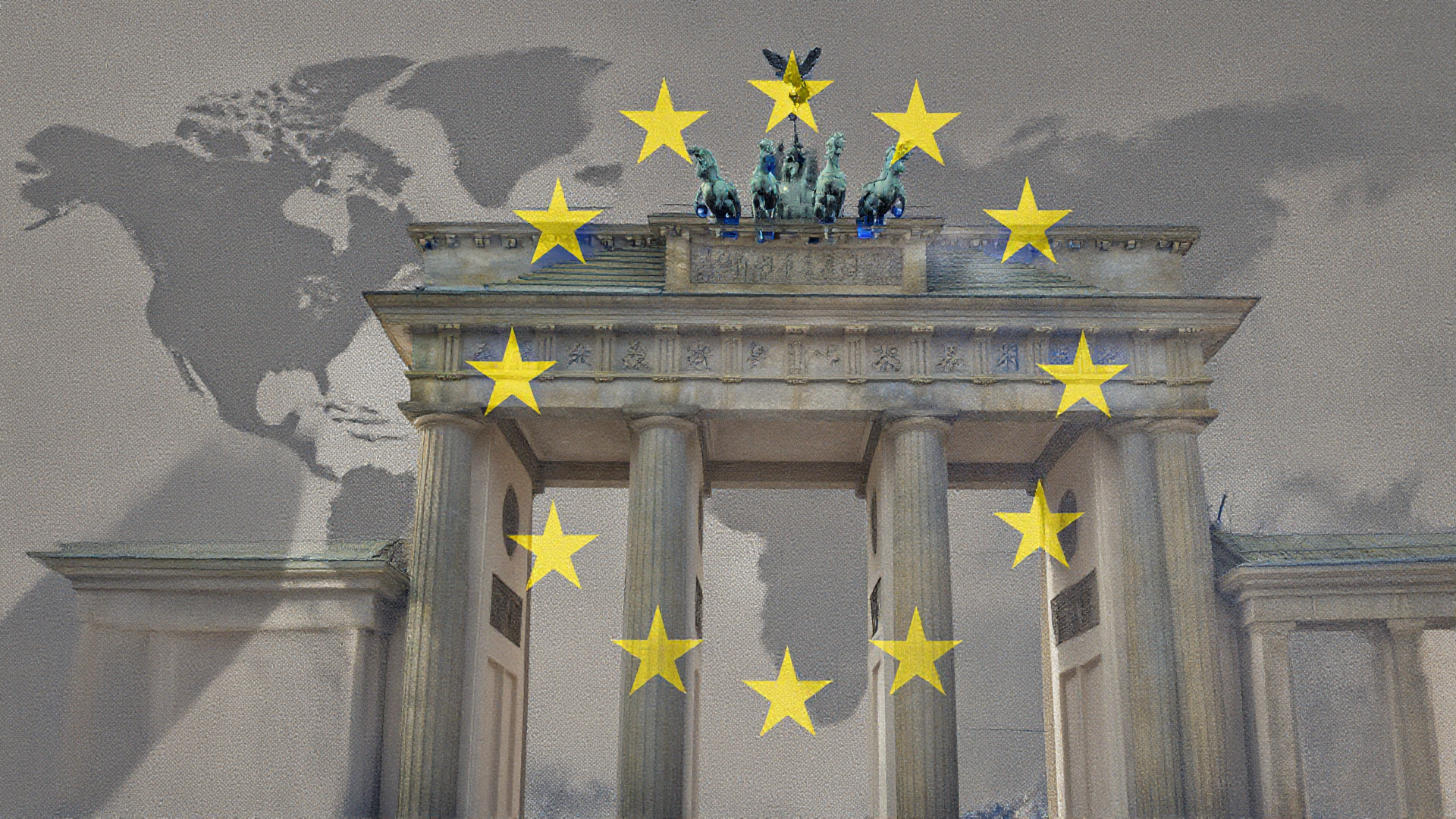
Speaking before the German parliament, Chancellor Friedrich Merz articulated a significant shift in European posture, asserting that the continent has found a vital sense of 'self-respect' in defending established international norms against rising global disorder. Merz's address underscored a collective European resolve hardening in the face of geopolitical volatility, including the ongoing conflict in Ukraine and recent trade friction with the United States.
Merz specifically highlighted that Europe would no longer acquiesce to economic intimidation, referencing the recent diplomatic standoff sparked by U.S. interest in Greenland. This unity, he suggested, demonstrated the EU's capacity to act swiftly and decisively when core interests are challenged, affirming that rules-based trade mechanisms remain viable despite current turbulence.
"We have been able to experience something of the joy of self-respect," Merz told lawmakers, framing the current global reorganization not just as a threat, but as an opportunity for actors prioritizing adherence to rules over arbitrary unilateral action. He noted that an increasing number of nations recognize the advantages of free and fair trade over purely self-interested economic pursuit.
The sentiment echoes recent declarations from other European capitals, including French President Emmanuel Macron's remarks at Davos regarding resistance to bullying, and European Commission President Ursula von der Leyen’s call for enhanced European independence. This coordination among key EU members suggests a concerted effort to project strength in an emerging world dominated by great power competition.
To bolster this autonomy, Merz advocated for accelerating internal EU reforms while simultaneously continuing to expand external trade partnerships, citing recent agreements with Mercosur and India as evidence of proactive engagement. He also maintained the importance of transatlantic security structures, calling for a stronger NATO presence within Europe while keeping lines of cooperation open with Washington.
Furthermore, the Chancellor forcefully rejected recent attempts to diminish the sacrifices made by European NATO allies, specifically addressing remarks questioning the commitment of European troops in Afghanistan. Merz countered these criticisms by citing the loss of 59 German soldiers during the nearly two-decade deployment, stating firmly that such contributions would not be belittled.
This moment appears to mark a maturation point for the EU bloc, moving beyond reactive defense to proactively shaping the global trade and security environment. The emphasis on shared values—rules over arbitrariness—is being positioned as Europe's core diplomatic and economic offering to a fragmented international system. (Source: Reporting adapted from Reuters coverage.)