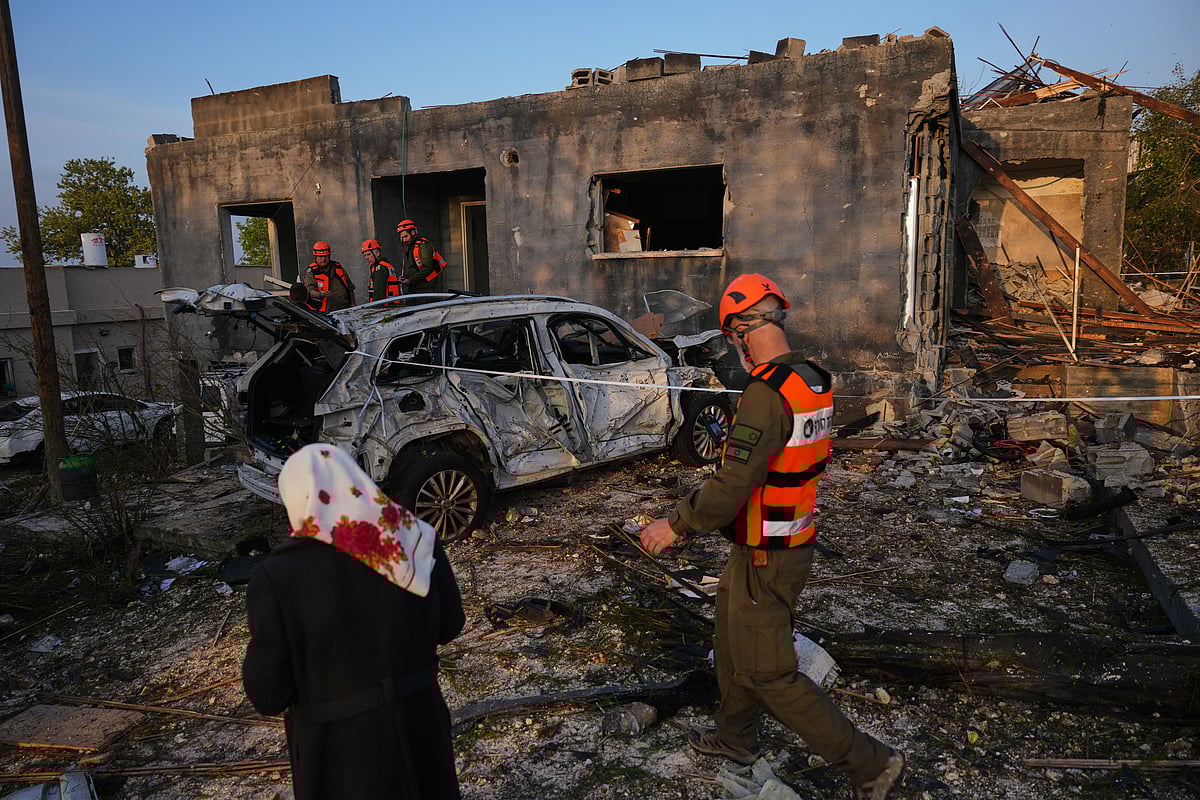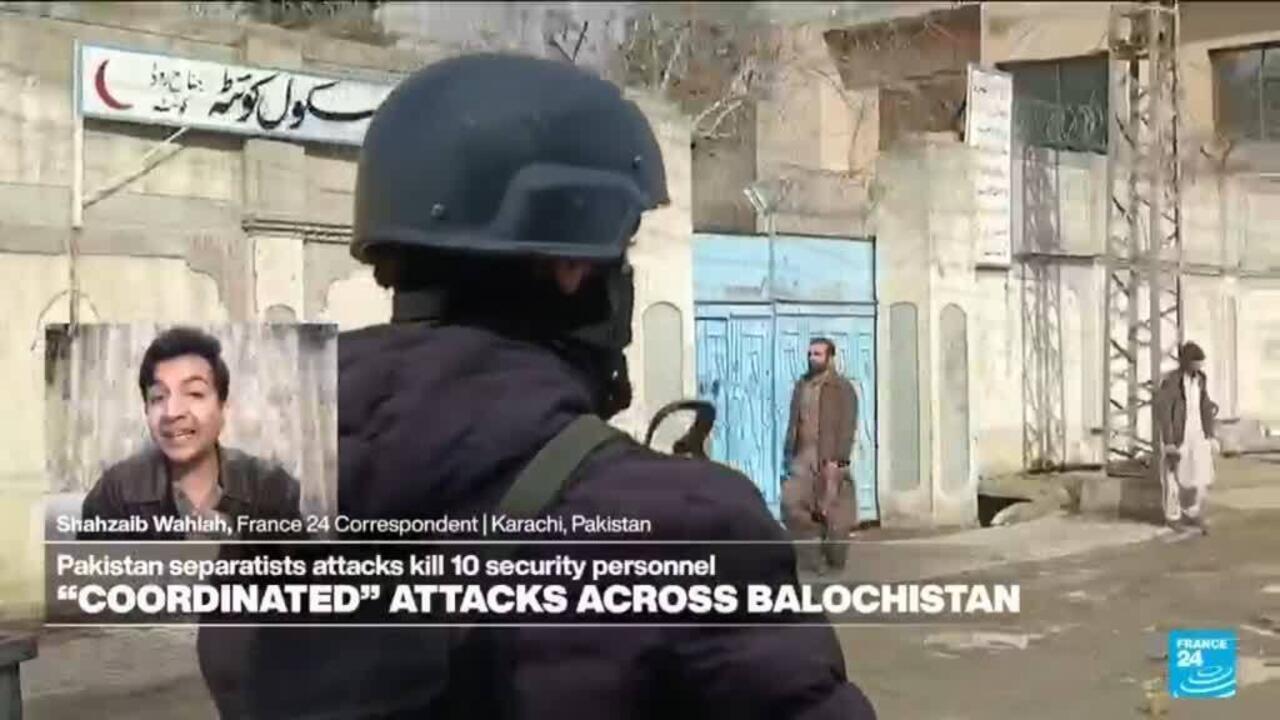
Militant attacks across Pakistan's southwestern Balochistan province on Saturday killed at least ten security personnel and eleven civilians, Pakistani officials confirmed. The banned separatist group, the Baloch Liberation Army (BLA), claimed responsibility for the synchronized assaults on security infrastructure and civilian targets. This escalation highlights ongoing instability in the region, a focal point for ethnic Baloch militant activity.
The BLA's claim of responsibility places renewed international attention on the protracted conflict in Balochistan, an area rich in natural gas and mineral resources. The group seeks greater autonomy or outright independence from the Pakistani state, citing historical grievances and economic marginalization.
France 24's correspondent Shahzaib Wahlah provided analysis on the nature of these coordinated strikes. Such operations often require significant logistical planning, suggesting a degree of operational capacity maintained by the BLA despite counter-insurgency efforts.
Security analysts note that attacks frequently target government installations, police facilities, and infrastructure projects, particularly those related to Chinese investment under the China-Pakistan Economic Corridor (CPEC). While the immediate report did not specify CPEC links, such targets are common in BLA operations.
Decades of insurgency have characterized the relationship between the Balochistan province and the central government in Islamabad. Militant groups argue that the benefits derived from local resources fail to adequately fund provincial development or benefit the local population.
The immediate security implication involves heightened vigilance across sensitive areas of Balochistan, likely leading to increased military presence and potential economic disruption. International stakeholders monitoring regional stability will observe Islamabad’s response closely.
This latest wave of violence underscores the complexity of maintaining economic development and security in Pakistan’s periphery. The sustained nature of the BLA’s activities suggests deep-rooted grievances that require more than purely kinetic solutions to resolve.