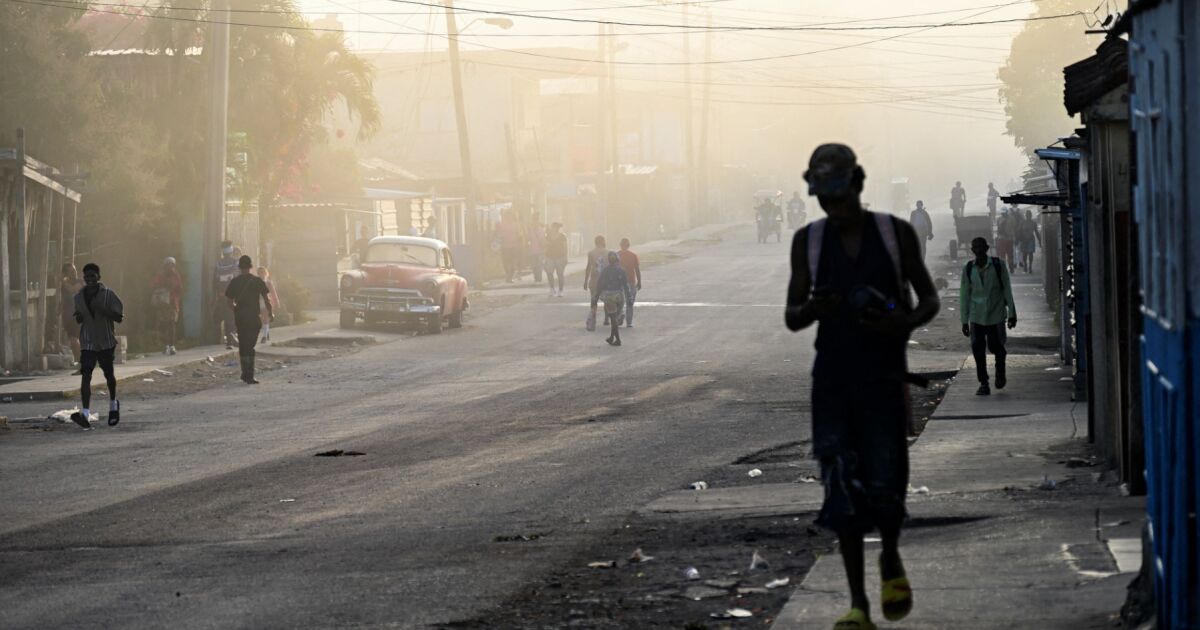
Violence erupted early Saturday morning in Morón, Cuba, when protesters attacked the local Communist Party headquarters. The incident occurred in the Ciego de Ávila province, approximately 460 kilometers southeast of Havana. Authorities detained five individuals following vandalism that included arson at the municipal committee site.
The official newspaper Invasor reported that the demonstration began peacefully before escalating into destruction. A smaller group of individuals reportedly pelted the building entrance with stones and ignited a fire using reception furniture on the street. Security forces intervened to contain the disturbance after the property sustained significant damage.
Cuban President Miguel Díaz-Canel addressed the unrest in a statement released on X on Saturday. He acknowledged the understandable frustration caused by prolonged power outages attributed to an alleged US energy blockade. Despite this recognition, the president warned that there would be no impunity for acts of violence and vandalism.
Local residents provided contrasting accounts to AFP regarding the scale and nature of the protest. Two anonymous inhabitants described the gathering as massive, stating that ordinary citizens could no longer endure the conditions. One resident noted that the municipality receives only one and a half hours of electricity per day.
Economic hardship appears to be a primary driver behind the civil unrest in the region. The same source indicated that all hotels in Morón remain closed due to a fuel crisis and a collapse in tourism. This shutdown has eliminated a major source of employment for the area's 70,000 inhabitants.
Social media footage circulated widely during the incident, capturing the assault on the government institution. The videos show flames consuming goods in the public street alongside the physical attack on the facility. Media reports confirmed one person suffered a fall while intoxicated and was transported to a hospital.
This event marks a significant escalation in public dissatisfaction with the island's infrastructure management. Previous protests have focused on food shortages, but targeting party infrastructure suggests deeper political grievances. The government typically responds to such disruptions with arrests and strict security measures.
International observers note that energy instability has plagued Cuba for several consecutive years. The shortage of fuel has cascaded into broader economic stagnation across multiple sectors. Regional analysts suggest the current situation mirrors similar crises seen in Venezuela and Nicaragua during their economic downturns.
The Cuban government faces a critical challenge in balancing social welfare with political stability. Restoring reliable power services remains the primary objective to mitigate further civil disorder. Authorities will likely increase surveillance in provincial capitals to prevent similar incidents.
Markets and diplomatic bodies are monitoring the situation for potential impacts on regional security. Continued unrest could affect foreign investment and tourism recovery efforts in the Caribbean. Investors will watch for policy shifts regarding energy infrastructure and private sector allowances. Mexico monitors these developments closely due to shared migration interests.