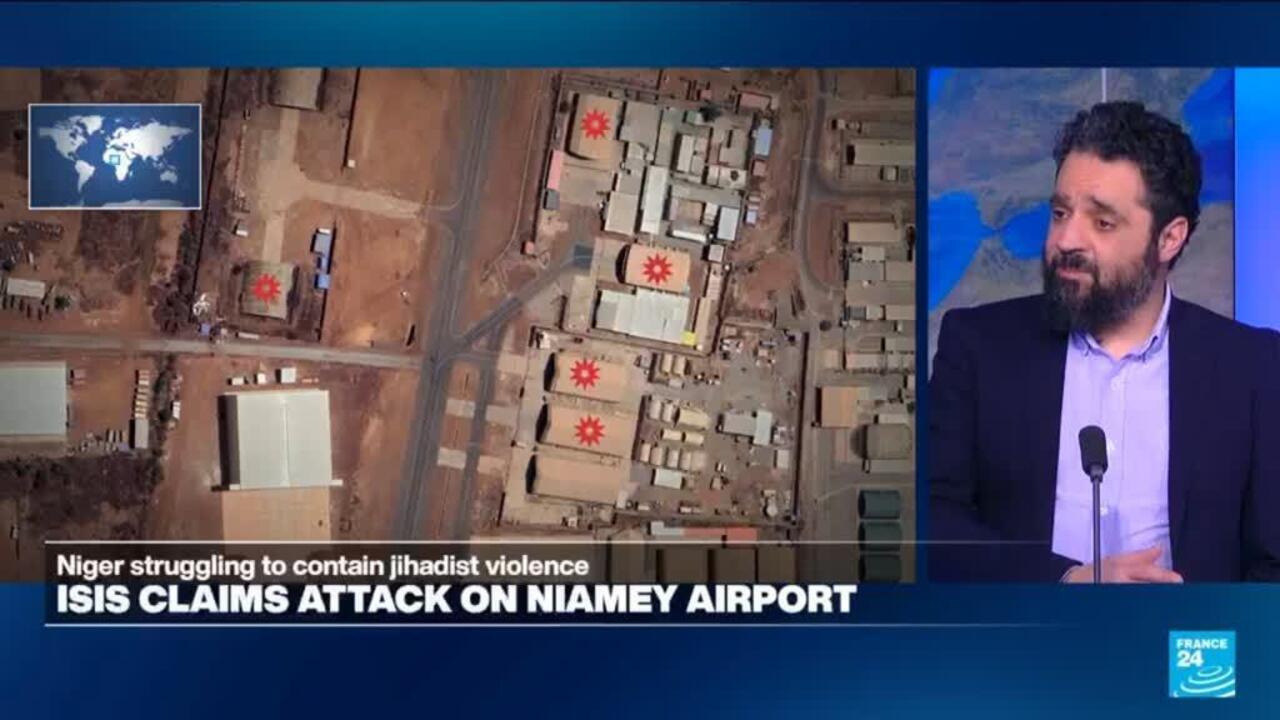
Militants engaged in heavy fighting at Niamey’s Base 101, located within the international airport perimeter, leaving four soldiers injured on February second. The sustained confrontation, lasting approximately two hours, underscores the persistent threat to critical infrastructure in Niger’s capital. This event immediately raises questions regarding the evolving operational capacity of regional extremist groups.
According to analysis provided by France 24’s Wassim Nasr, the targeted base is strategically sensitive, hosting both national forces and international partners. The presence of both Russian mercenaries and Italian troops at or near the facility adds a significant layer of geopolitical complexity to the security calculus in the Sahel.
Reports indicate that the attackers faced established drone defense systems operating at the base, suggesting a degree of planning intended to neutralize aerial surveillance capabilities. The nature of the assault implies that the militants possessed intelligence regarding base layout and defensive postures.
Evidence recovered from the site reportedly suggests involvement from multiple, previously distinct Islamic State (ISIS) branches active across the wider West African region. This indicates a potential consolidation or enhanced coordination among jihadist networks operating near key transit hubs.
The attack serves as a pressure point against the current security arrangements in Niger, which have seen shifting alliances following recent political instability. The ability of armed groups to strike the capital’s primary air facility tests the effectiveness of localized counter-terrorism measures.
For international observers, particularly those focused on the flow of military and economic support in the Sahel, the incident underscores the high risk associated with foreign military deployments in the area. The engagement will likely prompt a review of force protection protocols for all involved nations.
Moving forward, the incident necessitates a detailed assessment of intelligence sharing and operational synchronization between the diverse security actors present in Niger. The continuation of such high-profile attacks could deter foreign investment and complicate diplomatic efforts to stabilize the nation.