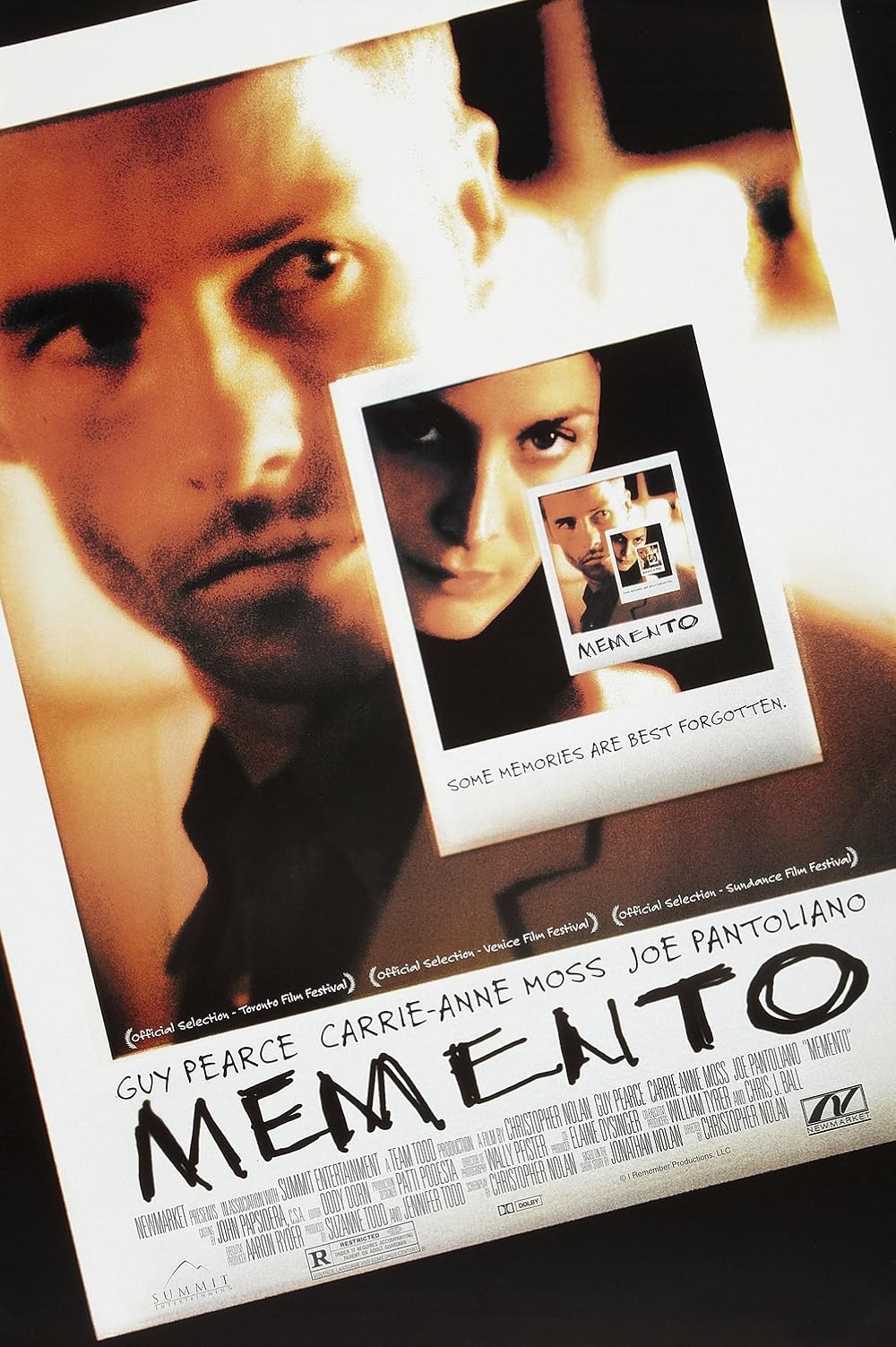
Christopher Nolan’s breakout film,Memento, marks its 25th anniversary in North America this month. The movie not only cemented Nolan’s status as a major Hollywood director but also became a cinematic touchstone, celebrated for its innovative narrative structure and deep philosophical inquiries.
Origins and Production
The concept forMementowas born during a road trip Nolan took with his brother, Jonathan Nolan. Jonathan pitched the idea of a man suffering from short-term memory loss who is attempting to track down and avenge his wife's killer while unable to form new memories. Intrigued, Nolan encouraged his brother to develop the draft, which eventually evolved into the short storyMemento Mori.
When writing the screenplay, Nolan decided to employ a reverse-chronological structure to mirror the protagonist's physiological limitations. According toArs Technica, Nolan once described the film as the inverse of Jorge Luis Borges’ short storyFunes the Memorious, which follows a man with hyperthymesia who is unable to forget a single detail. In contrast,Mementofocuses on an individual incapable of retaining any memory at all.
After the brothers spent a year refining the script, Newmarket Films invested $4.5 million in the production. Although Nolan initially hoped to cast Brad Pitt in the lead role, Pitt declined the offer. Ultimately, Nolan chose Guy Pearce, believing his range was perfectly suited for such a complex character. The female lead went to Carrie-Anne Moss, who had recently gained acclaim forThe Matrix; she also recommended her co-star Joe Pantoliano for a pivotal role in the film.
Over the past 25 years, Nolan has consistently proven his ability to balance commercial appeal with complex storytelling. FromMementoonward, he has remained dedicated to blending visual spectacle with existential philosophy—a creative signature that has defined his entire career.