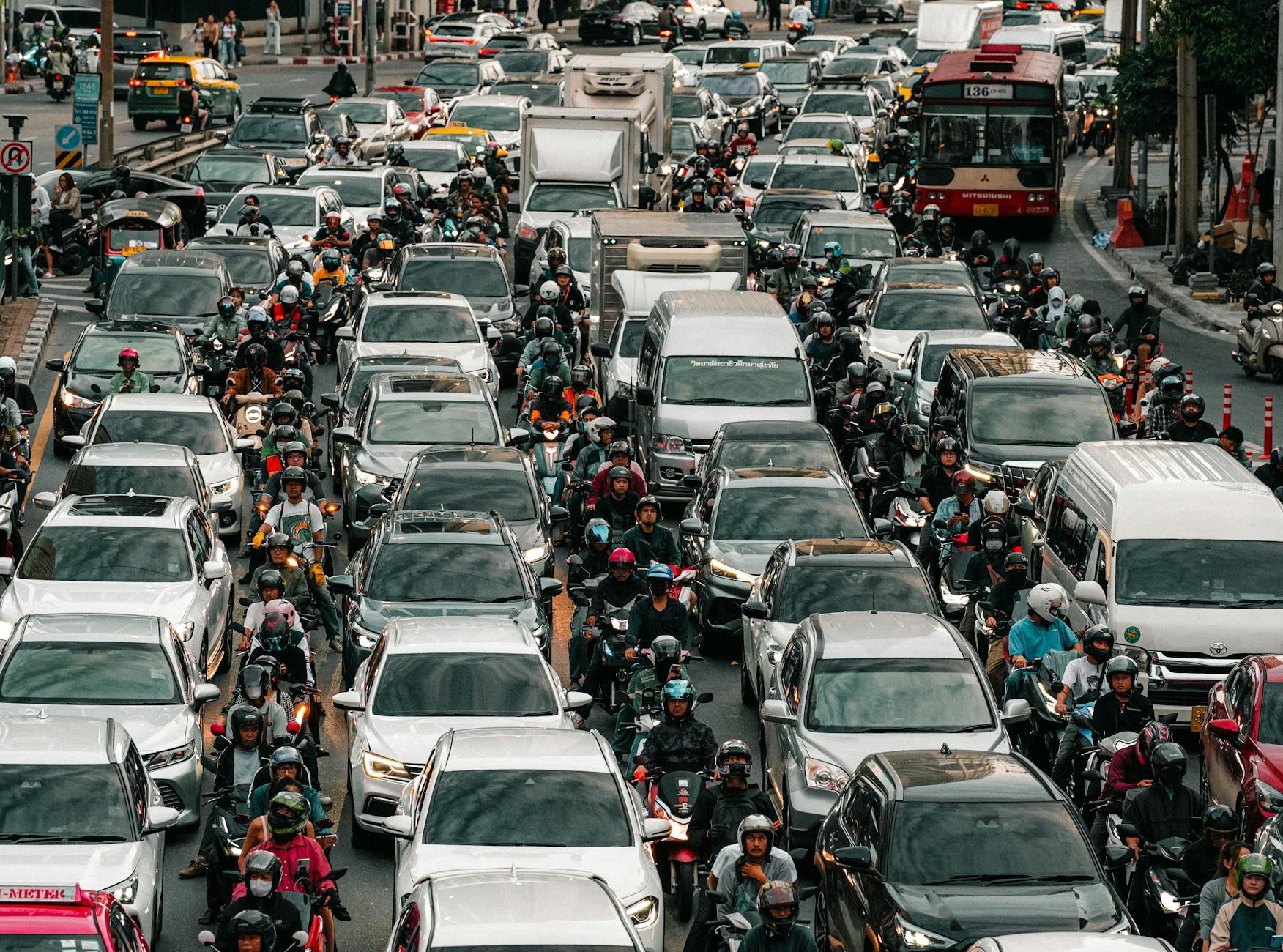
Researchers at The University of Manchester have developed a new method to measure how traffic-related heat impacts urban environments. By integrating a physics-based module into the Community Earth System Model (CESM), scientists can now track how heat from engines, exhausts, and braking systems influences local temperatures.
Traditionally, urban climate models focused largely on building materials and land surfaces. This new research, published in the Journal of Advances in Modeling Earth Systems, shifts that focus to the thermal footprint of active transport.
“Research on urban heat has traditionally focused on buildings, materials and land surfaces,” said Dr. Zhonghua Zheng, lead author and lecturer in Data Science & Environmental Analytics at the university. “However, the direct heat produced by vehicles—from engines, exhausts and braking—has received far less attention in large-scale climate models.”
Quantifying the urban heat effect
To test the model, the team used traffic data from Manchester, UK, and Toulouse, France. In Manchester, the study found that traffic heat increased simulated air temperatures by approximately 0.16°C in the summer and 0.35°C in the winter.
While these figures may seem modest, researchers note they carry significant weight during extreme weather. During the UK’s July 2022 heatwave, the model indicated that traffic heat pushed “feels like” temperatures above dangerous thresholds for extended periods.
The heat does not stay on the road. The study suggests that thermal energy released at street level transfers into nearby buildings, directly increasing the demand for air conditioning systems during the summer months.
Beyond current vehicle impact, the model allows researchers to distinguish between different engine types, including petrol, diesel, hybrid, and electric vehicles. This capability provides urban planners with a tool to simulate how shifting to cleaner transport might affect future urban climate resilience.
“We would like to highlight the importance of considering transport systems when planning for climate adaptation, urban cooling strategies and net-zero transitions,” said Yuan Sun, a PhD researcher and the paper’s first author.
The findings offer cities a new metric for evaluating how transport policy influences the liveability of urban centers. As municipalities look to mitigate the effects of rising global temperatures, this model provides a clearer picture of how moving parts of the city contribute to the heat trapped within it.