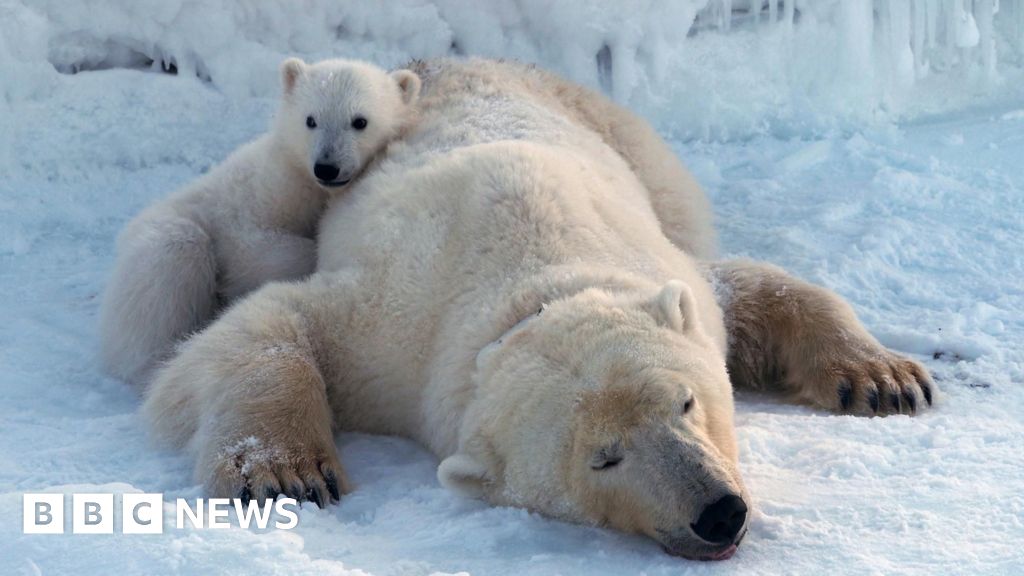
Polar bears in the Norwegian Arctic archipelago of Svalbard have reportedly become measurably fatter and healthier since the early 1990s, despite a steady decline in the sea ice they rely upon for hunting seals. Researchers from the Norwegian Polar Institute measured 770 adult bears during the period 1992 to 2019, finding a significant increase in body mass, according to data published in Scientific Reports.
This observed improvement in body condition is puzzling because the loss of sea ice, which serves as the essential platform for hunting blubber-rich seals, has been profound in Svalbard. During the study's timeframe, the region experienced an increase of almost 100 ice-free days annually, a direct consequence of rising global temperatures.
Lead researcher Dr. Jon Aars suggested that the Svalbard population has adapted by increasing consumption of alternative, land-based prey, specifically noting the increased availability of walruses. Walrus populations have rebounded significantly since they received official protection in Norway during the 1950s, offering bears a new source of high-fat sustenance.
Another potential factor involves hunting efficiency; Dr. Aars posited that reduced sea ice may cause seals to congregate in smaller, remaining ice patches, making them easier targets for bears. Furthermore, experts suggest the population may still be recovering from intense historical hunting pressure, which ceased with international protections introduced in the 1970s.
However, researchers caution that this positive trend is likely temporary, as continued ice loss will eventually force bears to expend more energy traveling greater distances to find food. Dr. John Whiteman, chief research scientist at Polar Bears International, noted that while body condition improved, other research indicated reduced cub and subadult female survival linked to more ice-free days.
This regional finding contrasts with trends observed elsewhere in the Arctic, such as Canada’s Western Hudson Bay, where declining polar bear populations have been directly attributed to warming temperatures. Dr. Whiteman emphasized that while the short-term picture in Svalbard is region-specific, the long-term trajectory remains dependent on sea ice availability.
The broader implication suggests complex, regional ecological responses to climate change, although the fundamental requirement for sea ice survival remains unchanged for the species globally.