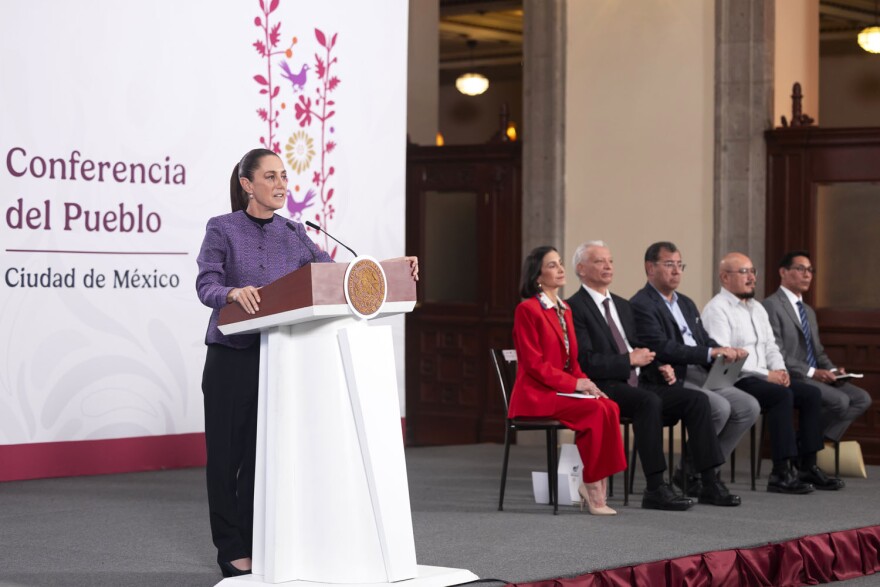
The Claudia Sheinbaum Pardo administration is preparing a pivot in its natural gas extraction policy that includes the potential return of fracking. The goal of this move is to boost domestic production and reduce reliance on foreign imports.
This shift in direction contradicts the policies of Andrés Manuel López Obrador’s administration, which had promised to eliminate hydraulic fracturing. Alberto Verdusco and Fernando Guarneros, specialists at Expansión, note that this process represents the central paradox of the country's new energy pivot.
Global tensions and market adjustments
The energy landscape is being shaped by the recent escalation of tensions in the Middle East. U.S. President Donald Trump has ordered a naval blockade in the Strait of Hormuz following the collapse of diplomatic talks with Iran. This development is impacting the stability of global hydrocarbon markets.
In the domestic market, the fuel sector has reiterated its willingness to accept a price cap of 28.28 pesos per liter for diesel. The industry is seeking to establish this ceiling to provide greater certainty for fuel distribution.
In terms of foreign trade, the United States has eliminated the tax on aluminum containers. This measure is set to benefit the production and sale of canned beer within the American market.
Finally, Mexico City is accelerating its infrastructure plans in preparation for the 2026 World Cup. Mobility programs, including the expansion of the Ecobici network, are showing steady growth across the capital.