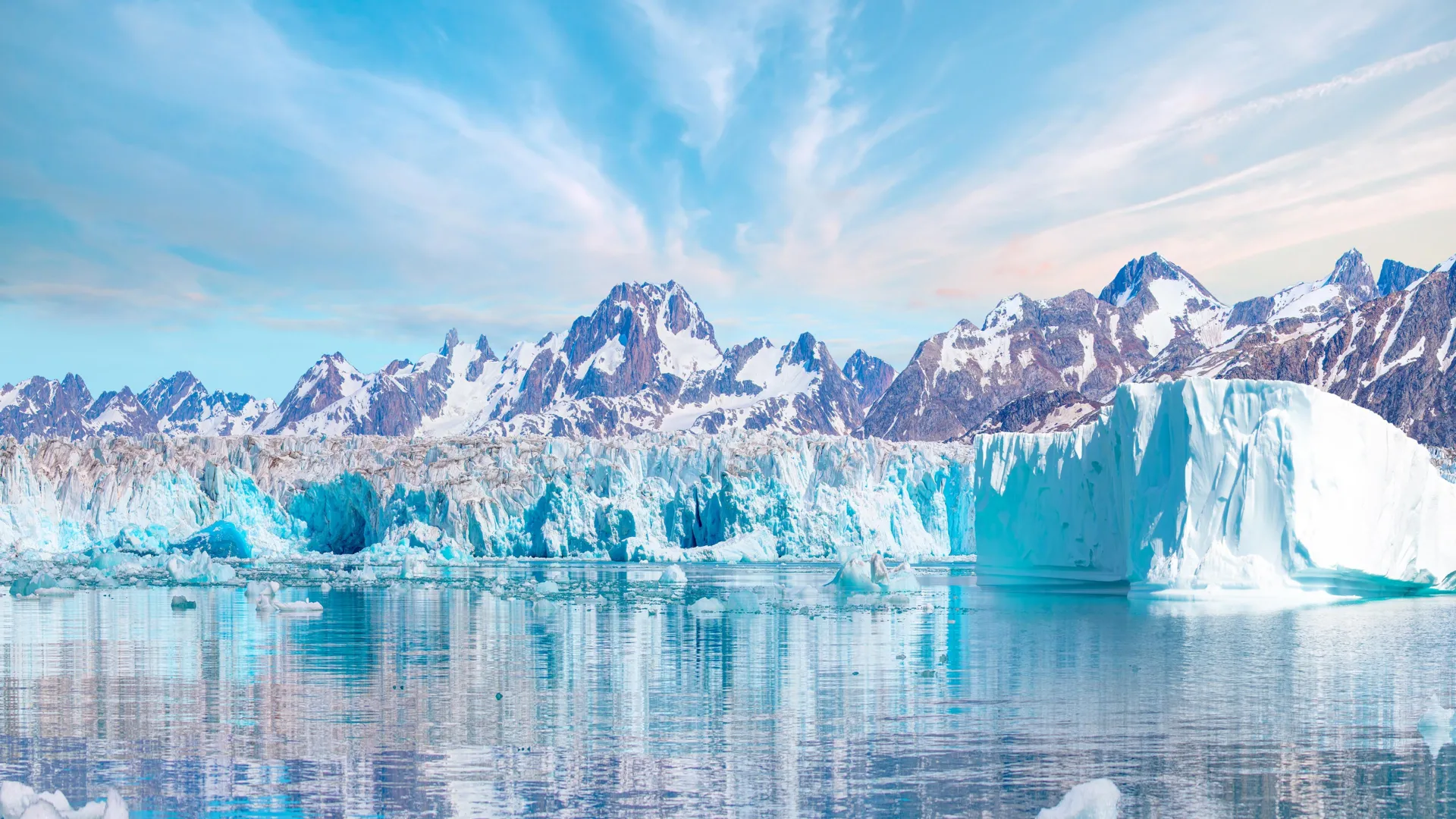
Scientists from the University of Bergen have identified massive swirling structures deep within the Greenland ice sheet. New research suggests these plumes form through thermal convection, challenging previous assumptions about ice rigidity. The findings were published on March 14, 2026, according to ScienceDaily reporting on the study.
These formations resemble rising plumes found in boiling water, yet they occur within frozen solid matter under extreme pressure. Researchers utilized mathematical models similar to those tracking continental drift to explain the physical phenomenon. The study indicates that deep ice in northern Greenland undergoes slow, circulating motion driven by temperature differences.
Analysis suggests the deep ice could be 10 times softer than scientists previously believed based on standard models. This softness affects how the ice sheet flows but does not automatically accelerate melting rates in the immediate future. Andreas Born, a professor at the Bjerknes Centre for Climate Research, noted the discovery is wild yet fascinating.
Lead author Robert Law explained that ice is at least 1 million times softer than the Earth's mantle in terms of viscosity. He described the convection process as a freak of nature that defies typical intuition about solid materials. The findings appear in the journal The Cryosphere, where editors selected it as a highlight paper for scientific importance.
This research addresses a decade-long mystery regarding strange plume-like structures beneath the surface that puzzled experts. Understanding these hidden movements helps refine predictions about the future behavior of the Greenland ice sheet significantly. Previous models often treated the deep ice as more static than current evidence suggests regarding internal dynamics and flow. These updates are critical for accurate long-term forecasting of environmental changes.
Improved understanding of ice physics offers a major way to reduce uncertainties in future climate models used by governments. Researchers emphasize that softer ice does not necessarily mean higher sea level rise projections for coastal populations. Further studies are needed to isolate the specific impacts on melting rates and mass balance. These models influence economic planning for flood defenses and infrastructure in vulnerable regions globally, affecting insurance markets.
Greenland often appears in global headlines due to mining interests and strategic geopolitical positioning in the Arctic. Law highlighted that the ice sheet is over 1000 years old and supports a permanent population at its margins. More knowledge about hidden processes prepares the world for changes affecting coastlines globally and economically. Access to resources within the territory remains a point of international negotiation and interest among nations.
The study involved collaboration between the University of Bergen, NASA Goddard Space Flight Center, and ETH Zurich. The University of Oxford also contributed to the analysis of the plume-like features detected deep within the ice. Their joint effort examined whether convection explains the softness and movement observed in the region. Data sharing between these institutions allowed for more robust verification of the thermal models used.
The team examined conditions conducive to convection within the Greenland Ice Sheet to understand flow dynamics accurately. Results indicate these features are likely created by thermal convection driven by internal heat sources. Better projections of sea level rise remain a primary goal for the scientific community and policymakers. Continued monitoring will be essential to track how these internal shifts respond to surface warming trends over time.