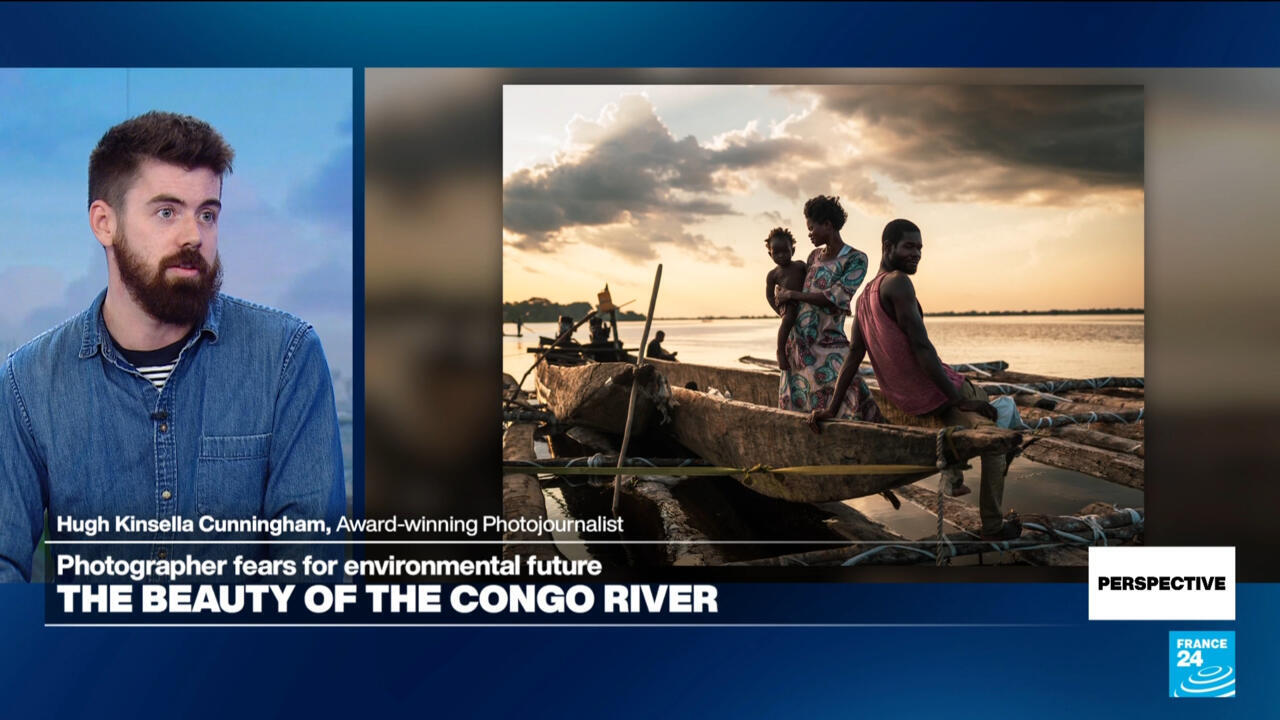
Photojournalist Hugh Kinsella Cunningham recently presented his new body of work, warning that the Congo River Basin is approaching a critical environmental threshold. The exhibition, currently on display at the Galerie Angalia in Paris, serves as a platform to discuss the region's escalating significance in climate mitigation efforts.
Cunningham spent several years documenting the vast jungle and ecosystem spanning Central Africa for this project. He asserts that the basin's ecological health directly impacts millions of people residing across the nine countries it traverses. This sustained water supply renders the area geopolitically and environmentally crucial on a global scale.
Speaking with FRANCE 24 regarding the collection, Cunningham framed the photographic series as an urgent call to action. The visual documentation intends to convey the immense stakes involved as environmental degradation continues to challenge regional stability. The basin functions as a massive carbon sink and biodiversity reservoir.
While specific data on the degradation rate were not provided in the initial report, the photographer's emphasis reflects growing international concern over deforestation and resource extraction in the region. These activities threaten the basin's capacity to regulate regional and global climate patterns.
The urgency conveyed by the exhibition appears timed to coincide with renewed international focus on securing natural carbon sinks outside of the Amazon. The Congo Basin represents the second-largest rainforest globally, making its stability a key factor in achieving international temperature targets.
This visual narrative places Central Africa at the center of the global climate security discussion, moving beyond localized conservation efforts. The implications extend to international finance, commodity supply chains, and migration patterns across the continent.
Future coverage will likely focus on policy responses from regional governments and multilateral organizations aiming to stabilize the basin. The exhibition serves as a marker against which future environmental commitments in the region will be measured by global observers.