Japan retrieved sediment rich in rare earth elements from an ocean depth of 6,000 meters during a recent test mission, the government announced on Monday. This operation represents a significant step toward bolstering economic security by developing domestic sources for minerals currently dominated by Chinese supply. Officials characterized the retrieval as a meaningful achievement for both security and maritime development endeavors.
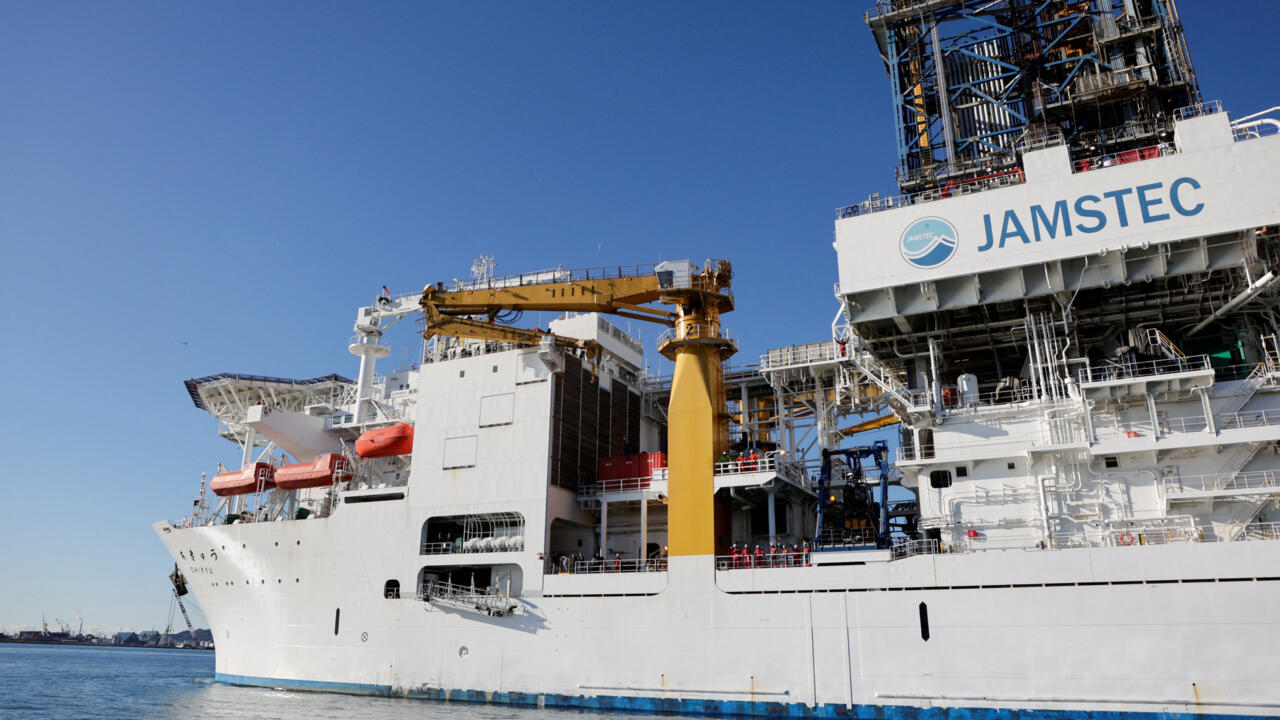
The sample was collected by the deep-sea scientific drilling vessel Chikyu, which operated in the waters surrounding the remote Pacific island of Minami Torishima. This area is estimated by the Nikkei business daily to hold over 16 million tons of rare earths, positioning it as the third-largest known reserve globally. The deposits reportedly contain vast quantities of dysprosium and yttrium, essential for high-strength magnets and lasers.
The drive for domestic sourcing intensifies amid heightened geopolitical tensions between Tokyo and Beijing. China, which controls the vast majority of global rare earth mining and refining output, has previously restricted exports of 'dual-use' items to Japan following political disagreements. This action fueled concerns in Tokyo regarding potential supply chain choke points for strategic materials.
Rare earths, comprising seventeen distinct metals, are fundamental components in modern defense systems, electric vehicles, and advanced electronics. Securing a consistent, non-Chinese supply chain is viewed by analysts as a key strategic objective for the current administration. Takahiro Kamisuna of The International Institute for Strategic Studies noted that successful extraction would provide Japan with a critical domestic supply for key industries.
Analysts suggest that establishing independent extraction capabilities would grant the Japanese government significant strategic leverage in future trade negotiations. China currently supplies nearly two-thirds of global rare earth mining production and 92% of refined output, according to the International Energy Agency data.
The immediate next step involves a detailed analysis of the retrieved sediment to quantify the concentration of rare earths and assess the technical feasibility of sustained extraction at these extreme depths. The success of this initial operation will dictate the scale and timeline of subsequent commercial exploration efforts in the region.
This deep-sea venture underscores a broader global trend among developed nations to diversify critical mineral sourcing away from concentrated geopolitical risks. The long-term economic implications hinge on transforming these deep-sea scientific findings into reliable, cost-effective industrial supply lines.