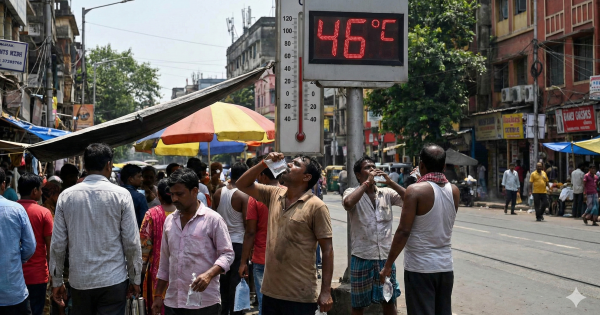
Recent scientific reports from Nature Sustainability and The Lancet Countdown indicate that the planet faces unprecedented vulnerability due to accelerating climate impacts, transforming the climate crisis from a future threat into an immediate health and economic emergency.
Research utilizing novel heating and cooling demand data projects that the population exposed to extreme heat will double to nearly 3.8 billion by 2050 under a 2.0°C warming scenario, up from 1.54 billion in 2010, according to the study by Lizana et al. in Nature Sustainability.
This exposure will not be uniform, with significant 'hot spots' identified in populous, developing nations including India, Nigeria, Indonesia, Pakistan, and Bangladesh, which are simultaneously less equipped to manage the resulting energy and health crises.
Experts, such as climate modeling scientist Dr. Luke Parsons, note that these nations face increased social vulnerability as rising cooling demands strain electrical grids, potentially creating a feedback loop of higher energy consumption and increased emissions.
Complementing future projections, The Lancet Countdown 2025 report confirms tangible health costs, showing heat-related mortality surged 63% compared to 1990s averages, while wildfire smoke accounted for a record 154,000 deaths in 2024 alone.
Furthermore, the economic toll is substantial, with previous Lancet Countdown Latin America data showing heat-related costs of approximately $855 million annually between 2015 and 2024, alongside $52 billion in lost labor productivity in 2024.
While adaptation measures are necessary, authors like Dr. Jesus Lizana stress that mitigation remains paramount, arguing that sustainable, net-zero development is the only established pathway to reverse these trends, urging policymakers to regain momentum on decarbonization goals.
Analysis suggests a critical disconnect between scientific evidence and political action, evidenced by reported backsliding on climate commitments, which analysts warn renders even advanced resilience strategies insufficient without drastic emissions cuts.