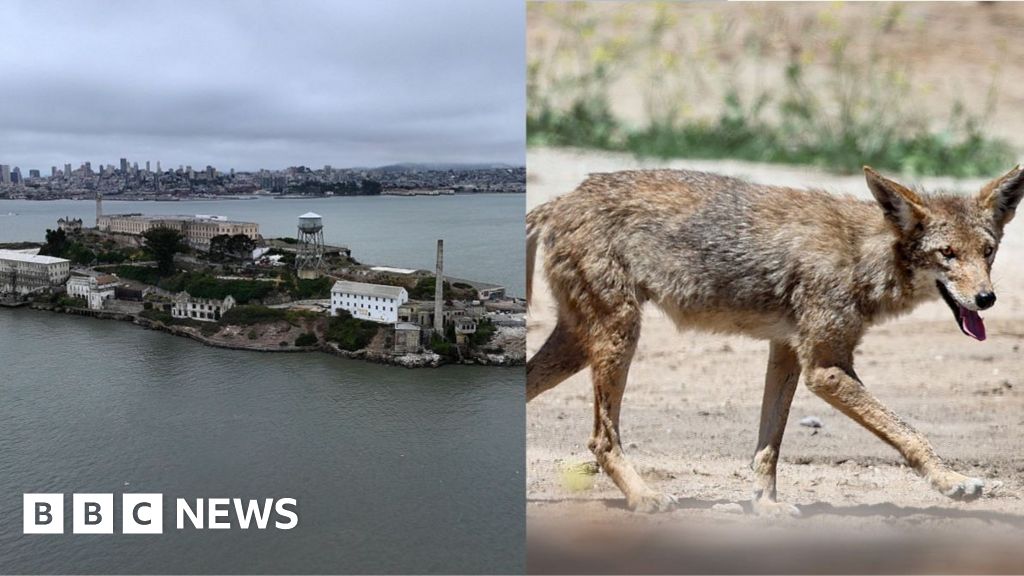
A lone coyote that traversed more than one mile across San Francisco Bay to reach Alcatraz Island is currently being monitored by federal authorities to determine its long-term viability on the restricted landmass. The Golden Gate National Recreation Area (GGNRA) confirmed the presence of the animal, marking the first documented case since the island transferred to the National Park Service in 1972, according to reports.
Park biologists are actively assessing how the canine is sustaining itself on the 22-acre island, particularly noting the absence of reliable freshwater sources, a critical factor for survival. The primary concern centers on potential impacts to the island's protected seabird breeding colony, which is currently undergoing its sensitive nesting period from February through September.
A local tour guide, Aidan Moore, who shared footage of the coyote's arrival, stated that the animal’s continued residency depends entirely on its conduct and its ability to secure avian prey. Naturalists suggest the animal may be hydrating from rainwater or garden sources, though its long-term caloric intake from local birds remains uncertain.
Wildlife experts suggest the coyote may have migrated due to increasing territorial pressure on the mainland, where the Bay Area's growing density is pushing the adaptable species into new ranges. However, Alcatraz presents a uniquely small territory, which could ultimately force the animal to seek return to the mainland, according to naturalist Janet Kessler.
The GGNRA emphasized that the coyote's presence does not currently impede public access to the former federal penitentiary site. However, organizations like Project Coyote have voiced concerns that high visitor traffic could lead to human-wildlife conflict, often stemming from unintentional feeding.
Evidence of the coyote’s survival, including partially consumed birds and scat samples, has been collected for DNA testing to better understand its origins. Authorities are managing the situation cautiously, balancing conservation mandates for the seabirds against the welfare of the resourceful, albeit misplaced, mammal.
The situation highlights the expanding ecological frontier in the densely populated San Francisco Bay Area, where urbanization is increasingly forcing native wildlife into unusual habitats. The next steps will likely involve a defined management protocol should the coyote fail to thrive autonomously or begin preying excessively on protected species.