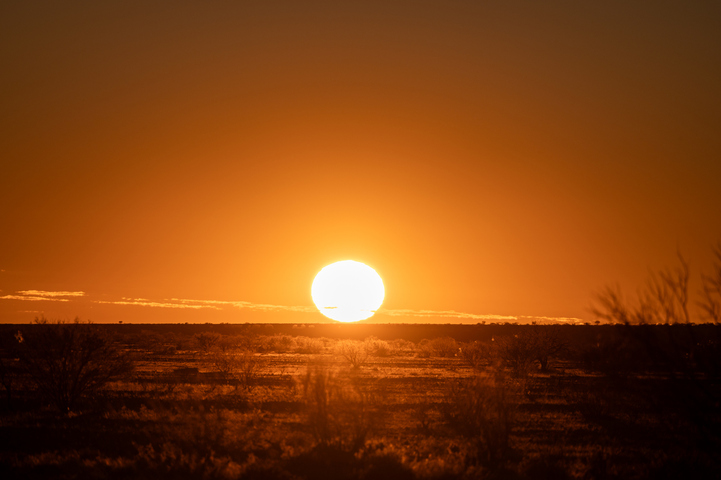
Two South Australian localities, Andamooka and Port Augusta, registered maximum temperatures of 50.0°C over the past forty-eight hours as a severe, week-long heatwave continues across southeastern Australia, according to reports from Weatherzone on January 30, 2026.
This sustained extreme heat is scientifically linked to a 'heat dome,' a meteorological phenomenon where a high-pressure system traps hot air near the surface, intensifying temperatures through subsidence warming. Such prolonged events stress regional infrastructure and agricultural output across affected states.
The 50.0°C reading at Andamooka on Thursday, and again at Port Augusta on Friday, represents the eighth and ninth instances of 50°C officially recorded in Australia's history. Prior to this week, the last station to surpass this mark was in 2022, highlighting the significance of this current thermal event.
Historically, South Australia had only officially registered 50°C on two occasions, both occurring in Oodnadatta in January 1960. The current heat event saw twelve separate weather stations across New South Wales and South Australia exceed 49°C between Monday and Friday, indicating a broad area of thermal stress.
Official meteorological reporting, managed by the Bureau of Meteorology, relies on standardized measurements taken within a Stevenson Screen at 1.2 meters above ground level to ensure international consistency. This contrasts with non-official readings, which can be inflated by direct solar radiation or heat absorption from nearby structures.
From a broader economic perspective, sustained extreme heat events impact energy grid stability, increase cooling demands, and pose significant risks to commodity production, particularly in the agricultural sector of South Australia and New South Wales.
Analysts suggest that as climate patterns continue to shift, the frequency of these high-intensity, persistent thermal events may increase, requiring greater investment in climate resilience for regional infrastructure and water management systems.