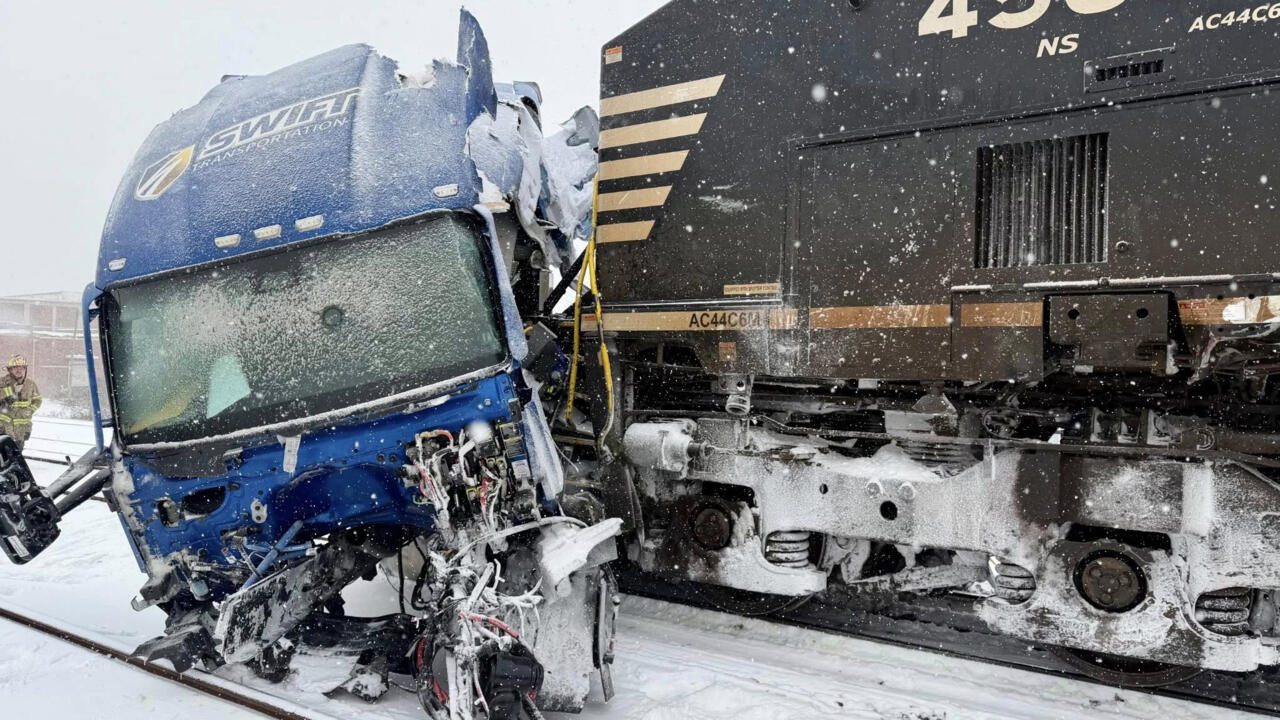
A potent winter storm is currently disrupting travel and commerce across the southern United States, pushing dangerous, subzero temperatures into regions unaccustomed to such deep freezes, according to reports Sunday. This latest weather event compounds recovery efforts following a monster storm approximately one week ago that claimed more than 100 lives across the nation. Heavy snow accumulation was reported Saturday across North Carolina and neighboring states, prompting officials to strongly advise residents against using roadways.
Winter storm warnings remain active for all of North and South Carolina, along with parts of Georgia, eastern Tennessee, Kentucky, and southern Virginia. North Carolina’s highway patrol documented 750 vehicle accidents on Saturday alone as the ice created treacherous driving conditions. Specific locations noted significant accumulation, including 14.5 inches of snow recorded in Faust, North Carolina, as reported by meteorological services.
The National Weather Service cautioned that travel was "Treacherous and Potentially Life-Threatening" in areas like Cape Carteret, North Carolina, where high winds caused snow to blow horizontally. The economic disruption extended to major logistics hubs, with Charlotte Douglas International Airport canceling over 1,800 flights for Saturday and Sunday combined. Atlanta's Hartsfield-Jackson International, the world's busiest airport, also reported over 600 cancellations on Saturday.
Geopolitical and economic operations are also facing setbacks, as evidenced by NASA postponing a critical fueling test for its 322-foot rocket at Cape Canaveral, Florida. This delay is anticipated to push back the planned manned Moon fly-by mission scheduled for later this month by at least several days. The intense cold surge is projected to extend freezing temperatures toward South Florida by Sunday morning, according to the National Weather Service analysis.
Infrastructure stability is a growing concern, with poweroutage.us data indicating approximately 156,000 customers remained without electricity early Sunday, predominantly in the Deep South. Mississippi, Tennessee, and Louisiana are reportedly the hardest-hit states regarding power outages. In Mississippi, Governor Tate Reeves confirmed the mobilization of US Army Corps of Engineers support for generator installation at vital sites, alongside the opening of 79 warming centers.
Coastal areas are also vulnerable to the severe conditions; North Carolina's National Park Service announced the closure of Outer Banks campgrounds and certain beaches due to threats against oceanfront structures. The intense nature of this coastal cyclone, bringing heavy snow and high winds, underscores the fragility of infrastructure in regions not built to withstand sustained arctic incursions.