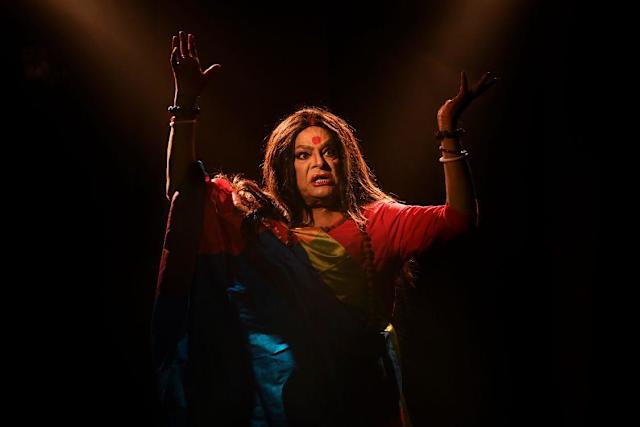
Chapal Bhaduri, once the reigning star of Bengal’s rural theatre circuit, is the subject of a new biography that documents his transition from a celebrated stage queen to a solitary figure in his twilight years. InChapal Rani: The Last Queen of Bengal, author Sandip Roy examines how Bhaduri became the face ofjatra, a traditional open-air theatre form where men played female roles to massive, fervent crowds.
Born in 1939 to a stage actress, Bhaduri entered the theatre at 16. He quickly gained fame for his ability to embody queens, goddesses, and courtesans with a grace that transcended mere caricature. "Femininity was always a part of me," Bhaduri said of his craft.
A disappearing tradition
For decades,jatrarelied on male actors known aspurush ranis. While these performers were once the heartbeat of rural entertainment, the arrival of women on stage in the mid-20th century rendered the tradition obsolete. Audience tastes shifted, and the very convention that had once sustained Bhaduri’s career began to unravel.
Roy writes that as the form lost its foothold, the rejection of male performers became visceral. In one instance, Bhaduri was booed off stage and pelted with a clay cup by an audience that no longer accepted his presence. While many of his peers fell into poverty or died by suicide, Bhaduri survived through odd jobs and occasional film roles arranged by directors like Kaushik Ganguly.
Despite his fame, Bhaduri’s personal life remained defined by the social constraints of his time. He did not publicly identify as gay, though he maintained a long-term relationship that spanned three decades. He remained an enigma to the public, often dressing in traditional male attire off-stage and resisting labels like "third gender" later in life.
"He was a queer survivor," Roy notes. While the modern LGBTQ+ movement has recently embraced Bhaduri as a "fairy godmother," the performer himself often avoided such contemporary political definitions.
Today, Bhaduri lives in a retirement facility near his childhood home. His story serves as a record of a time when gender was fluid on the stage, even as the society surrounding it remained rigid. The biography serves as a final archival effort to preserve the memory of an artist who spent over sixty years crafting illusions that once rivaled the reach of cinema.