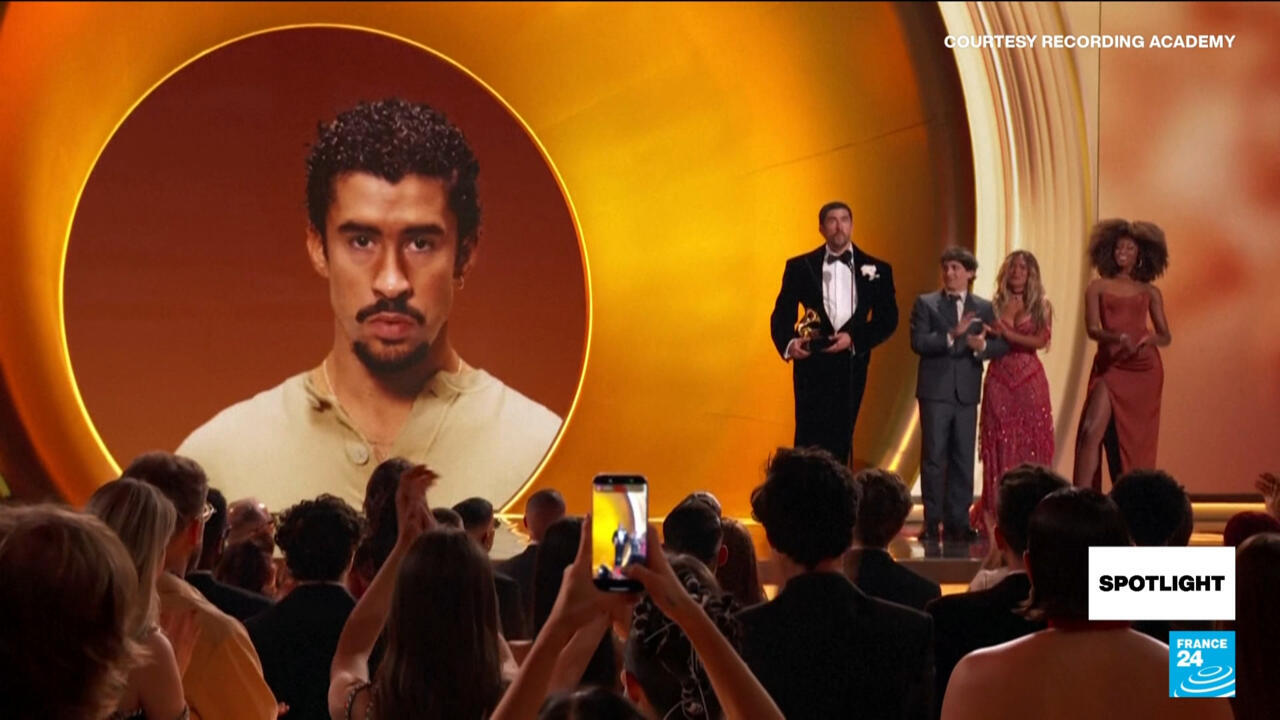
Multiple high-profile artists leveraged their platform at the annual Grammy Awards ceremony to publicly condemn recent enforcement actions undertaken by U.S. Immigration and Customs Enforcement (ICE). The protests manifested through visible messaging, such as 'ICE OUT' badges worn by recipients, and direct statements during acceptance speeches on Sunday, according to reports.
Puerto Rican artist Bad Bunny explicitly called for the removal of ICE while accepting an award for his album, stating that the individuals targeted by enforcement actions are humans and Americans, not 'savages' or 'aliens.' This vocal opposition surfaces as federal agencies increase scrutiny, with Homeland Security Secretary Kristi Noem reportedly warning of heightened federal agent presence at Bad Bunny’s upcoming Super Bowl performance.
Billie Eilish also contributed to the critique, using her time on stage to denounce the agency, adding that illegal status does not apply on 'stolen land.' The celebrity pushback aligns with broader civil unrest and protests that have intensified across several U.S. cities following fatal shootings involving federal agents and high-profile detentions, such as that of five-year-old Liam Conejo Ramos and his father.
Damian Kulash, lead vocalist for the band OK Go, commented to Reuters that celebrating at the event felt irresponsible given the government's use of agents against its own populace. Furthermore, Justin Vernon of Bon Iver signaled solidarity by wearing a whistle to honor legal observers documenting federal activities on the streets.
Advocacy groups noted the significance of these statements extending beyond superficial red carpet displays. Jess Morales Rocketto, executive director of Maremoto, suggested the unified outrage represented a deeper industry alignment, despite potential corporate pressures from record labels or sponsors that often discourage such political expression.
The coordinated celebrity messaging highlights the growing intersection between cultural events and contentious domestic policy debates in the United States. The incidents suggest that enforcement agencies are increasingly facing public relations challenges stemming from political opposition within entertainment sectors.
Future high-profile cultural events are likely to remain focal points for socio-political commentary as enforcement priorities continue to generate public friction. Industry observers anticipate further statements regarding the role of corporate partnerships when artists choose to engage in contentious advocacy.