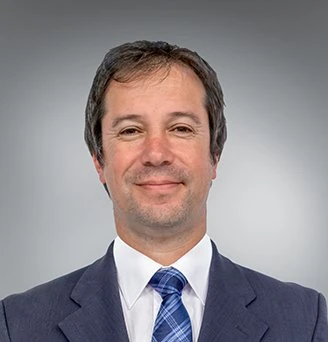
Lucas Palacios Covarrubias, rector of Inacap, is calling for a revival of critical inquiry and creative rebellion to counter the homogenizing effects of modern technology and artificial intelligence.
Writing for La Tercera, Palacios Covarrubias uses the legacy of poet Arthur Rimbaud to address the erosion of independent thought in a digital era.
He suggests that current social media algorithms privilege predictable patterns over authentic expression, creating a bias that flattens human thought.
Reclaiming the capacity to question
Palacios Covarrubias notes that while technology organizes our answers, it also threatens to dictate our questions. He argues that truth should not be viewed as a stable certainty but as a constant, often uncomfortable, exploration.
This challenge extends directly into the classroom. The Inacap rector warns that education risks producing individuals who can merely adapt to existing structures rather than transform them.
"If education is limited to transmitting content or reproducing established structures of thought, it risks forming individuals capable of responding, but not of questioning," Palacios Covarrubias wrote.
He advocates for an educational model that fosters the ability to imagine alternatives and maintain a personal, creative perspective.
Applying the 'spirit of Rimbaud' to pedagogy does not require teaching avant-garde poetry, according to the rector. Instead, it requires fostering the capacity to sustain a unique gaze and resist the urge to simply repeat established patterns.
Palacios Covarrubias concludes that the human task in this era is to move beyond repetition toward active exploration to become architects of the future.