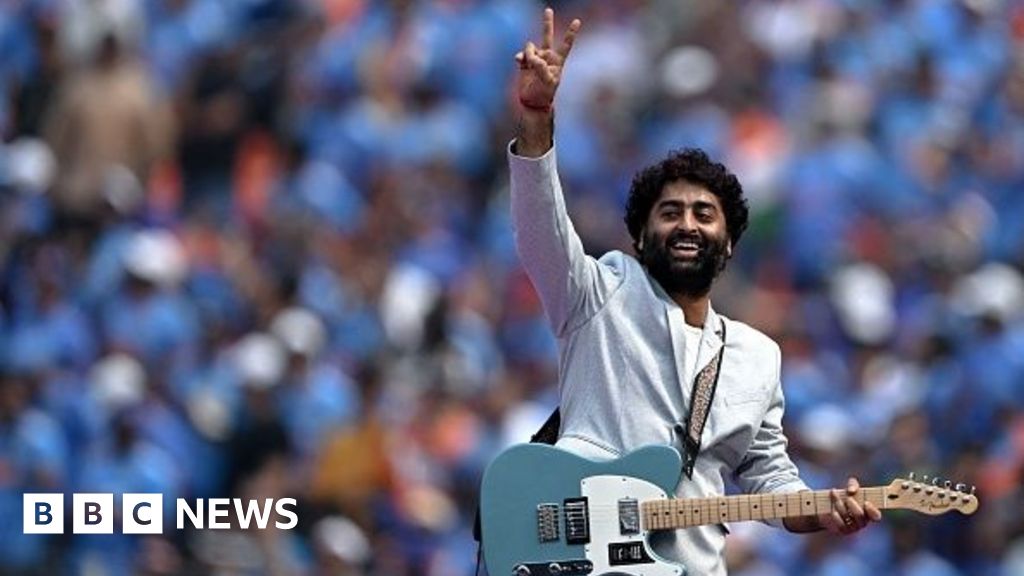
The Indian entertainment ecosystem is recalibrating following the abrupt announcement by Arijit Singh, arguably the most commercially potent playback singer in recent Bollywood history, that he will no longer accept new assignments for film soundtracks. Singh, 38, confirmed the decision via social media, stating, "It was a wonderful journey," signaling the end of a defining chapter for the industry where playback singing—where vocalists record tracks for actors to lip-sync—remains a foundational storytelling mechanism.
Singh's impact transcended mere chart performance. His distinctive, raw vocal texture, which re-centered vulnerability in romantic ballads starting around 2013 with 'Tum Hi Ho,' became the sonic backdrop for millions across India and the diaspora. His ability to cross linguistic barriers, recording hits in Hindi, Tamil, and Telugu, underscored his pan-Indian commercial appeal, leading to high-profile collaborations, including with global figures like Ed Sheeran.
From an economic perspective, the decision is unusual for an artist commanding such market saturation. At the peak of his visibility—recently selling out Wembley Arena—Singh is choosing a retreat from the commercial engine that propelled him. While he is expected to fulfill existing contracts, the focus is shifting toward independent creative projects, suggesting a deliberate decoupling from the high-volume demands of the studio system.
This move mirrors a broader, albeit subtle, trend among top-tier creative talent seeking autonomy over creative output versus commercial obligation. Singh has long displayed an ambivalence toward celebrity culture, favoring his hometown in West Bengal and maintaining a low public profile despite his overwhelming success. His reported discomfort with ubiquity—citing audience exhaustion with his prolific output—points toward an internal valuation prioritizing artistic control over maximal market penetration.
Industry analysts suggest this seismic shift could force production houses to reassess talent acquisition and music budgeting. The dependence on a singular, dominant voice creates systemic risk; Singh’s departure mandates diversification in finding the next commercially viable sound for the industry’s lucrative romantic and dramatic narratives.
Furthermore, the decision may reflect evolving audience tastes or internal industry dynamics. While some critics noted a perceived homogenization in his later work due to his signature style, Singh’s withdrawal now creates a vacuum that emerging or established regional artists might fill, potentially leading to greater stylistic diversity in future Bollywood scores.
This is not merely the retirement of a singer; it is the voluntary forfeiture of immense commercial leverage by an artist who seemingly prioritized personal equilibrium over sustained dominance. The full implications for Bollywood's multi-billion dollar music licensing and soundtrack production apparatus remain to be seen, but the narrative thread of the last decade has demonstrably been cut. (Source: Based on reporting from the BBC and related Indian media outlets.)