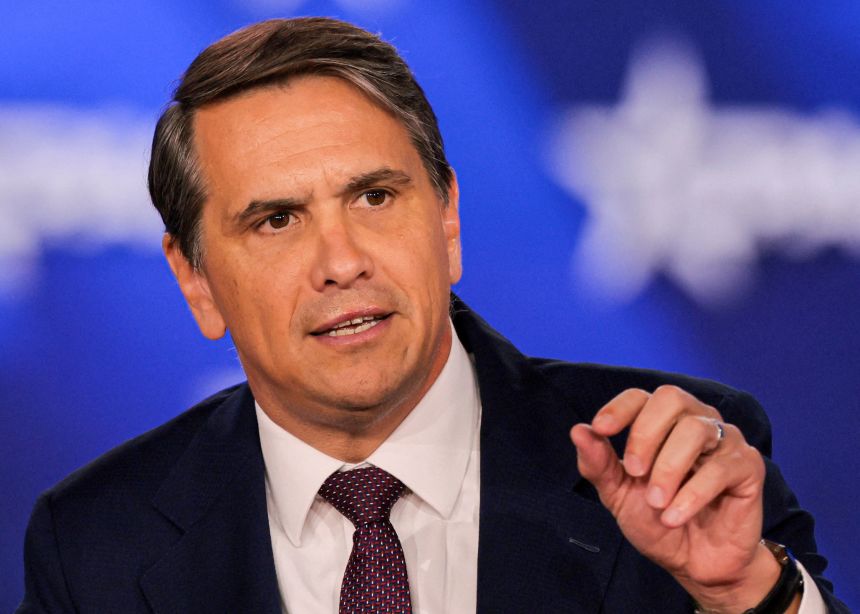
On Thursday, U.S. President Donald Trump dismissed Attorney General Pam Bondi and promoted Deputy Attorney General Todd Blanche to take charge of the Department of Justice. While Trump suggested the appointment may be temporary, observers widely believe the President is testing his former personal lawyer’s performance in the high-stakes role.
Blanche brings a unique background to the crypto space. As an investor, he disclosed holdings of $100,000 to $250,000 in Bitcoin and $50,000 to $100,000 in Ethereum upon joining the DOJ last year, alongside various other tokens such as Solana and Cardano. He later stated in ethics filings that these assets had been transferred to family members.
The Conflict Between Regulatory Stance and Enforcement
After taking office last year, Blanche moved quickly to disband the DOJ’s specialized cryptocurrency enforcement task force. He had previously criticized the prior administration’s strategy of “regulation by enforcement” and directed federal prosecutors to scale back investigations into crypto exchanges and mixing services—platforms often accused of helping criminals or sanctioned nations bypass regulatory oversight.
However, the DOJ’s actual enforcement record has not shifted entirely. Under the leadership of Blanche and Bondi, federal prosecutors have continued to pursue crypto software developers. Last fall, two Bitcoin privacy software developers were sentenced to prison for operating an unlicensed money-transmitting business. Furthermore, federal prosecutors decided last month to retry Ethereum developer Roman Storm after a jury failed to reach a verdict on charges of operating an unlicensed money-transmitting business.
Peter Van Valkenburgh, executive director of the crypto policy think tank Coin Center, told Decrypt that the contradiction between the DOJ’s pro-crypto rhetoric and its continued prosecution of developers has left the industry in a “very bad state.”
It remains unclear whether Blanche will adjust the DOJ’s cryptocurrency policy moving forward. Last December, Trump responded that he would “consider” pardoning crypto software developers convicted by the DOJ. As of now, no such pardons have been issued.