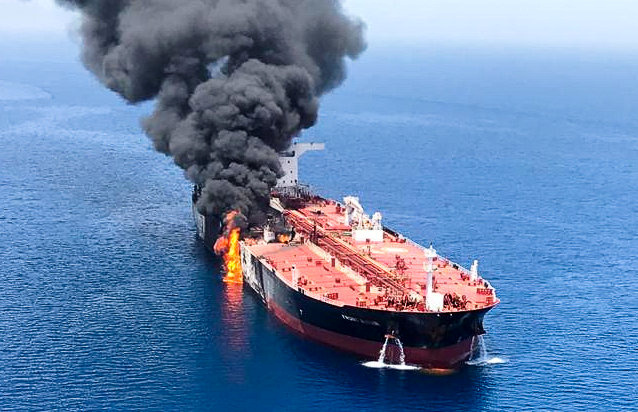
The Iranian government is planning to impose a toll on fully loaded oil tankers passing through the Strait of Hormuz, explicitly requiring that payments be settled in digital assets such as Bitcoin. According to a report by the Financial Times on Wednesday, this fee mechanism is set to be implemented during a two-week ceasefire between Iran and the United States.
Hamid Hosseini, a spokesperson for the Iranian Oil, Gas and Petrochemical Products Exporters Union, stated that the move is intended to strengthen oversight of shipping activities in the strait to ensure that no weapons are transported during the ceasefire. He clarified that the policy applies only to tankers fully loaded with oil, while empty vessels will be permitted to pass free of charge.
Cryptocurrency as a Geopolitical Tool
Under the proposed framework, tanker operators must submit detailed cargo declarations to Iranian authorities via email. Iranian officials will then calculate a toll of $1 per barrel of crude oil and instruct the crew to complete the payment using digital assets like Bitcoin. Hosseini added that once the declaration is verified, crews will have a very narrow window to complete the payment to receive clearance.
This policy highlights Tehran's attempt to leverage cryptocurrency to bypass the U.S. dollar-dominated global financial system. Facing severe sanctions, Iran is actively seeking digital payment channels to secure funds for the reconstruction of domestic infrastructure damaged by war.
Other nations under Western sanctions have previously attempted to integrate cryptocurrency into their national financial strategies. Russia, in its response to Western sanctions, has also explored the use of digital assets for cross-border payments. Analysts point out that Iran's move could force shipping lanes to shift closer to the Iranian coastline, significantly increasing operational risks for Western and Gulf state shipping companies.