The 2026 Davos Annual Meeting signaled a profound maturation of the digital asset sector, moving beyond the skeptical scrutiny of previous years. Where 2025 introduced Web3 topics to the main agenda, this year saw tokenization and stablecoins firmly established as central pillars of institutional finance strategy. The consensus among major financial players suggests that digital assets are no longer an external challenge but an integrated component of the future financial architecture.
Binance founder Changpeng Zhao (CZ), participating in the 'New Era for Finance' roundtable, tempered earlier disruptive rhetoric. His focus shifted toward complementarity, urging traditional banks to adopt blockchain infrastructure rather than aiming to replace them entirely. This measured approach suggests a strategic pivot toward regulatory acceptance and practical integration within existing systems.
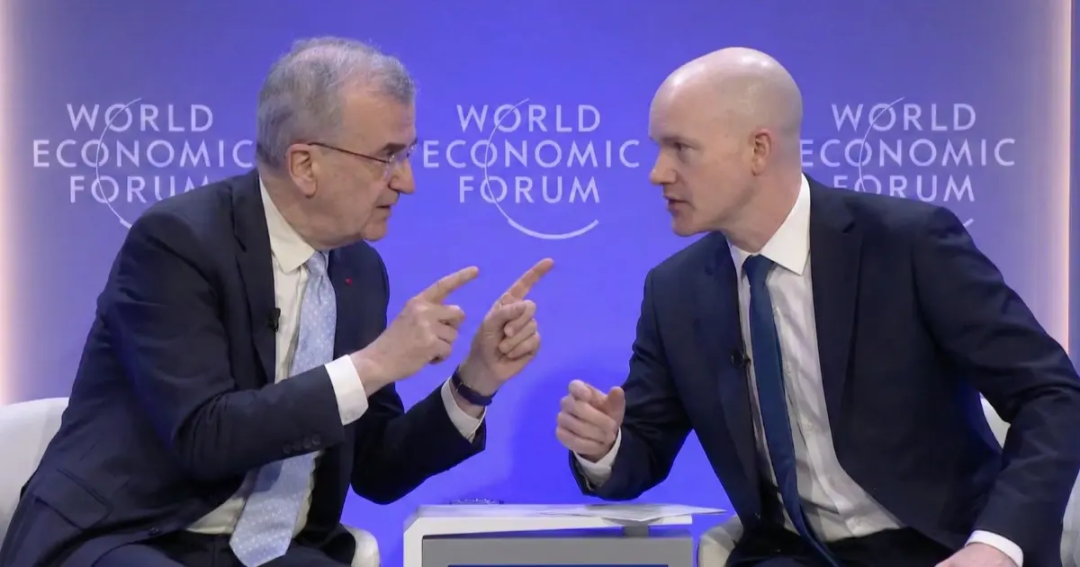
However, the integration dialogue was not entirely frictionless. A notable tension surfaced during the 'Is Tokenization the Future' panel, where Coinbase founder Brian Armstrong directly countered arguments from the Governor of the Bank of France, François Villeroy de Galhau, regarding the yields and systemic risks associated with Bitcoin and stablecoins. This clash underscored the ongoing philosophical divide between established central banking priorities and decentralized finance advocacy.
Despite regulatory caution, the institutional appetite for digital infrastructure appears voracious. Armstrong reported being told by an executive from a global top-10 bank that cryptocurrency is now viewed as an 'existential' priority. Furthermore, he posited that AI-driven transactions are likely to default to stablecoins over legacy payment rails, linking the two technological revolutions inextricably.
Traditional finance titans provided strong validation for the underlying technology. BlackRock CEO Larry Fink explicitly endorsed tokenization as the future of the financial system, advocating for migration onto a shared blockchain infrastructure—potentially Ethereum—to unlock liquidity and efficiency gains across asset classes. Standard Chartered CEO Bill Winters echoed this sentiment, highlighting stablecoins as the first universally applicable blockchain use case for lowering cross-border payment costs.
Further solidifying the institutional framework, the 'Davos Web3 Roundtable' saw industry leaders sign the 'Davos Declaration 2026.' This document commits signatories to ensuring that powerful technologies like blockchain and AI are deployed to enhance human well-being, balancing innovation with ethical governance principles.
Ripple CEO Brad Garlinghouse framed cryptocurrency's role as evolving from a 'threat' to necessary economic infrastructure, emphasizing that stablecoins must function as global payment bridges without undermining national monetary sovereignty. This multi-faceted engagement—from clashes on the main stage to quiet endorsements in private meetings—confirms Web3’s transition into the core of global economic discourse. (Source: Adapted from odaily.news reporting on the 2026 WEF Annual Meeting).