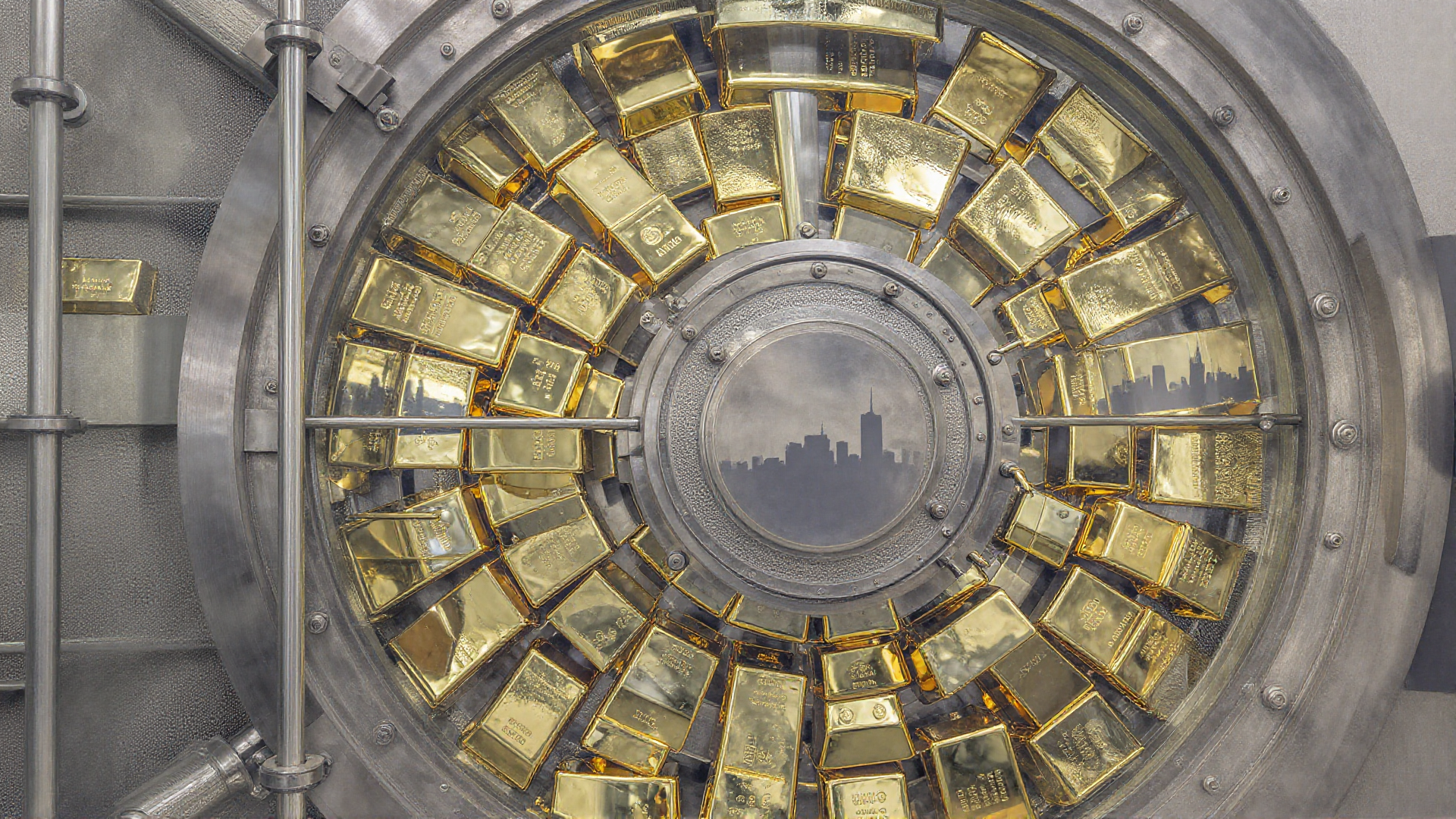
FRANKFURT/BERLIN – A significant debate is gaining traction among German economic and political circles regarding the physical location of the nation's substantial gold reserves, with influential voices citing heightened geopolitical risk under the current US administration as justification for repatriation from Federal Reserve vaults in New York.
Germany holds the world’s second-largest national gold reserves, valued at approximately €164 billion. Of this cache, roughly 1,236 tonnes—37% of the total—are stored abroad, primarily in New York and London. Experts argue that the unpredictability associated with Donald Trump’s foreign policy posture renders this concentration vulnerable.
Emanuel Mönch, a prominent economist and former head of research at the Bundesbank, explicitly advised the central bank to consider bringing the assets home. “Given the current geopolitical situation, it seems risky to store so much gold in the US,” Mönch stated to Handelsblatt, arguing that repatriation serves the interest of “greater strategic independence from the US.”
This sentiment is echoing beyond traditional political fringes. While the governing coalition, led by Friedrich Merz, maintains that withdrawal is not currently under review, the argument for self-reliance is building momentum. Michael Jäger of the European Taxpayers Association (TAE) framed the issue in terms of sovereign control, referencing recent US rhetoric such as the purported interest in Greenland. “Trump is unpredictable and he does everything to generate revenue. That’s why our gold is no longer safe in the Fed’s vaults,” Jäger warned, suggesting access could be compromised.
The discussion is shifting from fringe nationalism, where it was previously championed by the far-right AfD, into mainstream financial policy discourse. Katharina Beck, finance spokesperson for the opposition Greens, described the gold bars as an “important anchor of stability and trust” that must not be “pawns in geopolitical disputes.” Even some members of the ruling Christian Democrats are reportedly voicing support for relocation due to perceived unreliability in the transatlantic partnership.
However, the proposal faces substantial pushback from established financial authorities. Clemens Fuest, President of the Ifo Institute, cautioned that such a move could escalate tensions, warning it would “only pour oil on the fire of the current situation.” Bundesbank President Joachim Nagel previously assured international bodies in Washington D.C. that there was “no cause for concern” regarding the New York holdings. Junior coalition partners also emphasize the existing diversification, noting that over half the reserves are secured in Frankfurt, and that holding assets in New York reflects the deep financial linkages between Europe and the US.
Currently, Germany’s reserves are split between Frankfurt (over 50%), New York (37%), and London (12%). The debate underscores a broader European trend toward reassessing financial dependencies as geopolitical fragmentation intensifies, prompting a re-evaluation of where critical national assets are physically secured.
Source: Based on reporting from The Guardian and German financial press.