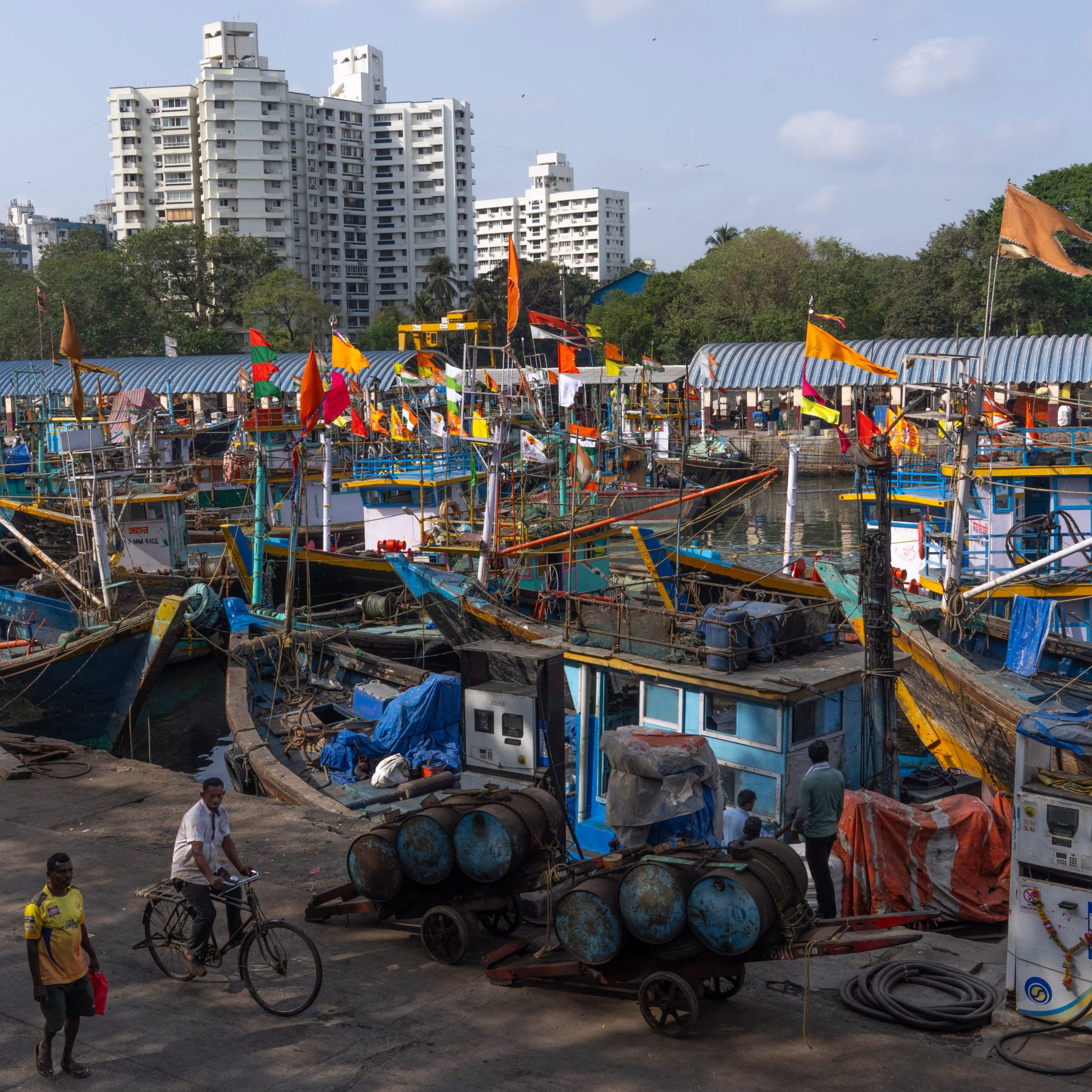
Mumbai’s historic Sassoon Dock, a cornerstone of the city’s fishing industry since the 19th century, has fallen into an uncharacteristic silence as rising diesel costs make maritime operations financially unsustainable. Fishing vessels that once fueled the city’s economy now sit clustered together under the morning sun, their engines quiet and their nets dry.
Boat owner Shekhar Chogle says the financial math no longer works. With diesel prices surging past $1.20 per litre, the cost of going to sea often exceeds the value of the catch.
“Our income has dropped significantly since we have not been able to take our boat out to sea,” Chogle said. He joins a growing number of operators who have been forced to anchor indefinitely to avoid mounting losses.
A supply chain in crisis
The impact reaches far beyond individual boat owners. Cooperatives that once supplied fuel, ice, and equipment to the fleet are struggling to maintain operations as prices remain volatile. At the local pump, workers are returning empty-handed, unable to secure the fuel necessary to keep the trade moving.
While a reported two-week ceasefire between Iran, the United States, and Israel has offered a brief glimmer of hope for global fuel markets, analysts warn that supply chains will take time to stabilize. For local fishers, that delay may be too long.
Despite the economic pressure, a small number of boats continue to venture into the Arabian Sea. The morning markets persist, though they offer a shadow of their former volume. Women navigate the docks to purchase whatever limited supply arrives, balancing the rising cost of fish against the necessities of daily life.
Chogle remains pessimistic about the immediate outlook for his peers. “If diesel prices don’t come down soon, I don’t know how we’ll survive,” he said. The crisis extends across Asia, leaving coastal communities to decide between the risk of financial ruin at sea or the certainty of poverty on shore.