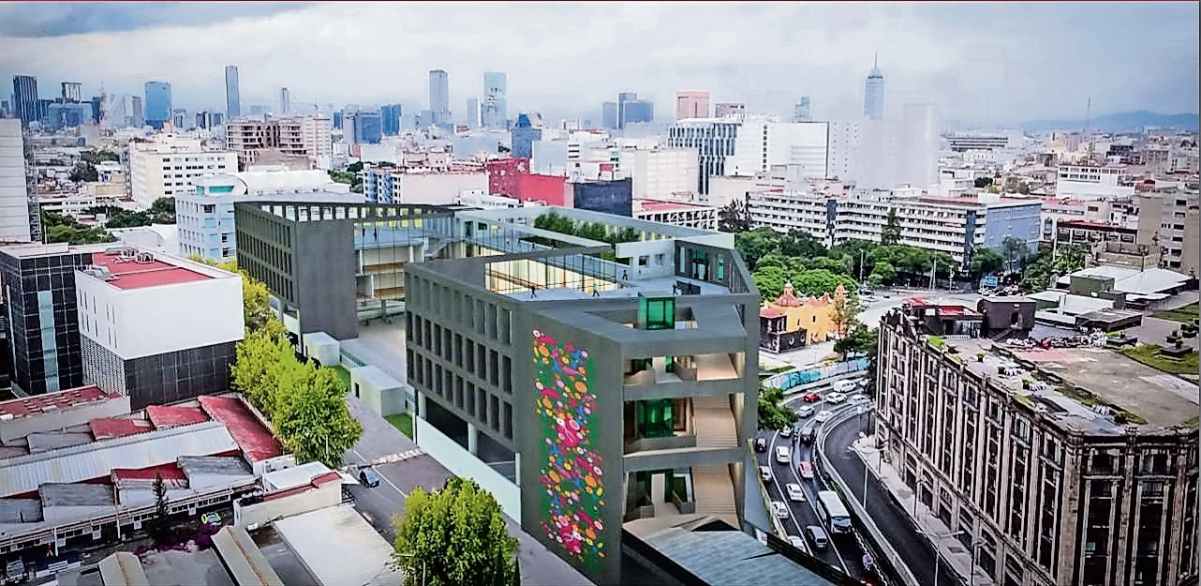
The Mexico City government announced plans to complete the Universidad de las Artes de la Ciudad de México by December of this year according to officials. Construction works are scheduled to run from March through December at a total cost of 390 million pesos according to local reports. Secretary of Culture Ana Francis Mor confirmed the timeline to El Universal during a recent site visit to the historic Plaza Tlaxcoaque.
Demolition efforts are currently visible behind the ruins of the Capilla de la Santísima Concepción near Plaza Tlaxcoaque. The site previously housed the General Directorate of Police and Transit for the Federal District during the authoritarian era. Workers operate machinery within the perimeter while preserving the historical significance of the location for future visitors.
The university will occupy 14,200 square meters across four levels and a subterranean basement facility designed for research archives. Officials project that 90 classrooms will accommodate 4,000 students enrolled in 19 undergraduate programs over four years of study. These degrees include Theater, Music, Visual Arts, and Audiovisual Production without an entrance exam for entry.
Education will be free and open to the public through competitive public contests held annually across the capital city. Mor stated that the institution aims to remove physical barriers often seen in traditional performing arts schools regarding body standards. She noted that height requirements or specific body characteristics should not limit artistic careers for new applicants seeking admission.
The Secretary emphasized a methodological shift away from what she described as cruelty in artistic training environments throughout history. She argued that discipline should remain rigorous but without the harshness experienced by previous generations of students in Mexico. This approach mirrors pedagogical models currently applied in various South American countries seeking similar educational reforms.
The project aligns with broader educational reforms such as the Nueva Escuela Mexicana currently promoted by the federal administration in Mexico. It follows similar initiatives like the Rosario Castellanos University and the Autonomous University of the City of Mexico. These institutions share a commitment to social connection and collective project work over rigid learning structures used previously.
A significant portion of the development includes a memorial dedicated to victims tortured in the former police detention area known as the basement. Survivors and families have assisted in cleaning the flooded basements to meet international heritage standards for memory sites. The space serves as a reminder of past repression within the heart of the cultural center for the public.
Faculty members will be selected based on professional expertise and social conviction regarding their community impact and teaching skills. Teachers must demonstrate an understanding of working for the public interest rather than remaining detached from reality in their daily lives. Interviews and training sessions will determine eligibility for positions within the new university structure for the academic year.
This investment represents a strategic allocation of cultural resources in the national capital and surrounding region for the public sector. It connects directly to the administration's focus on territorial vocations and social occupation of public spaces for community benefit. The project positions Mexico City as a regional hub for artistic education and human rights memory in Latin America.
Future developments will depend on the successful completion of the construction phase by the end of the year and the delivery schedule. Officials plan to integrate research projects from the Culture Secretariat into the academic framework for students to study. Monitoring construction progress and enrollment numbers will be key indicators of success for the initiative moving forward.