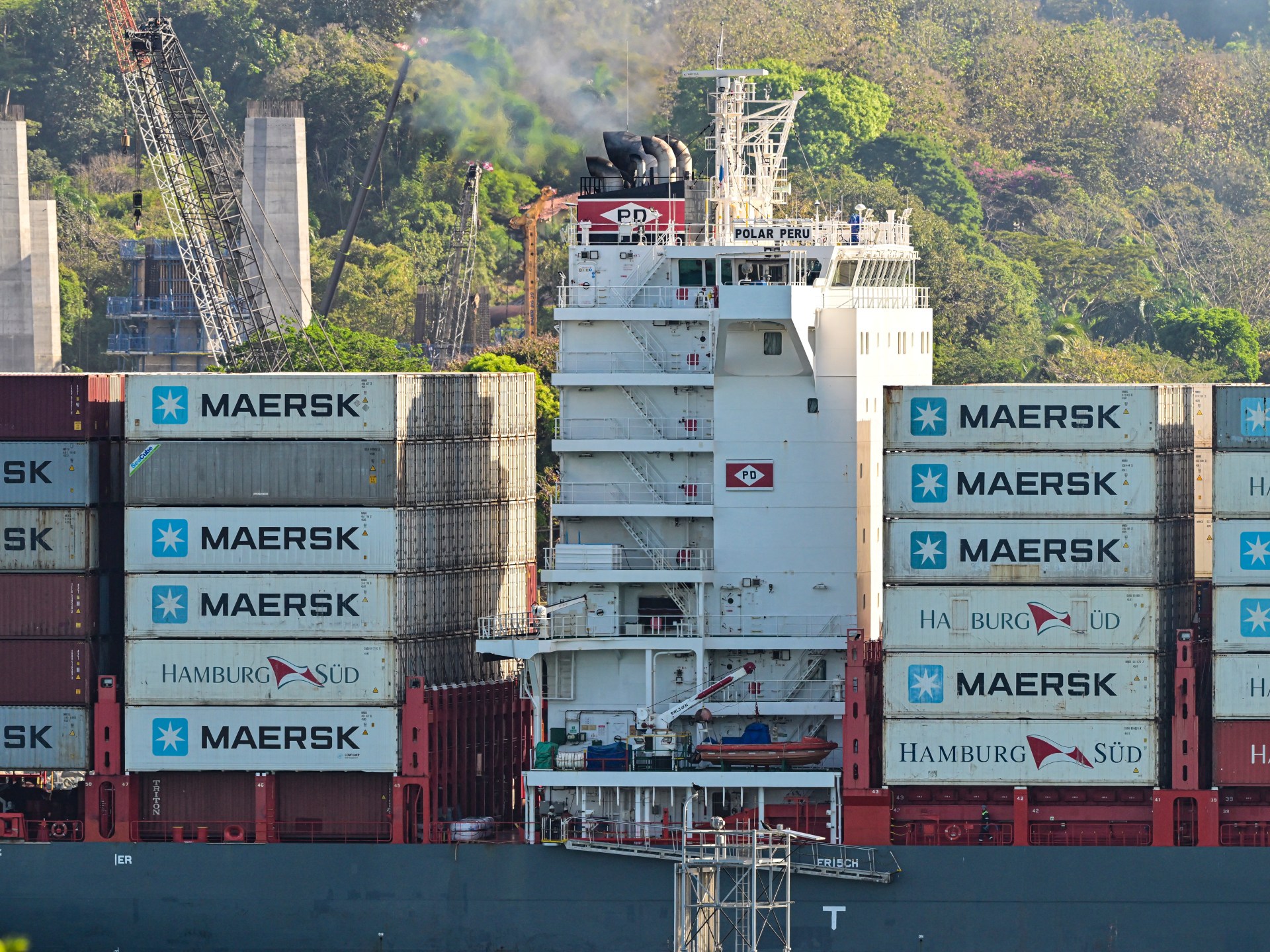
Danish shipping giant A.P. Moller-Maersk will temporarily administer two critical ports flanking the Panama Canal after Panama’s Supreme Court invalidated existing concession contracts held by a subsidiary of Hong Kong-based CK Hutchison Holdings. The Panama Maritime Authority (AMP) announced the transition on Friday, one day after the high court nullified the agreements, according to reports.
APM Terminals, the terminal operating arm of Maersk, will step in as the “temporary administrator” for the Balboa and Cristobal ports, situated at either end of the vital waterway. CK Hutchison’s subsidiary, Panama Ports Company (PPC), had managed these facilities since 1997 under a concession that was renewed in 2021 for an additional twenty-five years.
The court determined that the contract awarded to CK Hutchison exhibited “disproportionate bias” favoring the Hong Kong-based entity. This judicial action occurs amid heightened geopolitical sensitivity surrounding the canal's control, which handles approximately 40% of United States container traffic and 5% of global trade.
Washington welcomed the Supreme Court’s decision, although the context includes prior statements from former US President Donald Trump regarding perceived Chinese influence over the waterway. Conversely, Beijing’s Foreign Ministry spokesman Guo Jiakun stated that China “will take all measures necessary to firmly protect the legitimate and lawful rights and interests of Chinese companies.”
PPC issued a statement arguing the ruling “lacks legal basis and endangers … the welfare and stability of thousands of Panamanian families” reliant on the port operations. Panama has consistently denied allegations of Chinese control over the canal, which was ceded from US control in 1999.
The operational handover places a major global logistics player, Maersk, in charge of key infrastructure that links the Atlantic and Pacific oceans. This move underscores the economic importance of maintaining smooth transit through the 82-kilometer artificial waterway.
For Maersk, the temporary administration offers significant operational influence over one of the world’s most crucial maritime chokepoints. The long-term resolution for the port concessions remains uncertain, pending further legal or administrative action by Panamanian authorities.