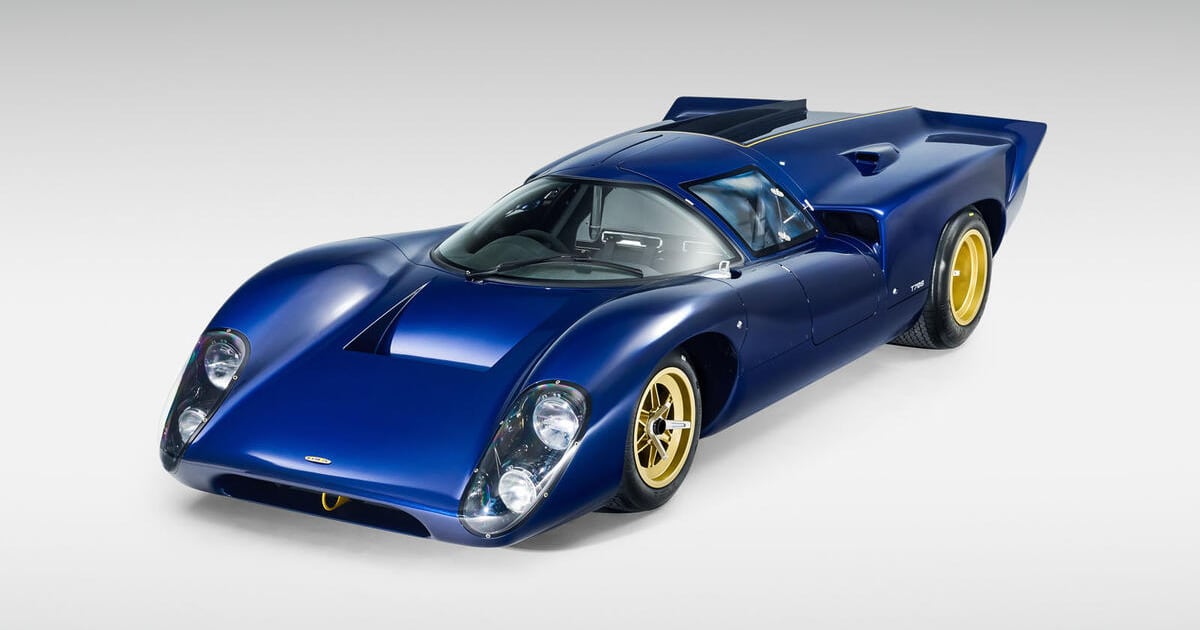
Lola Motor Company has announced the revival of its iconic T70 sports car with a sustainable modern iteration. The British marque unveiled the T70S and T70S GT models to align historic racing heritage with contemporary environmental standards. This move positions the brand within the exclusive continuation car market. The project signals a significant shift toward carbon-neutral manufacturing in high-performance automotive sectors globally.
Key Details
The new T70S retains the mechanical essence of the 1965 original while integrating modern engineering solutions. A naturally aspirated 5.0-liter V8 engine produces approximately 530 horsepower in the standard model. This powertrain pairs with a five-speed manual transmission to maintain driver engagement. Engineers retained the aluminum monocoque chassis to ensure structural integrity and optimal weight distribution.
Performance metrics remain aggressive despite the sustainability focus. The chassis weighs just 860 kilograms, allowing acceleration from zero to 100 kilometers per hour in 2.5 seconds. Top speed exceeds 320 kilometers per hour in both variants. These figures rival contemporary supercars while adhering to strict vintage specifications.
The GT variant features a slightly different configuration optimized for track and road use. It utilizes a 6.2-liter Chevrolet V8 generating 500 horsepower. Acceleration takes three seconds to reach 100 kilometers per hour. The suspension geometry has been recalibrated to handle modern tire compounds effectively.
"The initiative seeks to prove classics can evolve responsibly," La Tercera reported regarding the project. Manufacturing processes now prioritize reduced environmental impact without altering the driving experience. Advanced composite materials replace traditional components where feasible. This approach addresses growing consumer demand for ethical luxury goods in the current economic climate.
What This Means
Designers preserved the original proportions and lines of the 1965 prototype. Low silhouette, prominent wheel arches, and functional aerodynamics remain intact. Structural and safety improvements ensure usability by modern standards. Regulatory compliance now dictates specific crashworthiness features not present in the decade of the 1960s.
Production volume will remain strictly limited to 16 vehicles globally. This scarcity aligns with the niche status of continuation cars. Official pricing has not been confirmed by the manufacturer. Limited availability drives investment value and collector interest significantly in the current market.
Market analysts expect costs to mirror original units valued at over $400,000. High-end collectors often pay premiums for bespoke automotive heritage. The strategy targets a wealthy demographic seeking unique assets. This pricing model supports the economic viability of small-batch manufacturing.
This release reflects a broader trend among heritage brands adapting to green regulations. Electric powertrains often replace combustion engines in modern revivals. Lola maintains internal combustion to preserve the historic character. Sustainability efforts focus on supply chain transparency rather than electrification.
Investors will watch how this limited run influences the sustainability debate in automotive restoration. Future models may expand upon this sustainable framework. The long-term economic impact on the classic car sector remains uncertain. Success could encourage other marques to adopt similar green restoration protocols.