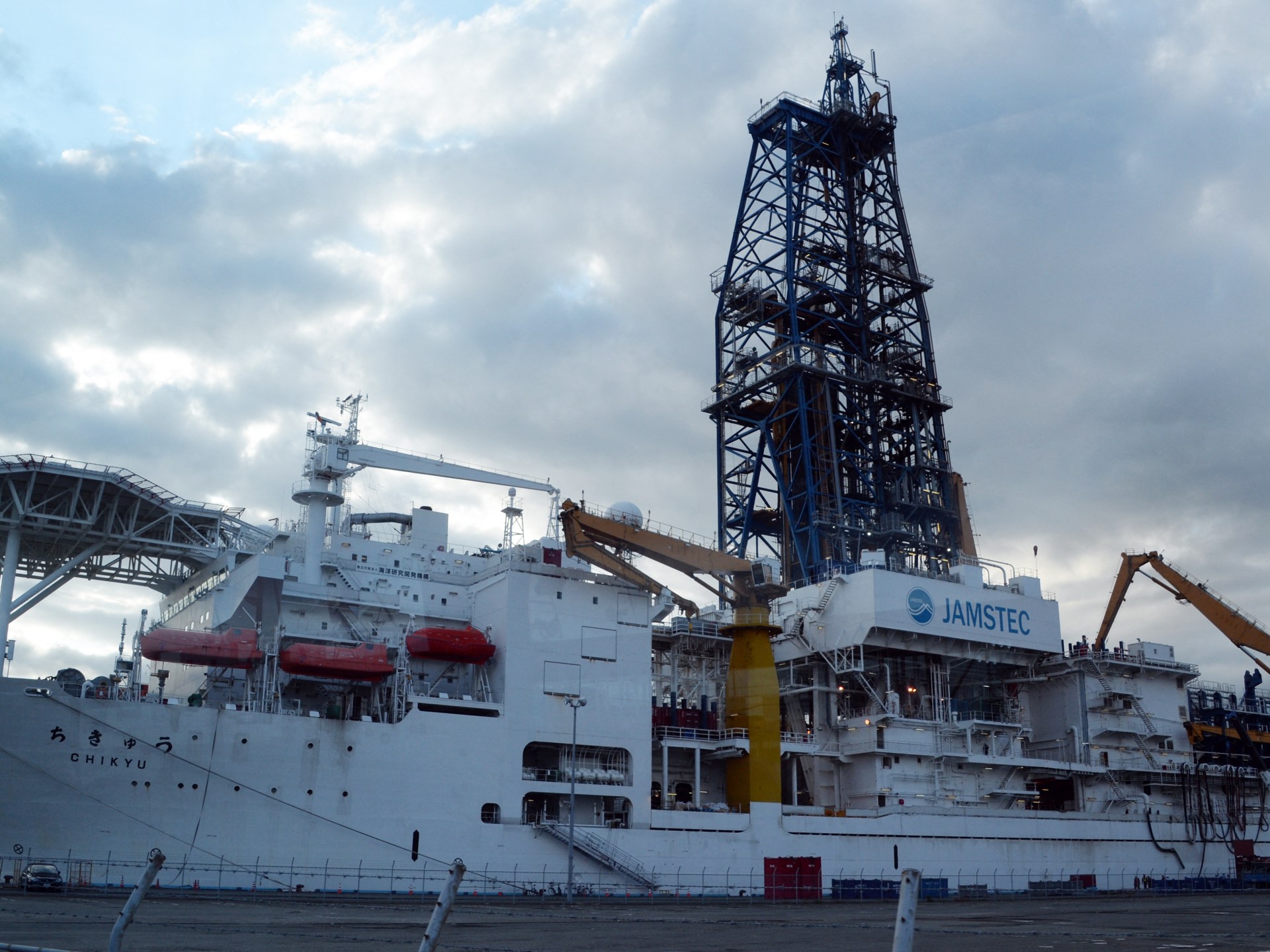
Japan announced on Monday the successful recovery of sediment containing rare earth elements during a deep-sea test mission in the Pacific Ocean, retrieving samples from a depth of 6,000 metres. The operation, conducted by the Japan Agency for Marine-Earth Science and Technology (JAMSTEC), signals an intensified national effort to secure critical mineral supplies outside of China’s dominant supply chain.
Government spokesman Kei Sato confirmed the recovery and stated that the sample was being analyzed for its rare earth concentration, characterizing the retrieval as a significant milestone for both economic security and maritime development. This deep-sea drilling exercise, aboard the research vessel Chikyu, targeted waters near the remote island of Minami Torishima, an area estimated to hold over 16 million tonnes of rare earths.
The reserves surrounding Minami Torishima are reportedly considered the third-largest global deposit, according to the Nikkei business daily, making the successful retrieval technologically vital. Rare earths, 17 essential metals, are crucial components in high-technology manufacturing, including electric vehicles, defense systems, and renewable energy infrastructure.
Tokyo’s proactive stance on deep-sea mining is directly linked to escalating diplomatic friction with Beijing, the world’s largest supplier of these minerals. Japan imports roughly 70% of its rare earth requirements from China, a vulnerability highlighted following recent diplomatic disputes concerning Taiwan.
Late last year, Tokyo formalized its diversification strategy by signing an agreement with the United States to coordinate efforts in securing these critical resources. This alignment underscores a broader Western effort to build resilient supply chains insulated from potential Chinese export restrictions.
Following recent robust statements from Japanese officials regarding Taiwan, Beijing temporarily blocked exports of certain dual-use items with potential military applications, a move that reportedly heightened Japanese strategic concerns. This incident validated Tokyo’s drive to cultivate domestic and allied sources for strategic materials.
JAMSTEC’s mission is reported as the world’s first attempt to tap rare earth deposits at such extreme ocean depths. The focus now shifts to assessing the economic feasibility and environmental impact of scaling up extraction from these deep-sea locations.