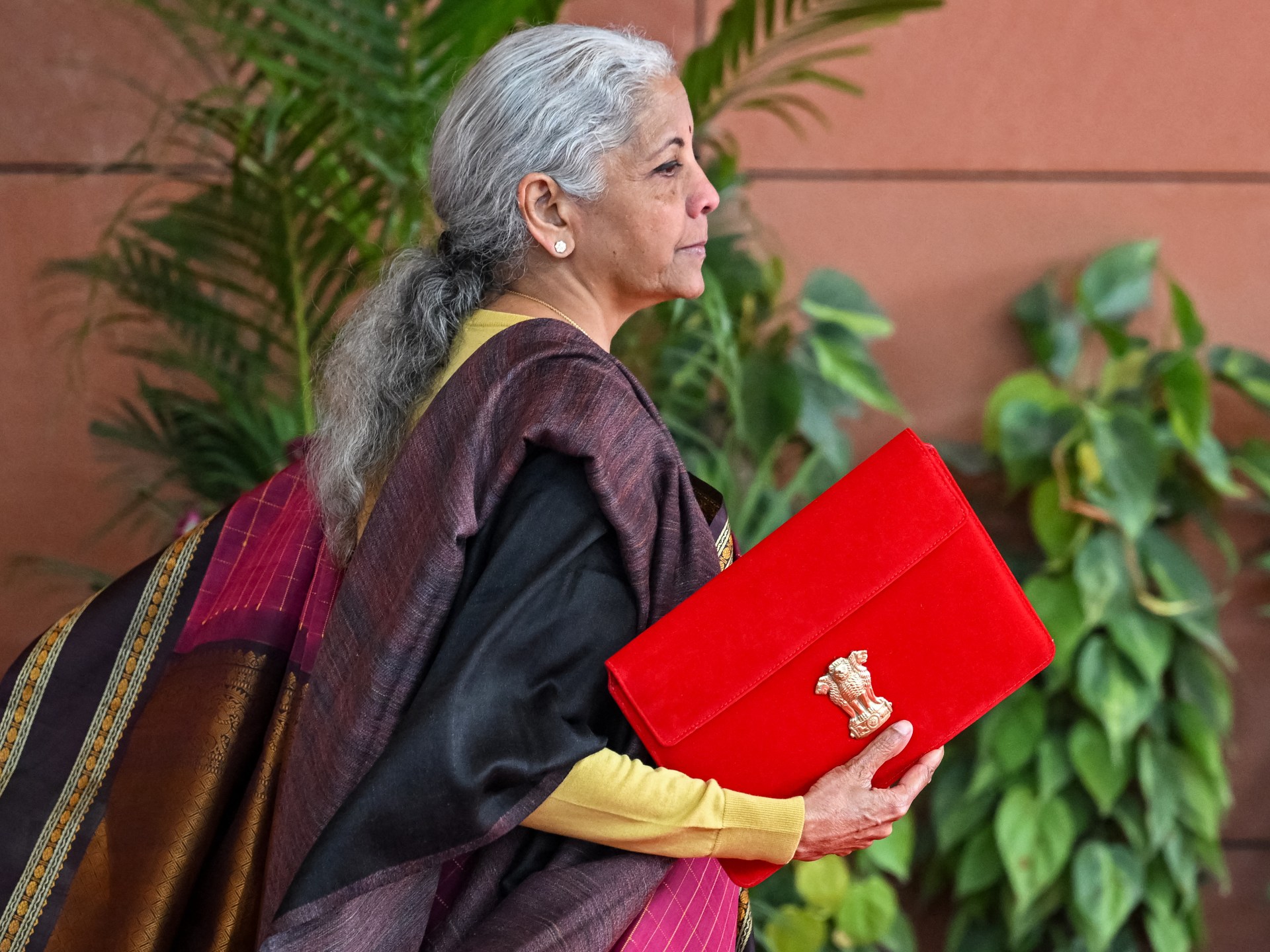
The government of Indian Prime Minister Narendra Modi presented its annual budget for the 2026-2027 financial year, focusing on boosting domestic resilience through infrastructure investment while navigating volatile international financial markets, according to reports from Parliament on Sunday.
Finance Minister Nirmala Sitharaman detailed a total estimated expenditure of $583 billion, emphasizing capital formation over populist measures, a notable shift from the previous year's focus on middle-class tax relief. This strategy aims to fortify India's role within evolving global supply chains, according to the presentation.
The budget projects the nation's Gross Domestic Product (GDP) growth to land between 6.8% and 7.2% for the coming year, a slight moderation from the estimated 7.4% this year, yet still placing India among the world's fastest-growing major economies, as noted in the Economic Survey.
To realize this growth target, the government allocated 12.2 trillion rupees ($133 billion) for infrastructure projects, an increase from the 11.2 trillion rupees ($122 billion) budgeted in the preceding fiscal year. Seven strategic manufacturing sectors, including semiconductors and pharmaceuticals, will receive focused support to deepen domestic production capabilities.
Despite this increased state spending, the administration signaled fiscal prudence, targeting a reduction in the federal government debt-to-GDP ratio from 56.1% to 55.6% in the next fiscal year. The fiscal deficit is also slated to narrow from a projected 4.4% of GDP to 4.3%, reflecting a commitment to macroeconomic stability, as stated by the Finance Minister.
This budgetary approach comes as India contends with external pressures, notably the 50% punitive tariffs imposed by the United States on New Delhi’s imports of Russian oil, which the government has attempted to counterbalance with agreements such as the recent trade pact with the European Union.
Analysts suggest the budget lacks immediate stimulus but focuses on structural improvements necessary for long-term stability, noting its absence of significant populist elements. Foreign investor sentiment has recently been tested by a sharp depreciation in the rupee, attributed partly to record equity sales totaling $22 billion since January of the previous year.