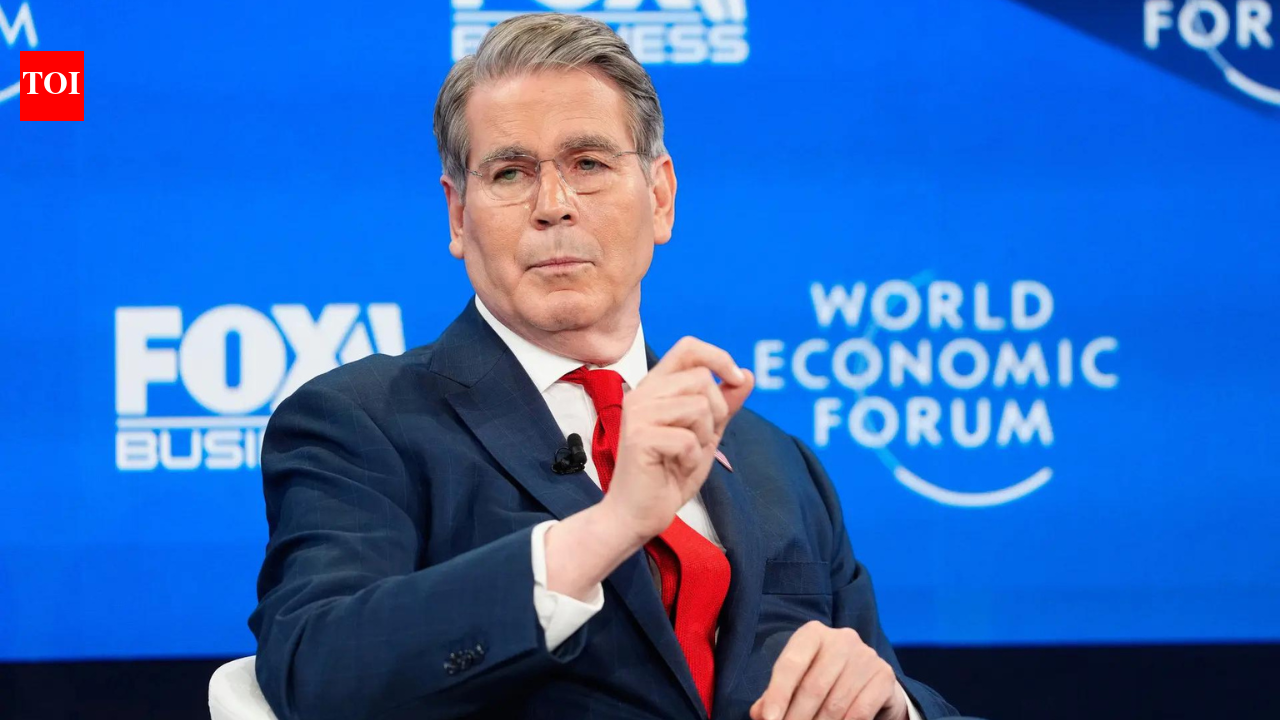
Scott Bessent, an influential economic advisor, has voiced considerable frustration over the progress—or lack thereof—in finalizing the comprehensive Free Trade Agreement (FTA) between India and the European Union. His remarks highlight the growing internal divergence within Western economic blocs regarding strategic trade alignment with major emerging economies.
The significance of the India-EU FTA extends beyond tariff reductions; it is widely viewed in geopolitical circles as a necessary mechanism for strengthening democratic trading partnerships against mounting global supply chain volatility. For the EU, securing deeper economic ties with New Delhi offers a vital counterweight in Asia, while India seeks market access and technology transfer.
Bessent's specific critique, as reported, appears centered on European reluctance or inflexibility concerning key market access demands from the Indian side. This tension reveals the classic friction points in complex bilateral trade talks: agricultural subsidies, intellectual property protections, and non-tariff barriers often become insurmountable obstacles when national interests diverge.
This public expression of displeasure from a figure associated with key economic policy circles suggests that the diplomatic groundwork necessary for a swift resolution may be encountering unexpected political headwinds in Brussels. The delay risks undermining the perceived momentum that had previously surrounded the negotiations, casting doubt on the EU's commitment to rapid economic integration in the Indo-Pacific region.
The economic implications are substantial. A protracted negotiation timeline could force both sides to reassess their medium-term strategic trade postures. For India, delays might prompt a faster pivot toward concluding similar agreements with other strategic partners, such as the UK or Australia, potentially altering the regional trade architecture.
From a strategic perspective, the stall in the India-EU track contrasts sharply with the more fluid economic dialogue occurring between India and other global actors. This friction point serves as a potential vulnerability in the broader Western strategy to foster resilient, rules-based trading systems in the face of rising protectionism elsewhere.
*Source attribution: Based on reports originating from The Times of India regarding statements made by Scott Bessent.*