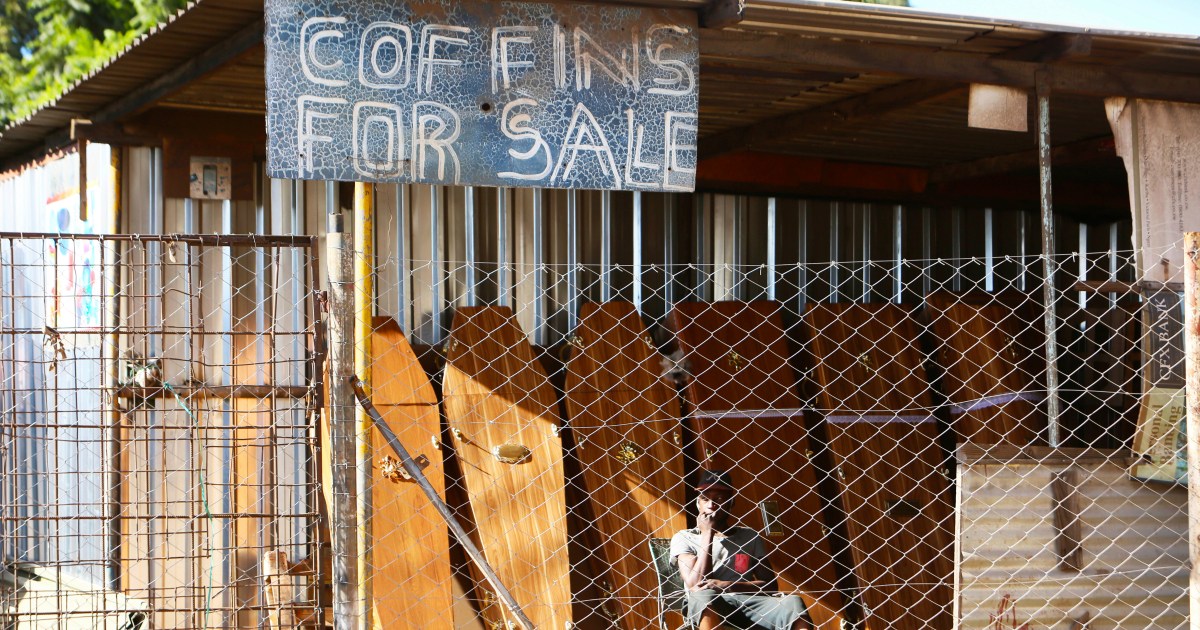
Millions of Zimbabweans are prioritizing end-of-life financial planning over immediate medical security, as funeral insurance has eclipsed health insurance as the most widely held financial product in the nation. This structural shift underscores the severe constraints placed on household incomes by the collapsing public health infrastructure and high private medical expenses, according to reports from Harare.
Data from Zimbabwe’s National Statistics Agency for 2023-2024 shows that approximately 16 million people, or 90% of the population, possess no health insurance, forcing them to fund care out-of-pocket. Conversely, 72% of insured Zimbabweans hold funeral policies, compared to only 30% with health insurance, as detailed in a 2022 FinMark Trust report.
Private health insurance premiums, averaging around $200 monthly, are unattainable for a majority living on less than $3.65 a day, according to the source material. In contrast, funeral plans are marketed at significantly lower entry points, with some providers like EcoSure offering policies starting at $0.75.
Experts suggest this preference is cultural, emphasizing that collective responsibility and dignity in death often outweigh the perceived risk of future illness. Innocent Tshuma, public relations manager at Doves Holdings Group, noted that funerals are immediate, unavoidable events, offering certainty in cost that medical aid currently lacks.
Public healthcare facilities are struggling with chronic underfunding, resulting in severe staff shortages and limited supplies, which deters those who might otherwise rely on state services. Physicians confirm that even accessing specialized care in public hospitals now often requires private funding, pushing basic diagnostics out of reach for many families.
Zimbabwe plans to launch a national health insurance scheme in June as a measure to expand universal health coverage access. However, Itai Rusike of the Community Working Group on Health voiced concerns regarding the government’s capacity to sustain the program given existing high public debt and currency fragility.
The trend has led some observers, such as traditionalist Pearson Takaingei Marinda, to critique this development as the “commercialisation of life,” where preparation for death supersedes planning for continued existence.