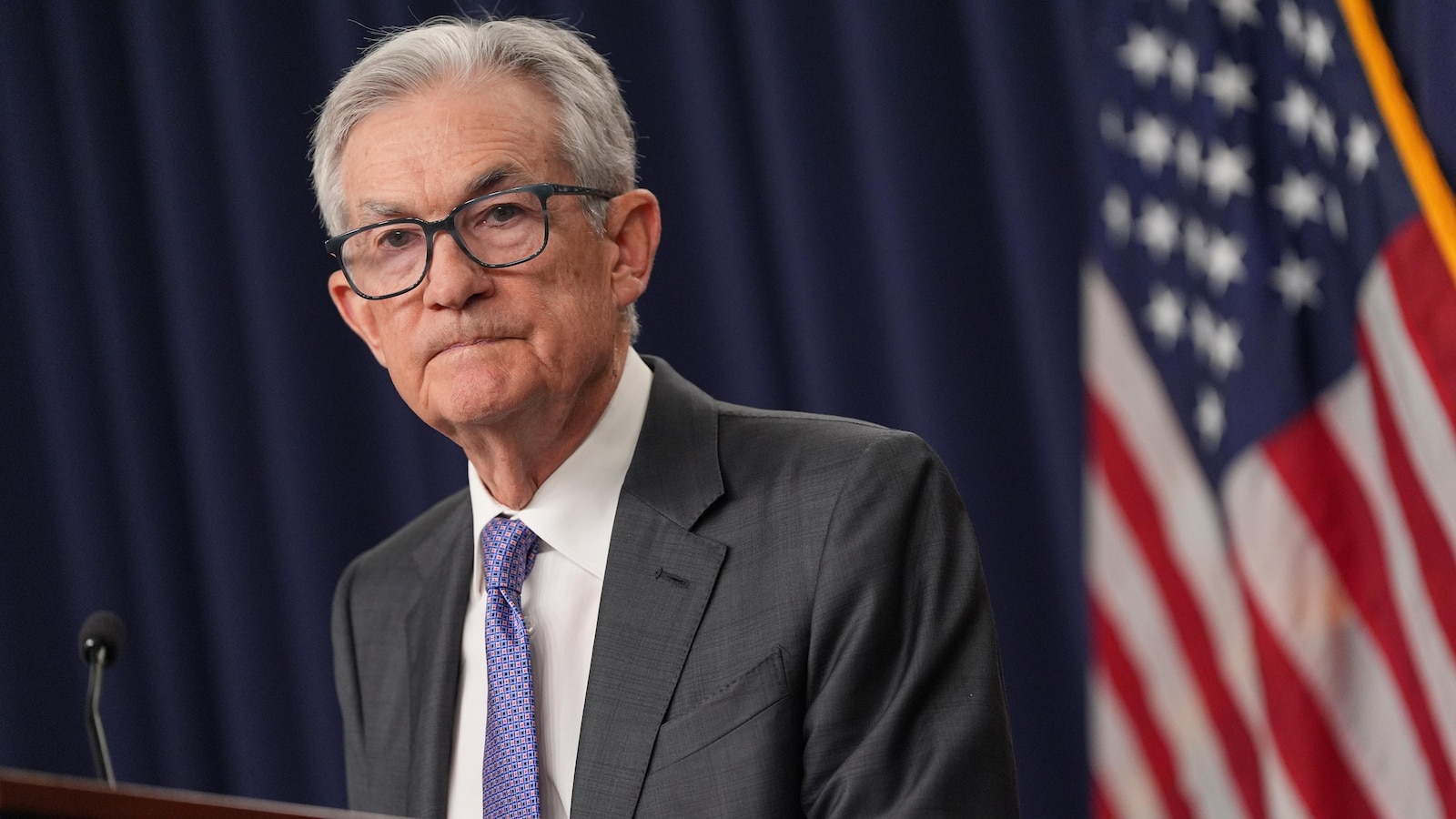
Fed Stays Course on Rates Amid Economic Resilience and Heightened Political Tension
Federal Reserve officials are widely expected to maintain current benchmark interest rates, pausing after last year's easing cycle. This decision prioritizes observing persistent inflation above target and nascent economic stabilization, despite significant external pressure for rate cuts.
Fed Stays Course on Rates Amid Economic Resilience and Heightened Political Tension
WASHINGTON – The Federal Reserve's policy-setting committee is anticipated to hold the federal funds rate steady this week, signaling a cautious pause following three rate reductions implemented last year. This inertia reflects a deliberate decision to prioritize incoming economic data over intense lobbying from the White House for lower borrowing costs.The central bank’s previous easing maneuvers were designed to insulate the labor market from a potential sharp downturn, triggered in part by escalating trade tariffs. Current indicators suggest that the unemployment rate has stabilized, and economic momentum may be reasserting itself. Critically, however, domestic inflation metrics remain stubbornly above the Fed’s long-term 2% mandate, providing a strong rationale for maintaining the current policy stance.A key focus for Chair Jerome Powell's forthcoming press conference will be articulating the duration of this holding pattern. The Federal Open Market Committee (FOMC) exhibits a notable internal division: one faction advocates for continued restraint until inflation definitively moderates, while another pushes for further easing to bolster employment growth.Market forecasts currently lean towards two potential rate cuts later in the year, likely commencing no sooner than the June meeting. This measured approach is unfolding against a backdrop of unprecedented political scrutiny directed at the central bank’s independence.Chair Powell has recently navigated significant external turbulence, including the disclosure of Justice Department subpoenas related to his prior congressional testimony and the Supreme Court's review of an attempt by the executive branch to remove Fed Governor Lisa Cook. Economists suggest this intense pressure may be prompting Powell to adopt a more reserved public posture, allowing other officials to manage expectations regarding future policy adjustments.Internal dynamics within the FOMC further support a wait-and-see approach. Several voting members from the regional Federal Reserve banks have recently expressed skepticism regarding the immediate necessity for further cuts. For example, Philadelphia Fed President Anna Paulson indicated that if inflation moderates and growth settles near 2%, “some modest further adjustments” later in the year might become appropriate.Looking ahead, economists anticipate that higher-than-average tax refunds could inject fresh stimulus into consumer spending in the coming months. However, underlying weakness in job creation persists, contributing to subdued consumer sentiment, evidenced by the Conference Board’s confidence index hitting an 11-year low in January.The Fed’s commitment to data dependency, even under political duress, underscores the institutional firewall designed to protect monetary policy decisions from short-term political cycles. The market remains keenly focused on whether economic data will necessitate a pivot or confirm the current trajectory of policy neutrality.Source: Adapted from ABC News reporting.