The annual World Economic Forum in Davos, traditionally a bastion of global cooperation and environmental advocacy, reflected a significant thematic shift this year, driven partly by the participation of the US delegation promoting an 'America First' agenda. Topics traditionally central to the forum, such as multilateral climate transitions and ESG mandates, appeared marginalized in favor of immediate geopolitical concerns, according to reports from the gathering.
This year marked the first absence of WEF founder Klaus Schwab since the organization's inception in 1971, an event observers linked to a noticeable decline in focus on established themes like net-zero transitions. Furthermore, prominent climate activist Greta Thunberg was also absent, contrasting with previous years where her presence galvanized discussions on fossil fuel divestment.
Conversely, the forum welcomed technology entrepreneur Elon Musk, who had previously criticized the WEF as representing an 'unelected world government.' Musk shared a stage with BlackRock CEO Larry Fink to discuss technological advancement creating future global abundance, signaling a move toward techno-optimism over collective policy frameworks.
Climate-related sessions saw a marked contraction, with only four agenda items referencing 'climate change,' down substantially from sixteen noted in the 2022 program. Speeches delivered by European leaders, including those from France and Canada, noticeably omitted previous focal terms such as 'net zero,' underscoring a shift in immediate policy priorities across major economies.
US Secretary of Energy Chris Wright, making his debut appearance, advocated strongly for increased global reliance on traditional energy sources, arguing that the world requires more oil, natural gas, and coal to sustain economic growth. Wright supported the tone set by the US delegation, which celebrated domestic deregulation and surging energy production as hallmarks of American economic performance.
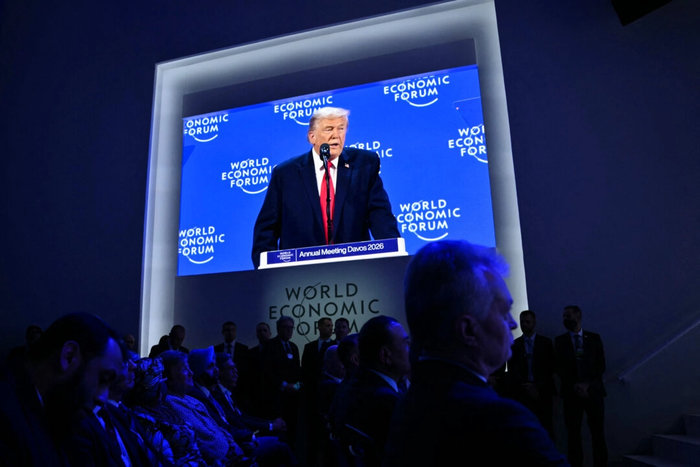
US President Trump utilized his platform to criticize renewable energy investments in Europe, labeling them the 'Green New Scam' during a well-attended address. His remarks focused heavily on demonstrating US economic and military strength, including asserting a new framework agreement regarding Greenland’s strategic positioning, which drew significant international attention.
While European leaders privately voiced concern over the rhetoric, NATO Secretary General Mark Rutte defended aspects of the US position regarding the Arctic region, citing escalating activity by Russia and China. Rutte emphasized to the European Parliament that the continent cannot secure itself without sustained American defense support, highlighting persistent geopolitical dependencies despite policy divergences.
Overall, the 2024 WEF underscored a growing fragmentation in global economic governance, with national interests and energy security temporarily eclipsing the multilateral sustainability goals that previously defined the Davos gathering, as detailed in reporting by usnn.news.