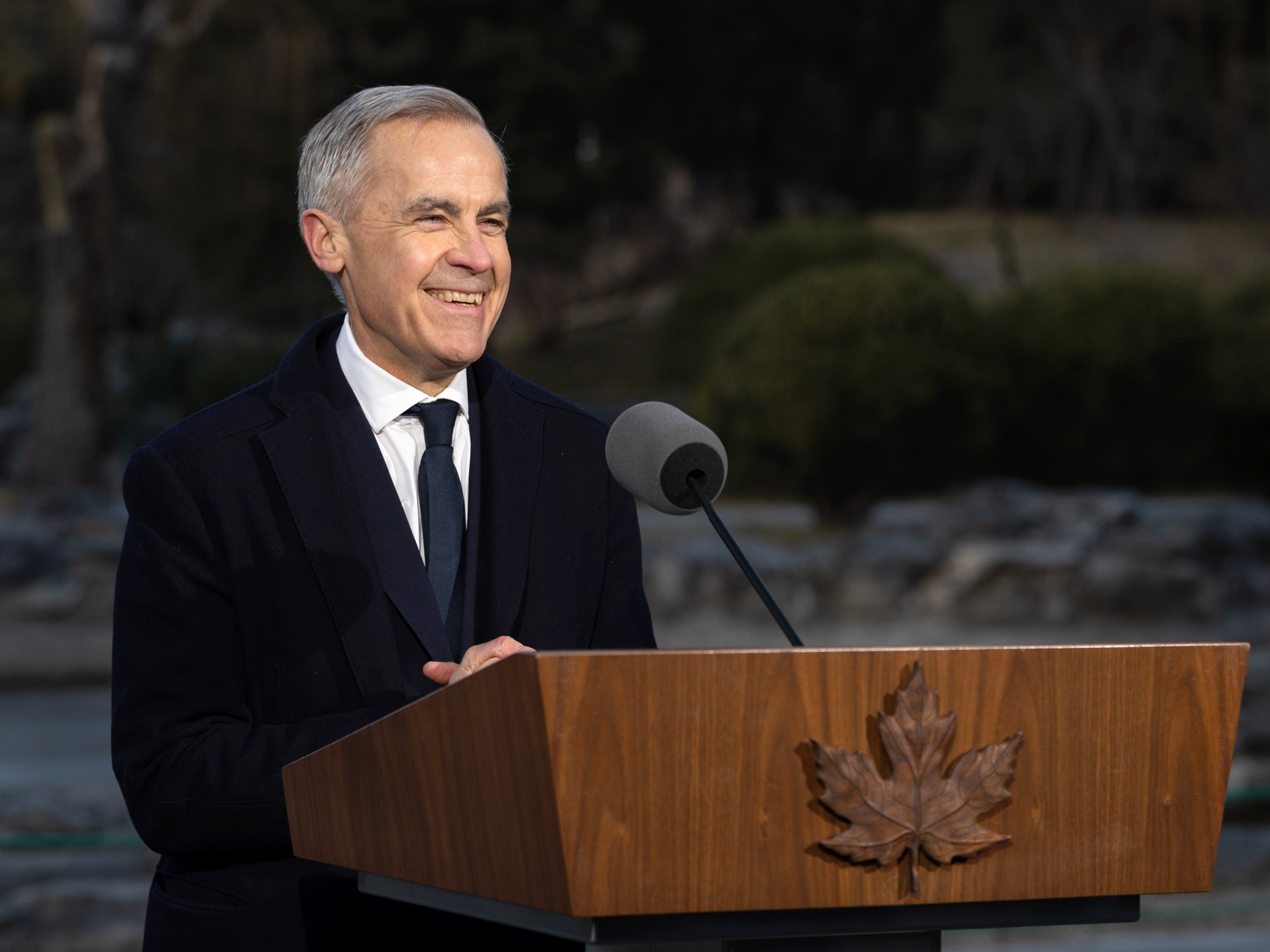
Canadian Prime Minister Mark Carney confirmed twelve new economic and security agreements reached over the past six months, emphasizing a renewed national ambition to diversify trade partners. Carney made these remarks Thursday during a meeting with provincial and territorial leaders, framing the accords as seizing a critical economic moment. This push for diversification occurs against a backdrop of persistent trade tensions with the administration of US President Donald Trump.
Carney specifically highlighted a new bilateral agreement with Beijing concerning the reduction of trade levies, which unlocks over $7 billion in export markets for Canadian agriculture sectors. This deal drew immediate criticism from President Trump, who had previously threatened punitive 100% tariffs on Canadian goods, accusing Ottawa of facilitating Chinese import transshipment. Carney clarified that Canada is not pursuing a full free-trade agreement with China, according to reports.
Looking ahead, Ottawa intends to pursue closer trading relationships with major global economies, including India, the Association of Southeast Asian Nations (ASEAN), and the Mercosur bloc. Furthermore, the government will focus on renewing the crucial economic and security relationship with the US via the joint review of the Canada-United States-Mexico Agreement (CUSMA), which is slated for expiration in July.
These economic maneuvers follow Carney’s recent address at the World Economic Forum in Davos, where the Prime Minister warned that the international rules-based order was fragmenting amid an era of great power rivalry. Carney asserted that the previous rules were enforced asymmetrically, benefiting the strongest actors when convenient, as reported by Al Jazeera.
Carney’s Davos speech was widely interpreted as a direct critique of the Trump administration’s aggressive tariff strategies against traditional allies. The Prime Minister subsequently called for the world’s “middle powers” to coalesce in response to escalating geopolitical unpredictability.
In a pointed assertion regarding US conduct, Carney addressed reports that State Department officials met with the Alberta Prosperity Project, a group advocating for an independence referendum in the energy-rich province. Responding to these reports, Carney stated firmly that the administration must respect Canadian sovereignty in all bilateral discussions.
This assertion on sovereignty comes after repeated instances where President Trump referred to Canada as the “51st state,” an action that has reportedly caused concern within the NATO alliance. Carney confirmed he conveys this expectation of sovereign respect directly to President Trump in their conversations.