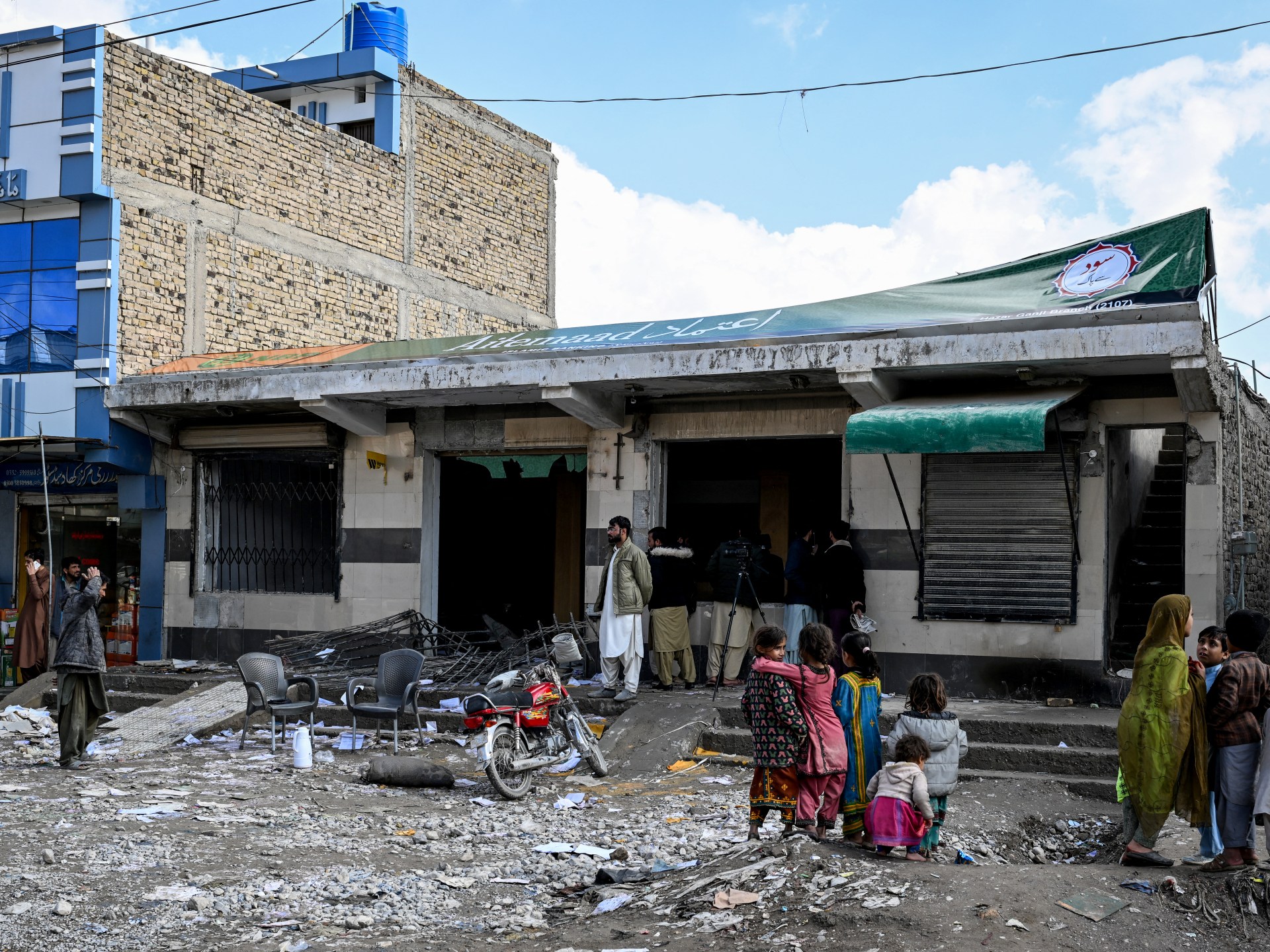
Coordinated attacks across Balochistan province, which resulted in 31 civilian and 17 security personnel deaths on Saturday, serve as a stark reminder of the deep-seated instability in Pakistan’s resource-rich, yet impoverished, region. The violence, claimed by the Baloch Liberation Army (BLA) as part of its “Herof 2.0” operation, complicates Islamabad’s efforts to secure foreign direct investment (FDI) in the area.
These security incidents are particularly sensitive given Pakistan’s recent overtures to major global powers regarding Balochistan’s reserves of copper, gold, and gas. In September, Pakistani officials showcased minerals to the US administration while simultaneously courting Chinese investment crucial to the China-Pakistan Economic Corridor (CPEC).
Interior Minister Mohsin Naqvi immediately blamed India for orchestrating the attacks, an assertion swiftly rejected by New Delhi as a deflection from Pakistan’s “internal failings.” The BLA, which seeks independence for the province annexed in 1948, has escalated its insurgency, mirroring a broader 26% increase in attacks across Balochistan observed in 2025 compared to the prior year, according to the Pakistan Institute for Peace Studies.
Balochistan’s structural instability creates a dichotomy for international partners, as noted by researcher Saher Baloch, who highlighted the contradiction between marketing resources and ignoring political grievances. She argued that persistent violence makes large-scale extraction projects primarily viable for state-backed entities like China, rather than market-driven Western firms.
Despite security risks, some analysts, such as Abdul Basit of Singapore’s S Rajaratnam School, contend that major investors like China and the US are already factoring these known risks into long-term strategic calculus. Basit suggested that government-to-government deals, such as the $500 million US mining memorandum signed last year, are unlikely to be withdrawn solely due to episodic violence.
Nevertheless, broader economic indicators suggest investor confidence remains precarious; Foreign Direct Investment (FDI) fell sharply to $808 million in the first half of the fiscal year 2026, down from $1.425 billion the previous year. Imtiaz Gul of the Centre for Research and Security Studies stated that the surge in violence deters any “sane national or international investor” from committing capital in such a volatile environment.
The situation is further compounded by Balochistan’s shared porous border with Iran’s Sistan-Baluchestan province, reinforcing the region’s perception as a high-risk zone for capital deployment. Islamabad’s success in stabilizing the province remains critical for servicing its recent $7 billion IMF programme and ensuring sustained economic recovery.