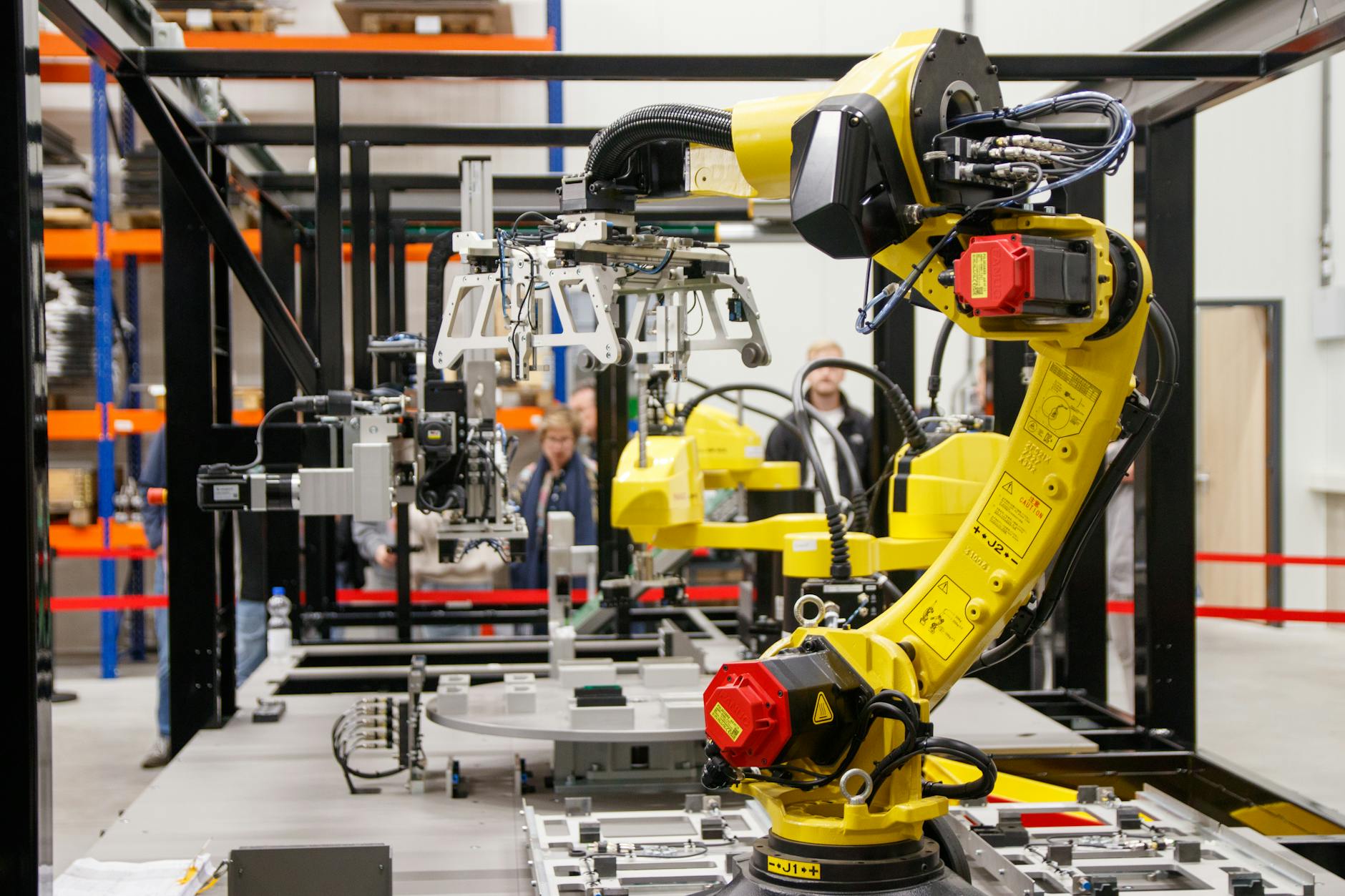
Robotics company Generalist has officially unveiled its new physical AI system, GEN-1. According to the company, the model has reached "production-grade success rates" across a wide range of physical skills, enabling it to perform complex tasks that previously required human dexterity and muscle memory.
GEN-1 builds upon the foundation of the GEN-0 model, which Generalist introduced last November. GEN-0 served as a proof-of-concept for scaling laws in robotics, demonstrating that increasing pre-training data and compute time could significantly boost model performance. However, unlike large language models that can ingest vast amounts of text from the internet, the field of robotics has long suffered from a shortage of high-quality object manipulation data.
To overcome this data bottleneck, Generalist developed a set of wearable grippers known as "data hands." These devices capture the subtle movements and visual information involved when humans perform manual tasks. The company claims to have collected over 500,000 hours of interaction data—totaling petabytes in volume—to train its physical models.
Navigating Complex Physical Environments
According to data released by Generalist, GEN-1 has achieved a 99% success rate in repetitive, high-precision tasks such as folding boxes, packaging mobile phones, and repairing robotic vacuum cleaners. The company reports that the model operates approximately three times faster than its predecessor, GEN-0. Furthermore, when fine-tuned for specific robotic form factors, GEN-1 requires only about an hour of training to reach these performance benchmarks.
In the past, complex robotic systems typically relied on pre-programmed sequences or training tailored to a single, specific task. Generalist highlights that the core advantage of GEN-1 lies in its versatility. A single model can improvise based on past experience and respond naturally when encountering disturbances outside of its training distribution.
This capability gives robots a much higher degree of adaptability. Whether it is placing a coin into a wallet, folding laundry, or sorting automotive parts, GEN-1 can connect logic across different scenarios to solve novel problems. Generalist states that the model not only executes set tasks but can also adjust its strategy in real-time when faced with unexpected situations, making it significantly more practical for industrial and production environments.