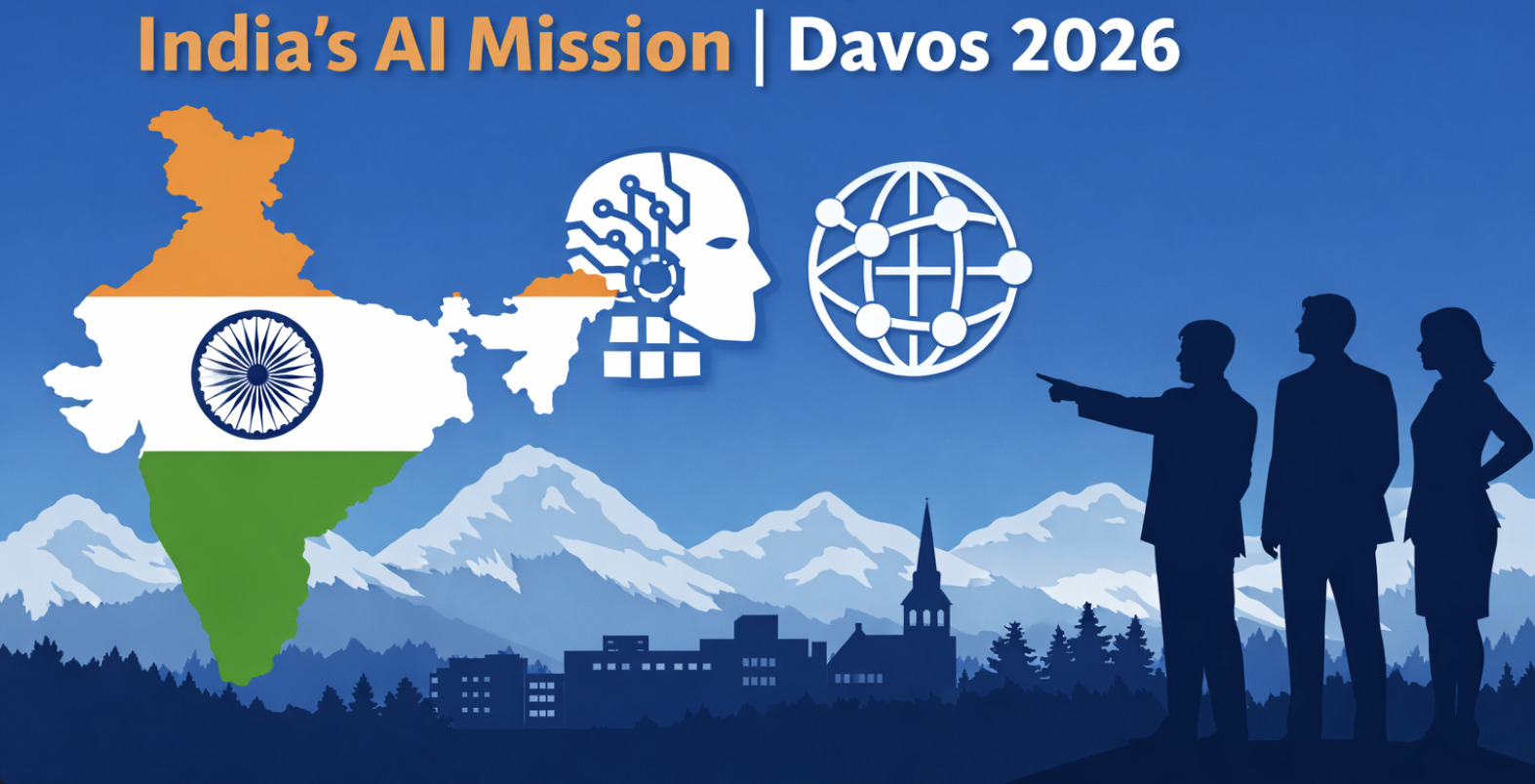
Artificial intelligence ambitions emanating from New Delhi captured significant attention at the World Economic Forum Annual Meeting in Davos 2026. Global technology titans and venture capital leaders converged around the India AI Mission, viewing the country as an indispensable global platform for AI innovation, rather than merely a consumption market.
Abhishek Singh, CEO of the India AI Mission and Additional Secretary at MeitY, articulated the core drivers behind this international confidence. He highlighted a rare confluence of factors: unparalleled demographic scale, rapidly maturing digital infrastructure, a vast talent pool, and immediate, complex real-world use cases. This environment allows AI systems to be validated and refined at a population level—a capability scarce in many established Western economies.
The tangible manifestation of this confidence is evident in capital deployment. Singh noted record commitments toward foundational digital assets, including data centers, cloud capacity, and high-performance computing clusters essential for training next-generation large language models. These investments are crucial for transitioning India from an AI technology adopter to a global creator of competitive solutions.
Talent remains a decisive geopolitical and economic advantage. India’s deep bench of engineers and data scientists, coupled with a dynamic startup ecosystem, is attracting global R&D hubs. These firms are seeking not just cost arbitrage, but access to problem-solvers adept at tackling challenges inherent in large-scale, diverse operational environments.
Crucially, the AI strategy is anchored in impact-driven innovation across vital sectors like agriculture, healthcare, and financial inclusion. This focus on solving fundamental development challenges positions India as a crucial testing ground for scalable AI solutions applicable across the Global South, resonating with multilateral development goals.
Discussions also emphasized India’s commitment to responsible AI governance, stressing ethics, transparency, and trust. This framework positions India as a champion of 'AI for public good,' aiming to prevent technological progress from exacerbating existing socio-economic disparities.
This strategic direction will be further formalized at the forthcoming India AI Impact Summit in New Delhi. This event is slated to become a landmark forum for shaping global AI frameworks that genuinely incorporate the needs and realities of developing economies, moving beyond models designed solely by advanced nations.
As concluded at Davos, the narrative surrounding India’s technological ascent has matured. Global stakeholders now recognize the nation as a foundational locus for building, deploying, and governing AI systems at a scale that will inevitably influence the trajectory of the technology worldwide. (Source: Based on reporting from Davos 2026 and related industry commentary.)